The Battle of Ethandun: A Turning Point in English History
Background
The Battle of Ethandun, fought in May 878, was a pivotal moment in the struggle between the Anglo-Saxons and the Viking invaders in England. By the late 9th century, the Viking Great Heathen Army had launched a series of invasions, capturing large swathes of territory in England. The Kingdom of Wessex, under the leadership of King Alfred the Great, remained one of the last bastions of Anglo-Saxon resistance.
The Battle
The exact location of the Battle of Ethandun is debated, but it is generally believed to have taken place near present-day Edington in Wiltshire. After a series of setbacks and a strategic retreat to the marshes of Somerset, Alfred regrouped his forces and launched a surprise attack on the Viking army led by Guthrum.
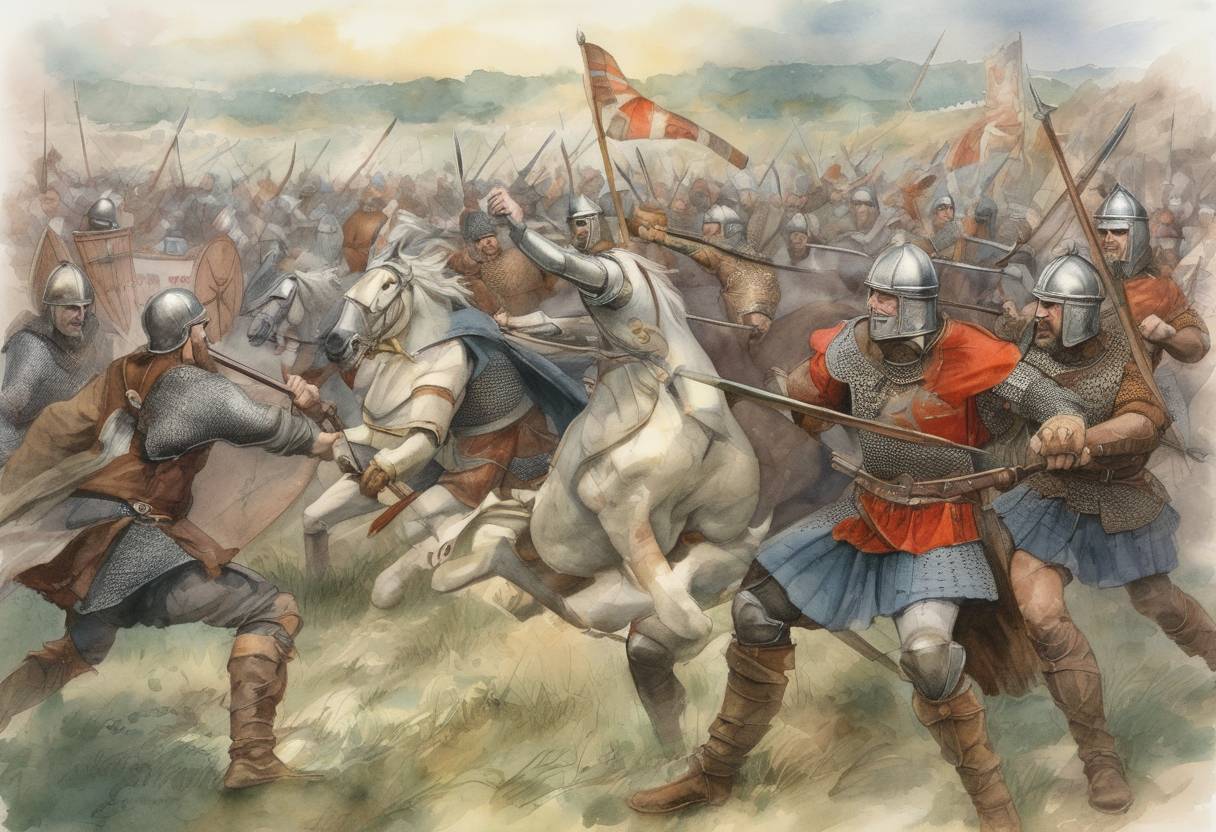
Alfred’s forces, though outnumbered, were well-prepared and motivated. The battle was fiercely contested, but Alfred’s tactical acumen and the determination of his troops led to a decisive victory for the Anglo-Saxons. The Vikings were forced to retreat to their stronghold, where they were besieged by Alfred’s forces.
Aftermath and the Treaty of Wedmore
Following the battle, Guthrum and his remaining forces were compelled to negotiate peace. The result was the Treaty of Wedmore, which had several significant outcomes:
Conversion of Guthrum: As part of the treaty, Guthrum agreed to convert to Christianity, symbolizing a shift in relations between the Vikings and the Anglo-Saxons. He was baptized with Alfred as his godfather.
Establishment of the Danelaw: The treaty delineated boundaries between the Anglo-Saxon and Viking-controlled territories. The area under Viking control became known as the Danelaw, encompassing much of northern and eastern England.
Peace and Stability: The treaty brought a period of relative peace and stability, allowing Alfred to focus on strengthening his kingdom and implementing reforms.
Significance
The Battle of Ethandun and the subsequent Treaty of Wedmore were crucial in shaping the future of England. Alfred’s victory ensured the survival of Wessex and laid the groundwork for the eventual unification of England. His reign saw significant cultural and military advancements, earning him the title “Alfred the Great.”
The establishment of the Danelaw also had lasting impacts on English society, influencing legal systems, culture, and language. The battle and its outcomes marked a turning point in the Viking invasions, demonstrating the resilience and adaptability of the Anglo-Saxons under Alfred’s leadership.