Armenia Declares Independence from the Soviet Union
1990 · Yerevan, Armenia
Armenia declared its independence from the Soviet Union.
September 21, 1991
Armenia declared its independence from the Soviet Union following a referendum.
Yerevan, Armenia | Armenian government
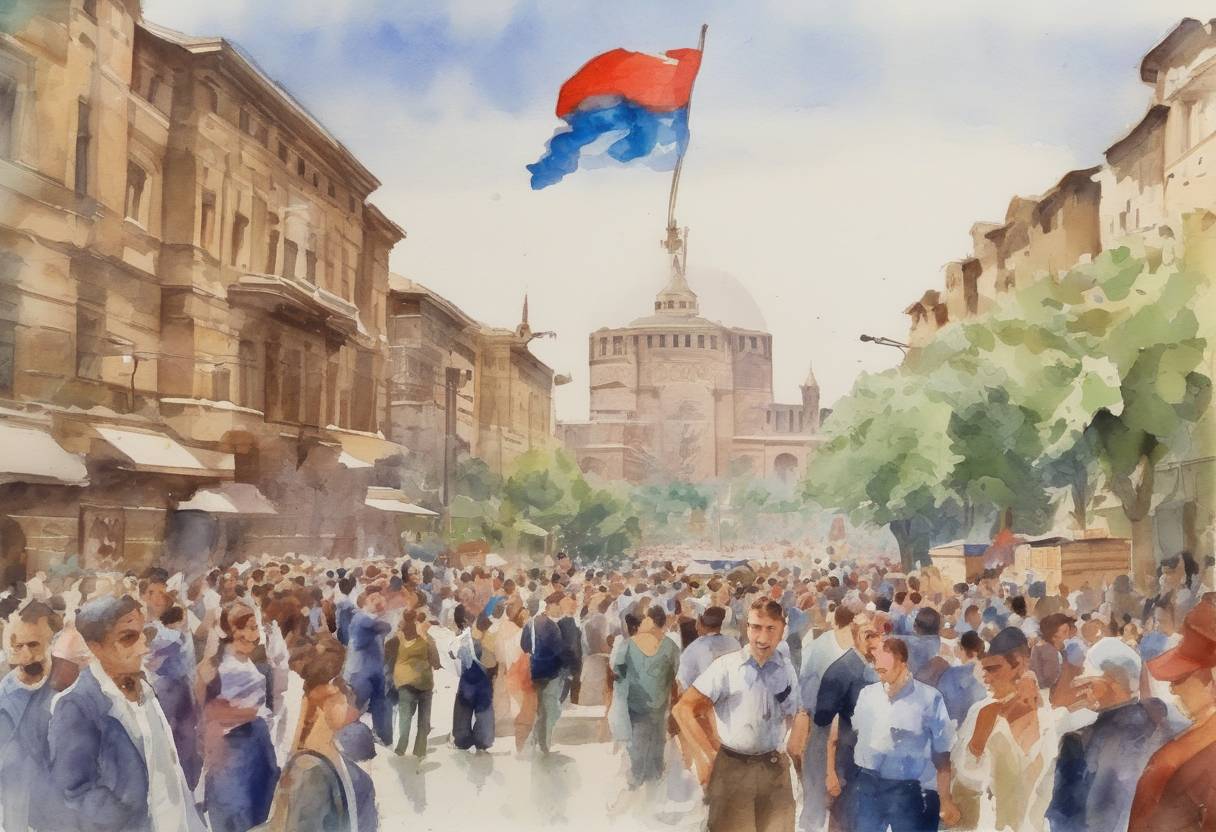
On September 21, 1991, Armenia declared its independence from the Soviet Union, marking a significant moment in the country’s history and the broader dissolution of the Soviet bloc. This declaration followed a national referendum held on the same day, where an overwhelming majority of Armenian citizens voted in favor of establishing an independent republic.
The late 1980s and early 1990s were a period of significant political upheaval across the Soviet Union. The policies of glasnost (openness) and perestroika (restructuring) introduced by Soviet leader Mikhail Gorbachev had inadvertently sparked nationalist movements within various Soviet republics. In Armenia, the push for independence was also fueled by longstanding ethnic and territorial tensions, particularly concerning the Nagorno-Karabakh region, which had a majority Armenian population but was located within the borders of Azerbaijan.
On September 21, 1991, Armenia conducted a referendum to determine the will of its people regarding independence from the Soviet Union. The results were decisive: over 99% of the voters supported the move to become an independent state. This overwhelming support reflected the strong nationalistic sentiments and the desire for self-determination among the Armenian populace.
Following the referendum, the Armenian Supreme Council formally declared independence. This declaration was a pivotal step in Armenia’s transition from a Soviet republic to a sovereign nation. The move was part of a broader wave of independence declarations across the Soviet Union, as republics sought to establish their own governance and break away from Moscow’s control.
Armenia’s independence was soon recognized by other countries, and it became a member of the United Nations on March 2, 1992. The international community’s recognition was crucial for Armenia as it sought to establish diplomatic relations and integrate into the global political and economic systems.
The declaration of independence was a turning point for Armenia, setting the stage for the development of its national identity and governance structures. However, the early years of independence were challenging, marked by economic difficulties and the ongoing conflict over Nagorno-Karabakh, which would continue to affect regional stability.
Armenia’s independence from the Soviet Union is a significant chapter in its history, symbolizing the resilience and determination of its people to chart their own course. It also reflects the broader geopolitical shifts of the early 1990s, as the collapse of the Soviet Union reshaped the political landscape of Eastern Europe and Central Asia.
In summary, September 21, 1991, remains a day of great importance for Armenia, commemorated annually as Independence Day, celebrating the country’s sovereignty and the enduring spirit of its people.
Source: en.wikipedia.org