The Beer Hall Putsch: November 9, 1923
1923 · Munich, Germany
The Beer Hall Putsch, an attempted coup by Adolf Hitler and the Nazi Party, was thwarted in Munich, leading to Hitler's arrest and temporary setback for the Nazi movement.
March 13, 1920
Kapp Putsch begins in Germany in an attempt by right-wing elements to overthrow the Weimar Republic.
Berlin, Germany | Freikorps
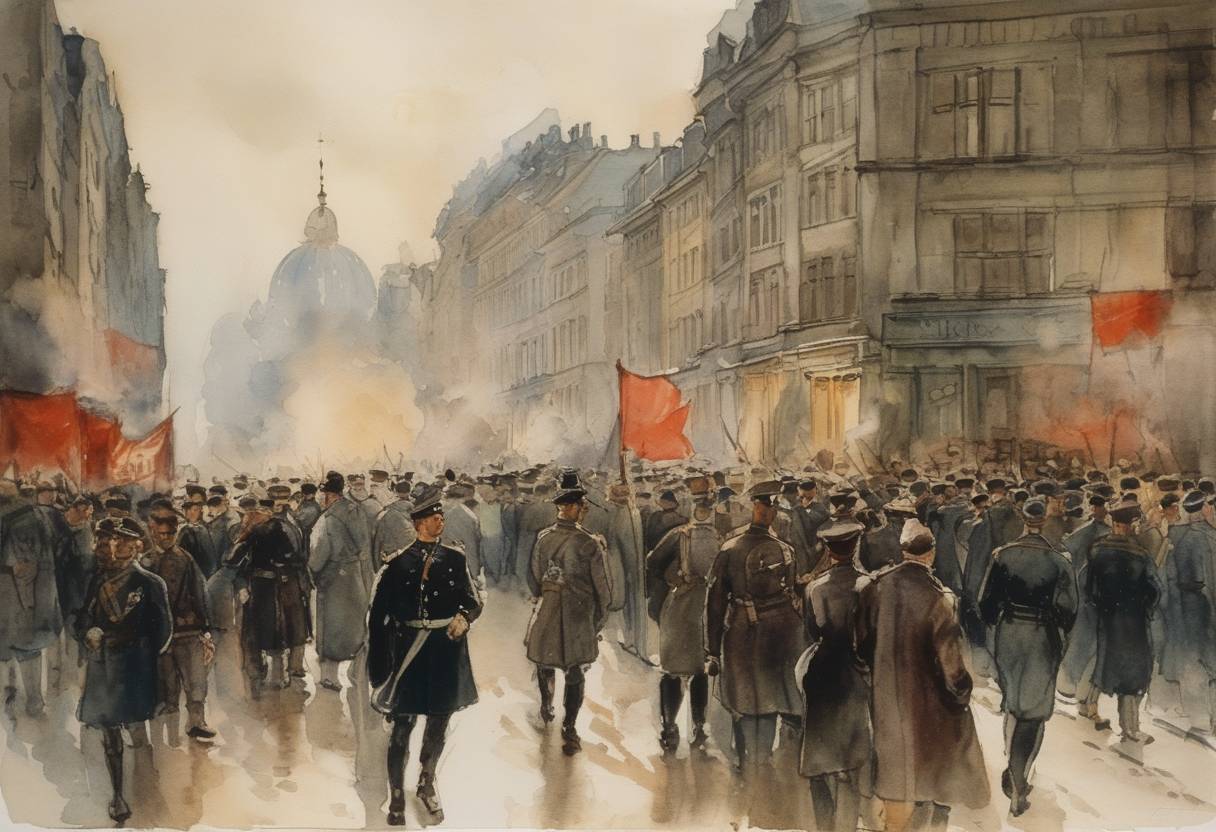
On March 13, 1920, the Kapp Putsch, a significant event in the early years of the Weimar Republic, began in Germany. This attempted coup was spearheaded by right-wing elements dissatisfied with the post-World War I government, which they viewed as weak and ineffective.
After Germany’s defeat in World War I, the Weimar Republic was established amidst significant political instability and economic difficulties. The Treaty of Versailles, signed in 1919, imposed heavy reparations and territorial losses on Germany, leading to widespread national resentment. The young republic faced opposition from both leftist and rightist factions, each vying for control in the volatile post-war environment.
The Kapp Putsch was led by Wolfgang Kapp, a journalist and civil servant, and General Walther von Lüttwitz, commander of the Berlin Reichswehr. Their primary aim was to overthrow the democratic government and stem what they perceived as the rise of Bolshevism in Germany.
On the morning of March 13, 1920, Lüttwitz’s troops occupied Berlin, encountering little initial resistance. Government officials, caught off guard by the sudden takeover, fled to Dresden and then to Stuttgart. Meanwhile, Wolfgang Kapp declared himself Chancellor, envisioning a new government returning Germany to autocratic rule.
Despite their initial success in seizing control of the capital, the Kapp Putsch quickly began to unravel. The legitimate government’s appeal to the public resulted in widespread civil disobedience. A general strike, organized by trade unions and supported by widespread worker movements, paralyzed the country. Essential services ground to a halt, and the putschists struggled to maintain order without popular support.
The coup collapsed within four days due to the lack of widespread support and the crippling effects of the strike. Kapp and Lüttwitz fled, and the government was restored by March 17, 1920. The failed putsch highlighted the fragility of the Weimar Republic but also demonstrated the potential power of popular resistance and labor movements.
The Kapp Putsch serves as an early indication of the extreme political instability that plagued the Weimar Republic throughout its existence. Although the coup failed, the event exposed the weaknesses within the Republic and the extent of right-wing opposition. Crucially, it reinforced the importance of worker and union actions in shaping the political landscape, a theme that would continue through the tumultuous years of Weimar Germany.
Source: en.wikipedia.org