The Treaty of The Hague (1701)
1701 · The Hague, Netherlands
The Treaty of The Hague was signed between England, the Holy Roman Empire, and the Dutch Republic to secure a mutual defense against France and Spain.
August 10, 1585
On August 10, 1585, the Treaty of Nonsuch was signed by Elizabeth I of England and representatives of the Dutch rebels fighting against Spanish control. By this treaty, Elizabeth agreed to provide military support for the Dutch revolt against Spanish rule, marking England's official involvement in the Eighty Years' War.
Nonsuch Palace, England | Kingdom of England
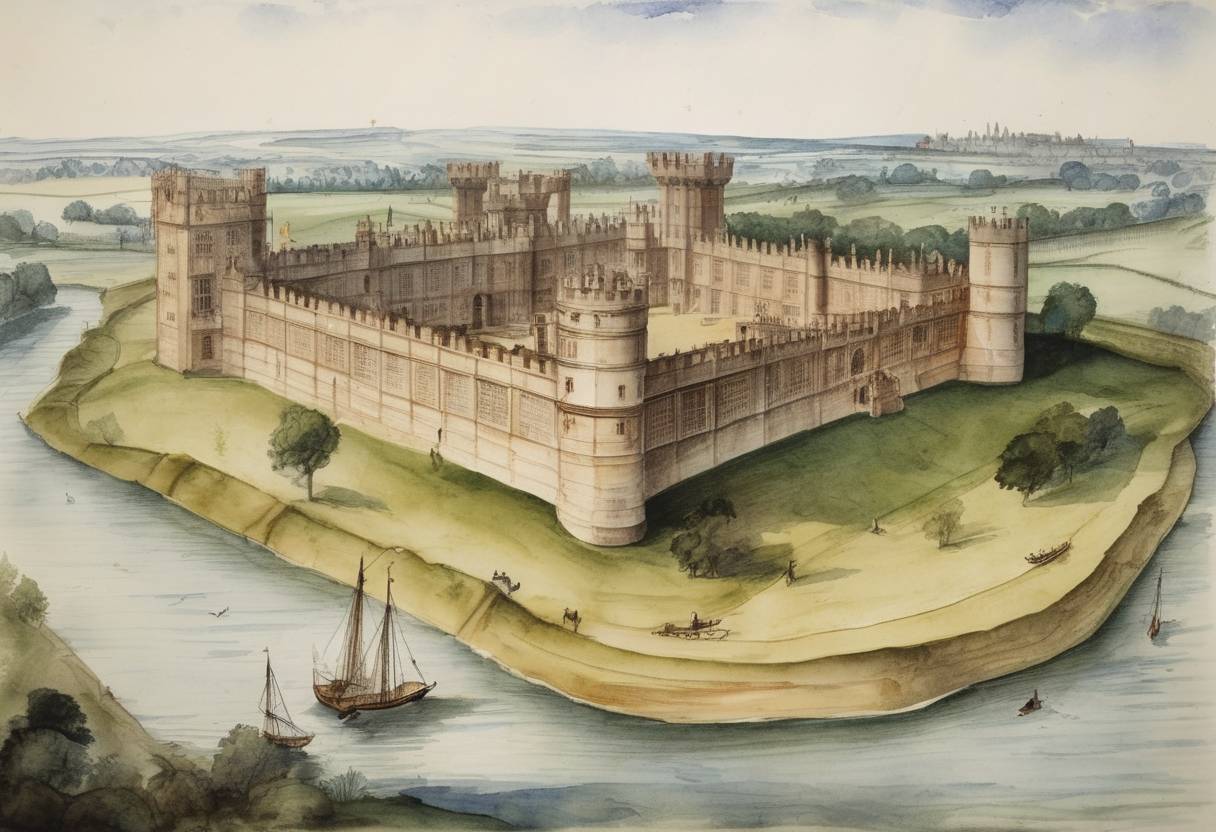
On August 10, 1585, the Treaty of Nonsuch was signed in Nonsuch Palace, Surrey, effectively marking England’s official intervention in the Dutch Revolt against Spanish rule. This pivotal moment occurred during the Eighty Years’ War (1568–1648), a protracted conflict between the Protestant Dutch provinces and the Catholic Spanish Empire.
The Treaty of Nonsuch was a response to the dire situation faced by the Dutch rebels, who were struggling to maintain their independence from the dominion of the Spanish Habsburgs, led by King Philip II of Spain. The Dutch provinces were embroiled in a battle for religious and political autonomy, which was part of the broader European conflicts known as the Wars of Religion.
Prior to the treaty, Queen Elizabeth I of England had been hesitant to engage directly in the conflict. However, several factors ultimately pushed her towards intervention:
The terms of the Treaty of Nonsuch were significant and included the following commitments:
In exchange for this assistance, the Dutch rebels agreed to cede these towns temporarily to English protection as a form of collateral to assure both their commitment to the cause and as security for English expenses.
The signing of the Treaty of Nonsuch was a momentous event, signalling the start of open war between England and Spain, which would eventually culminate in the Spanish Armada’s attempted invasion of England in 1588. It also sent a clear message that England would not tolerate unchecked Spanish expansion and dominance in Europe.
The treaty solidified the Anglo-Dutch alliance, though it was fraught with complications. The English forces faced numerous challenges, including supply issues and coordination difficulties with the Dutch. Despite these obstacles, the agreement marked a significant escalation in the Eighty Years’ War and demonstrated Elizabeth I’s commitment to countering Spanish influence.
Overall, the Treaty of Nonsuch reinforced the geopolitical and religious divides within Europe that would shape the continent for decades to come.