1897 · Brooklyn, New York, United States
The start of the Coney Island Cyclone roller coaster's long run opens with much anticipation and excitement.
June 16, 1884
The first roller coaster in America, known as the Switchback Railway, opened at Coney Island in Brooklyn, New York. Designed by LaMarcus Thompson, it sparked a new era of amusement park rides.
Brooklyn, United States | Coney Island Amusement Park
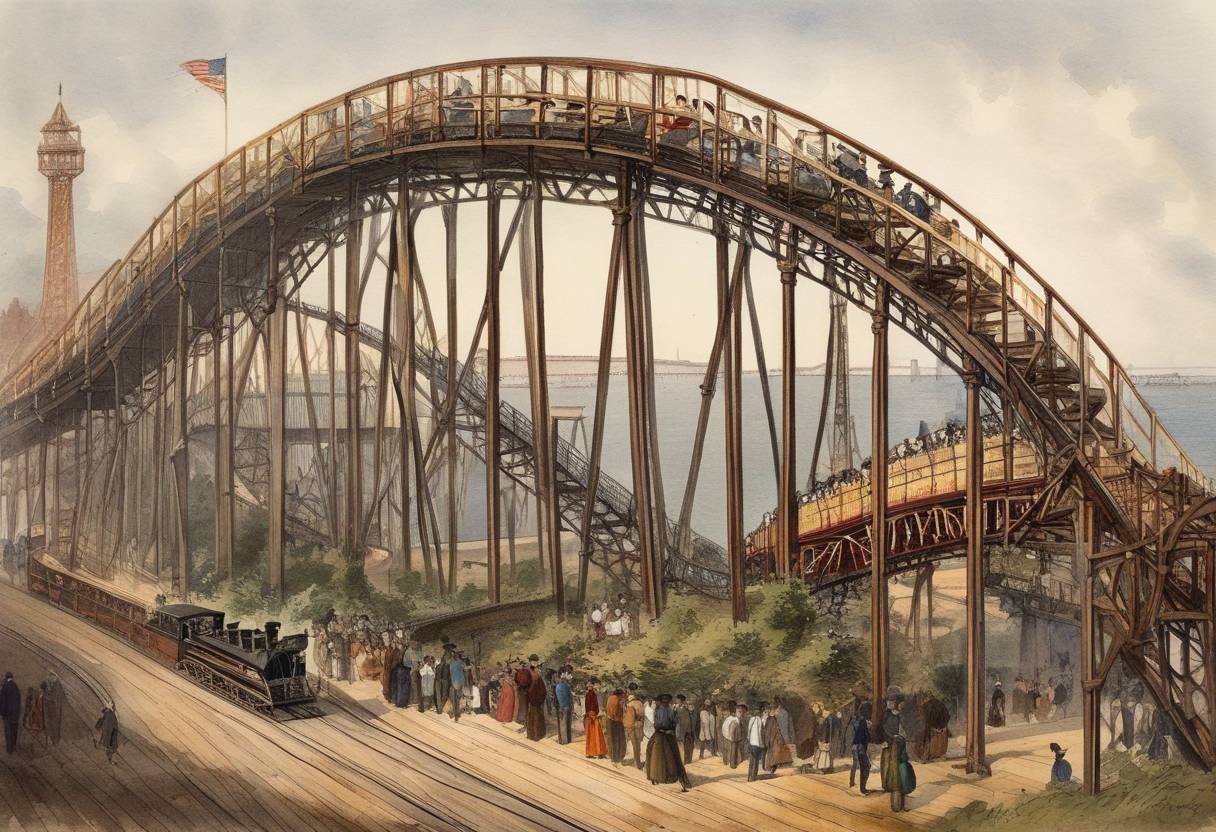
On June 16, 1884, the first roller coaster in America, known as the Switchback Railway, officially opened at Coney Island in Brooklyn, New York. Designed by LaMarcus Adna Thompson, this groundbreaking attraction heralded the birth of a new era in amusement rides and entertainment.
The Switchback Railway was a modest and mechanical creation by today’s standards. The ride featured a layout that consisted of gentle hills and a simple out-and-back path. Passengers boarded at one end and were pulled up a slight incline by gravity, rolled down a 600-foot wooden track at a thrilling speed of approximately 6 miles per hour, and finally arrived at another platform. The cars were then manually switched to a parallel track for the return journey.
The Switchback Railway quickly became a popular attraction, marking the start of Coney Island’s reputation as a premier entertainment destination. It demonstrated the potential of amusement rides as profitable ventures and inspired numerous inventors and engineers to develop more sophisticated and daring rides in the future. The ride’s success is credited with beginning the evolution of roller coasters into more complex and thrilling structures.
LaMarcus Thompson’s innovation laid the foundation for the amusement park industry. The technology and excitement surrounding the Switchback Railway led to a flurry of roller coaster construction across the United States and beyond. It revolutionized public entertainment by combining engineering ingenuity with a unique form of leisure, influencing amusement parks globally.
By drawing the masses to amusement parks and proving the financial viability of such attractions, the Switchback Railway at Coney Island played a critical role in shaping the modern amusement park experience.
Source: www.coneyisland.com