Battle of Vitoria: June 22, 1813
1813 · Vitoria, Spain
During the Peninsular War, the Battle of Vitoria took place, where Anglo-Portuguese and Spanish forces under the Duke of Wellington defeated the French army led by Joseph Bonaparte.
July 22, 1812
The Battle of Salamanca, a major engagement of the Peninsular War, is fought between the Anglo-Portuguese alliance led by the Duke of Wellington and French forces near Salamanca, Spain.
Salamanca, Spain | Anglo-Portuguese Army
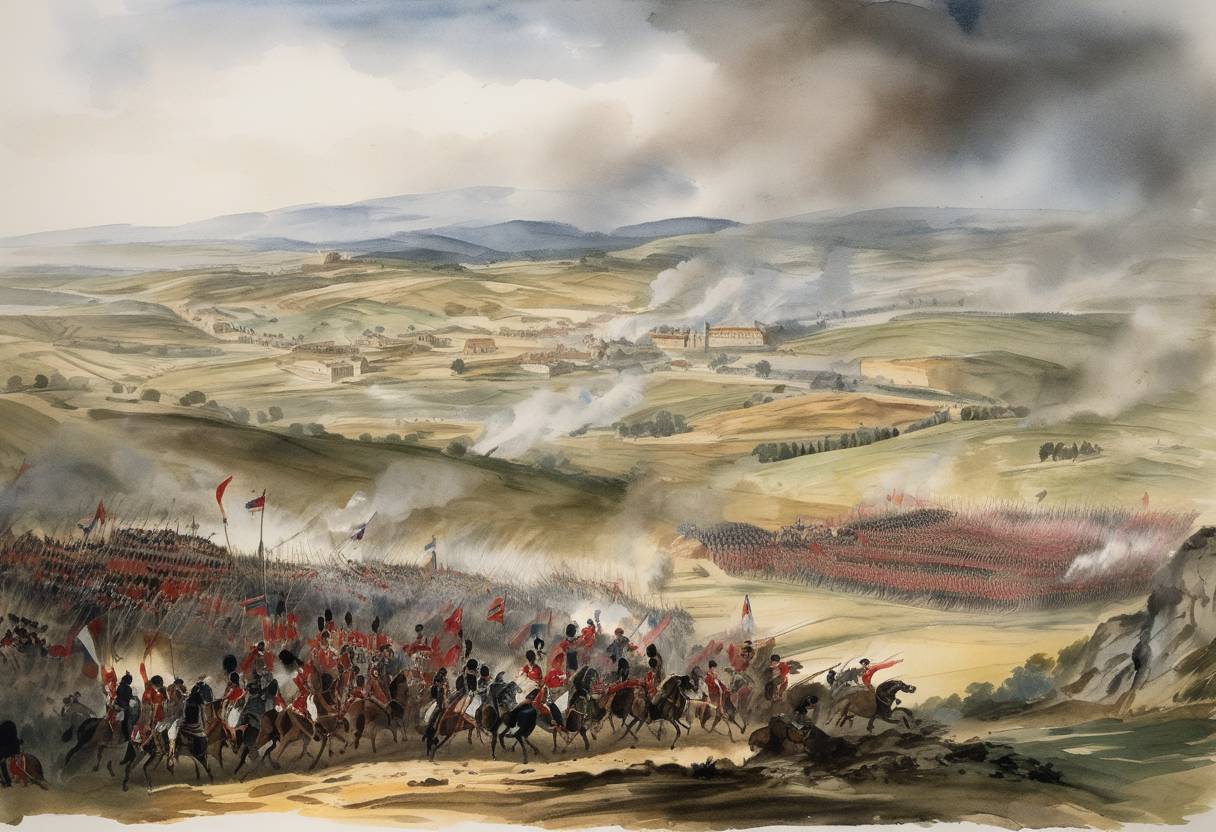
The Battle of Salamanca, fought on July 22, 1812, stands as a pivotal engagement during the Peninsular War, where the Anglo-Portuguese forces, commanded by the Duke of Wellington, decisively defeated the French army led by Marshal Auguste Marmont. This battle took place in the rolling plains near Salamanca, a university city in western Spain.
The Peninsular War, part of the larger Napoleonic Wars, had been raging since 1808 with fluctuating fortunes for both the French and the allied forces of Britain, Spain, and Portugal. By 1812, the British-led coalition sought to leverage their strategic advantages to drive the French out of the Iberian Peninsula.
As the campaign progressed, Wellington’s army was advancing through Spain, having captured the fortress city of Ciudad Rodrigo in January and subsequently Badajoz in April. Marshal Marmont, commanding the French Army of Portugal, sought to outmaneuver Wellington and disrupt his lines of communication with Portugal.
On July 22, Marmont positioned his forces to the south of Salamanca, near the hills of Los Arapiles. He aimed to extend his line to flank the allied army, presuming Wellington would retreat. However, Marmont’s assumptions were incorrect. Wellington, recognizing the over-extension of the French forces, seized the opportunity to attack.
The Battle of Salamanca resulted in a decisive victory for Wellington’s forces. French casualties numbered approximately 14,000, including killed, wounded, and captured, while the allies suffered around 5,000 casualties. The impact of this victory was profound:
The Battle of Salamanca is remembered for its demonstration of tactical brilliance and adaptability. Wellington’s ability to exploit French missteps altered the course of the Peninsular War, leading to further successes that eventually contributed to the downfall of Napoleonic dominance in Spain.
Source: www.britannica.com