The End of the Warsaw Uprising: October 2, 1944
1944 · Warsaw, Poland
The Warsaw Uprising officially ends as the remaining Polish resistance in Warsaw surrenders to the German forces.
August 5, 1944
Polish insurgents in the Wola district of Warsaw encounter a massacre by units under the command of SS-Gruppenführer Heinz Reinefarth and Oskar Dirlewanger.
Warsaw, Poland | Nazi Germany
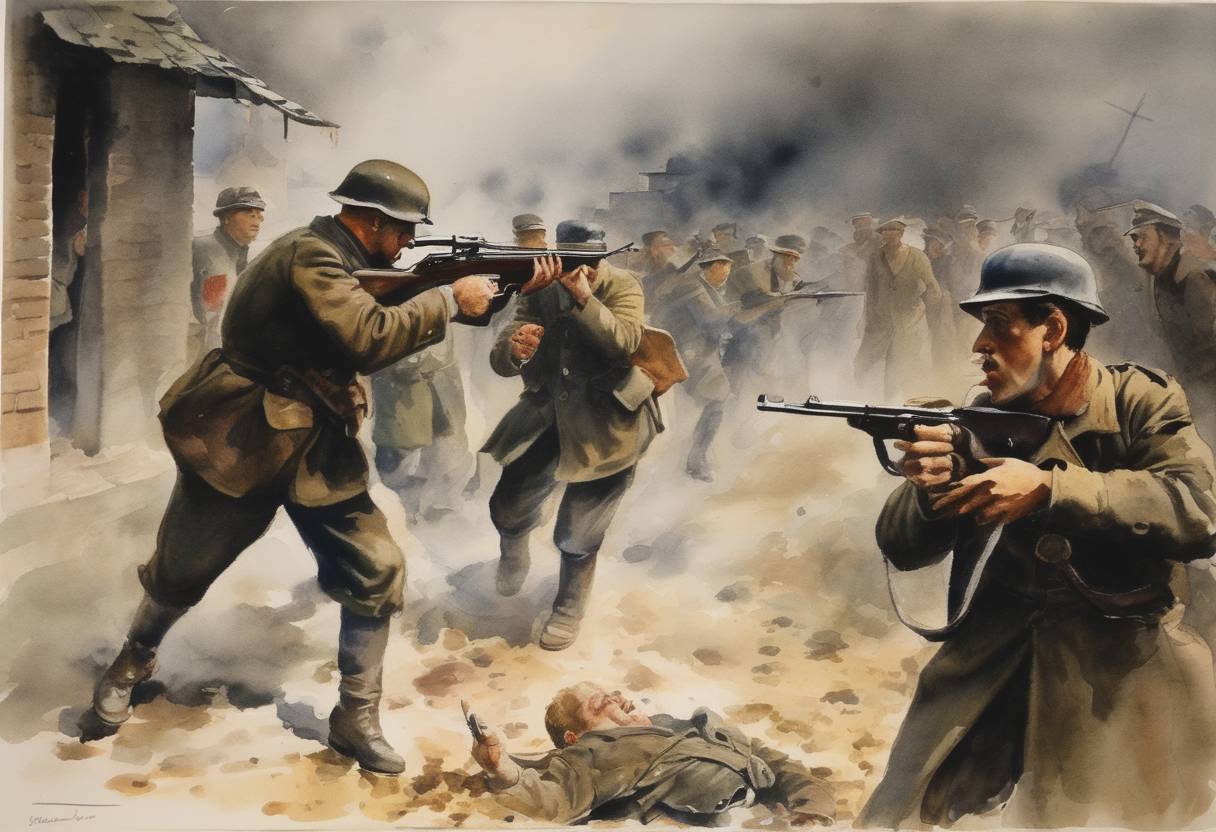
On August 5, 1944, one of the most tragic episodes of the Warsaw Uprising took place in the Wola district as part of the larger resistance effort against Nazi occupation. During this period, the Polish Home Army initiated Operation Tempest in a bold attempt to liberate Warsaw from German control. The uprising began on August 1, 1944, but by the fifth day, German forces initiated a brutal crackdown on the civilians and insurgents in the Wola district.
Under orders from Adolf Hitler to suppress the uprising with maximum force, SS-Gruppenführer Heinz Reinefarth and Oskar Dirlewanger led the infamous units responsible for carrying out mass killings in Wola. Reinefarth commanded elements of the SS Police regiments, while Dirlewanger led a notorious brigade composed of criminals recruited into the ranks of the Waffen-SS. Their mission was to terrify and demoralize the Polish resistance while wiping out any insurrection against German rule.
The tactics employed during what became known as the Wola Massacre involved indiscriminate and systematic killings of civilians, as well as Polish insurgents. Thousands, including women, children, and the elderly, were executed in mass shootings over a period of several days, beginning on August 5. The estimated numbers of those murdered range from 30,000 to 50,000 civilians, making it one of the largest single massacres in European history during World War II.
The Wola Massacre is remembered as a stark example of the brutality of the Nazi regime and the severe challenges faced by resistance movements in occupied territories. Despite the heavy losses and harsh reprisals, the uprising continued for several more weeks before it was ultimately suppressed in October 1944.
The massacre had profound ramifications on the Polish psyche and contributed to post-war memory as a symbol of Polish resistance and suffering. It remains a poignant reminder of the atrocities committed during the Nazi occupation and underscores the resilience of those who fought against tyrannical forces.
Source: en.wikipedia.org