Execution of Robert Blum: November 9, 1848
1848 · Vienna, Austria
Robert Blum, a German politician and revolutionary, was executed in Vienna following his involvement in the Revolutions of 1848.
April 8, 1848
The Austrian Empire abolishes serfdom as part of revolutionary changes sweeping Europe in 1848.
Vienna, Austrian Empire | Austrian government
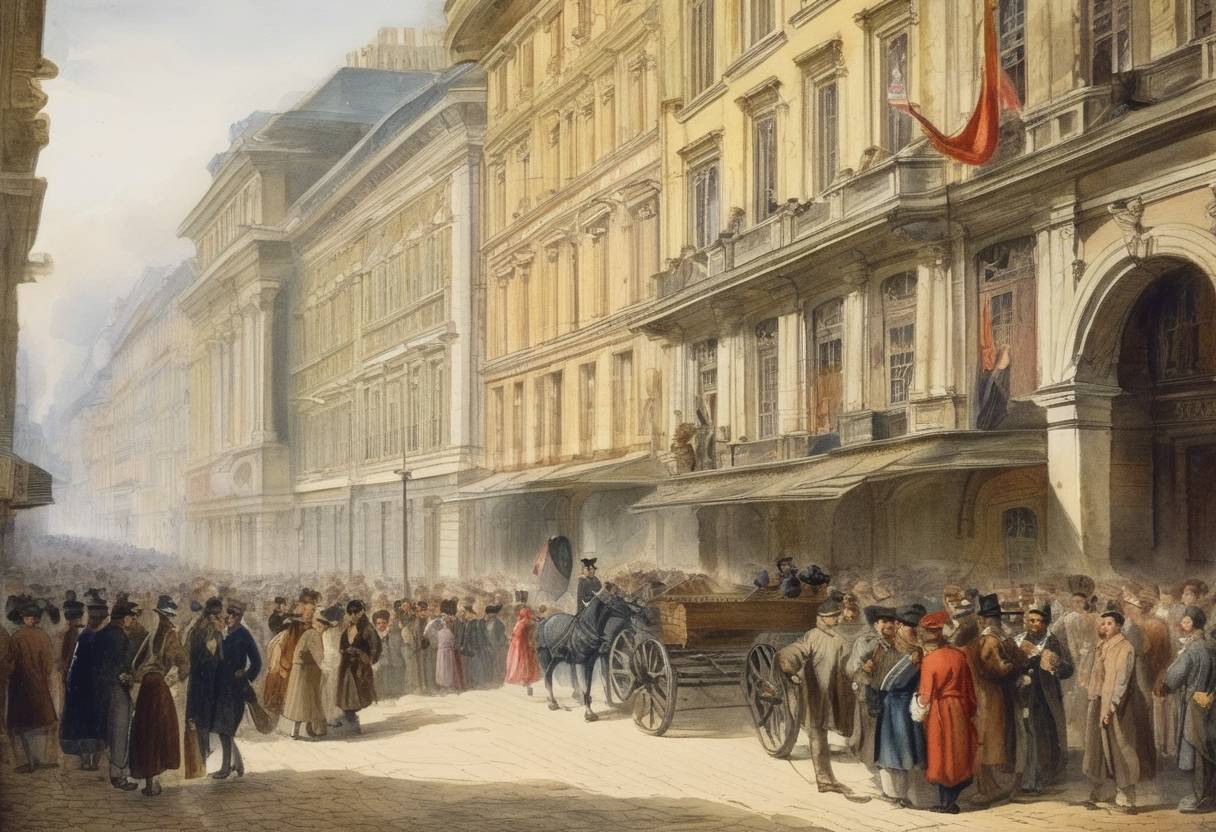
On April 8, 1848, amidst the revolutionary upheavals across Europe, the Austrian Empire made a significant step by abolishing serfdom. This decision was part of widespread reforms catalyzed by the 1848 Revolutions, a series of political upheavals throughout Europe that year, influenced by liberalism and nationalism.
The wave of revolutions in 1848 is often referred to as the “Springtime of Nations.” Across Europe, widespread discontent with conservative monarchies, social injustices, and rigid class structures sparked demands for liberal reforms. In the Austrian Empire, discontent was exacerbated by economic hardships, ethnic tensions, and demands for increased political representation.
The revolutions began in France in February 1848, quickly spreading to other parts of Europe, including the Austrian Empire. In March 1848, Vienna witnessed protests and demands for reforms. This pressure contributed to the resignation of the longstanding Austrian Chancellor, Prince Klemens von Metternich, embodying the collapse of the reactionary policies he upheld across Europe.
In response to these pressures, and aiming to prevent further unrest, the Austrian government enacted a series of reforms. Among the most significant was the proclamation on April 8, 1848, which effectively abolished serfdom in the empire. This decree liberated millions of peasants who had been bound to noble estates, unable to marry or relocate without their lord’s permission, a system entrenched since the medieval era.
The abolition of serfdom was a transformative change for the agricultural economy and rural society in the Austrian Empire. It allowed former serfs greater personal freedoms and the opportunity to own and cultivate land independently, contributing to the gradual modernization and restructuring of the empire’s rural economy.
The abolition of serfdom within the Austrian Empire was a pivotal moment in the broader context of the 1848 Revolutions. It illustrated the powerful impact of revolutionary movements, as well as the capacity for significant social and political reforms when pressed by popular demand. Although the revolutions of 1848 failed to achieve all their aims, with many conservative regimes eventually reasserting control, they undeniably laid the groundwork for future reforms and the eventual modernization of European societies.
Moreover, the abolition of serfdom in Austria reflected a wider trend across Europe of dismantling feudal structures, which would continue throughout the 19th century, significantly altering the social and economic landscape of the continent.
Source: www.britannica.com