Battle of Guam - July 21, 1944
1944 · Guam, Guam
The Battle of Guam commenced during World War II as American forces began their assault to retake the island from Japanese control.
March 26, 1942
The first U.S. troops arrive in Australia during World War II, marking the beginning of significant U.S. military presence.
Brisbane, Australia | United States Armed Forces
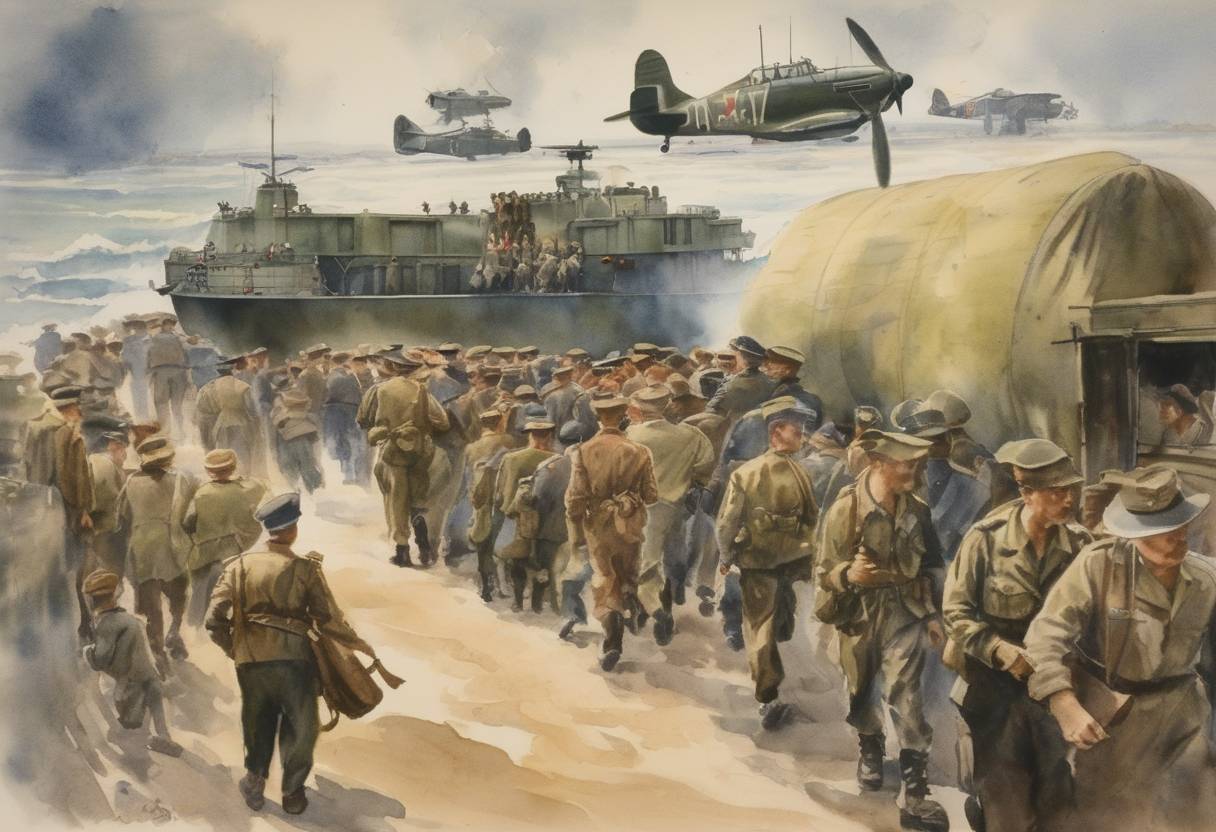
On March 26, 1942, the first contingent of American troops arrived in Australia, marking the beginning of a substantial United States military presence in the country during World War II. This deployment was a crucial component of the Allied strategy in the Pacific Theater, reflecting a shift in focus as the Allies recognized the increasing threat posed by Japanese advancements in the region.
Following the attack on Pearl Harbor on December 7, 1941, Japan rapidly expanded its control over large areas of the Pacific. By early 1942, Japanese forces posed a direct threat to Australia after capturing territories that brought them uncomfortably close to the continent. The fall of Singapore in February 1942 and the bombing of Darwin shortly thereafter underscored the urgency of securing Australia as a base for launching counter-offensives.
The American troops that arrived on March 26 were part of the U.S. Army’s 41st Infantry Division, chosen to fortify Australia’s defenses. This initial landing took place in Brisbane, a city on Australia’s eastern coast, which soon became a crucial Allied logistics center for operations against Japanese-held islands in the Pacific. The arrival of U.S. forces marked a turning point, as it provided significant morale and strategic support to Australian forces, who were concerned about Japanese aggression.
The deployment aimed to establish a robust defensive framework across Australia and develop it as a staging ground for offensive operations. The U.S. military presence also facilitated greater military coordination with the Commonwealth forces, enhancing intelligence sharing, joint training, and combined operations. General Douglas MacArthur, who had arrived in Australia earlier that month, played a pivotal role in overseeing these efforts as the Supreme Commander of Allied Forces in the Southwest Pacific Area.
The presence of U.S. troops in Australia was instrumental during key Pacific campaigns. It helped secure lines of communication and supply routes vital for sustaining the Allied war effort. As a result, Australia became a critical base for launching operations in New Guinea and the broader Pacific theater. This partnership fostered a lasting military relationship between the United States and Australia, evolving into a strategic alliance that endures to this day.
The arrival of U.S. troops on March 26, 1942, thus symbolizes a pivotal moment of collaboration and determination within the Allied Powers, significantly impacting the course of World War II in the Pacific.
Source: en.wikipedia.org