Isaac Newton: Birth and Early Life
1642 · Woolsthorpe, England
Isaac Newton, one of the most influential scientists of all time, was born in Woolsthorpe, England.
June 19, 1623
Blaise Pascal, a renowned French mathematician, physicist, inventor, and philosopher, was born. His contributions laid foundational groundwork in the development of the probability theory, projective geometry, fluid dynamics, and the early development of computers.
Clermont-Ferrand, France
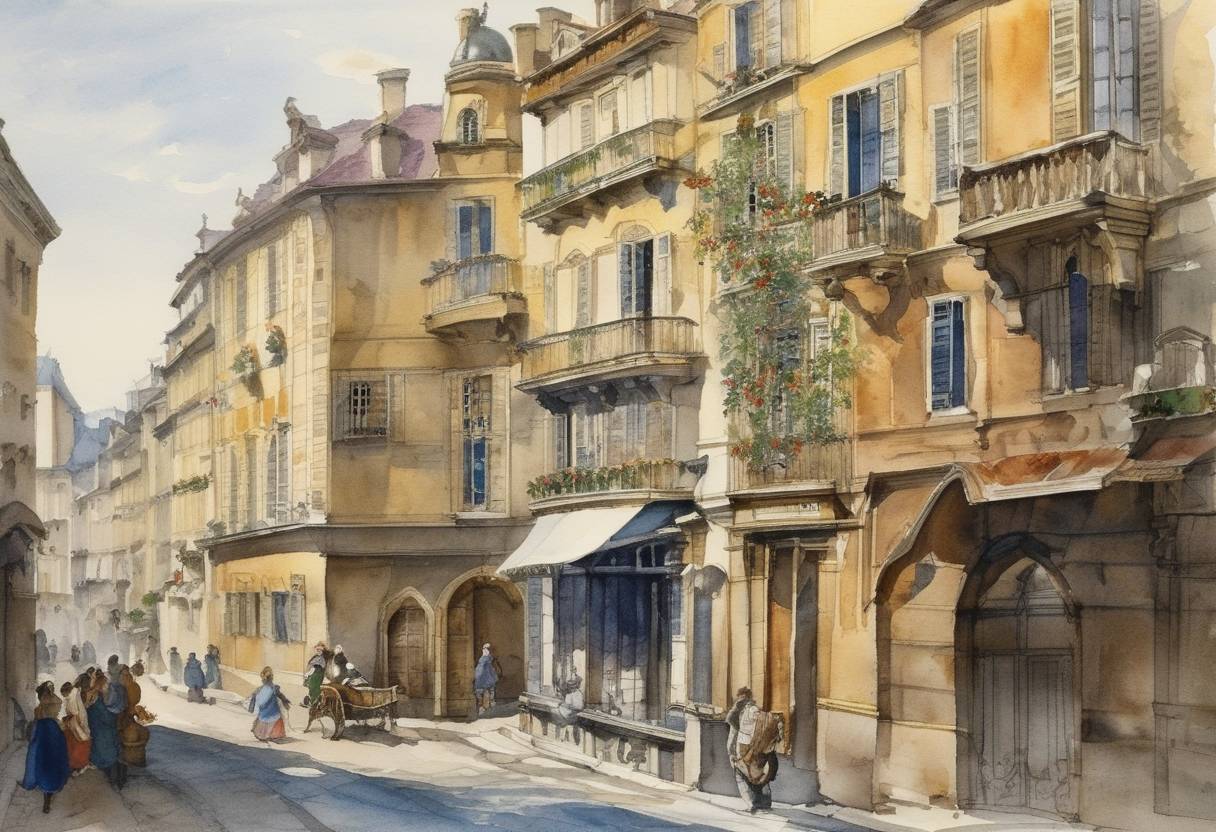
On June 19, 1623, Blaise Pascal was born in Clermont-Ferrand, France. Pascal grew to become a prominent figure in numerous fields such as mathematics, physics, and philosophy. His contributions have had a lasting impact on the development of several scientific and mathematical principles foundational to various modern disciplines.
Probability Theory: Pascal, alongside Pierre de Fermat, laid the groundwork for probability theory through a series of correspondences. Their work was crucial in formalizing the mathematical study of probability and statistics, which has since become essential in fields like economics, finance, and risk management.
Projective Geometry: Pascal made early contributions to projective geometry, a branch of mathematics that studies the properties of geometric figures that are invariant under projection. His work “Essay on Conics” (1639) details Pascal’s theorem, which describes the properties of hexagons inscribed in conics.
Pascal also ventured into philosophy and theology, producing writings that explored the limits of human reason and the nature of faith. His most famous philosophical work, “Pensées” (Thoughts), is a collection of fragments on theology and philosophy that includes Pascal’s Wager, an argument in favor of believing in God.
Blaise Pascal passed away on August 19, 1662, but his diverse contributions continue to influence contemporary thought and technology. In particular, his work on probability theory laid the foundations for modern probability and statistics, while his philosophical insights are still studied and debated.
Pascal’s interdisciplinary approach and innovative thinking have left an indelible mark on both the scientific community and the humanities, establishing him as a quintessential polymath of the 17th century.
Source: en.wikipedia.org