Treaty of Hamburg: Ending Sweden's Involvement in the Seven Years' War
1762 · Hamburg, Germany
Sweden and Prussia signed the Treaty of Hamburg, ending Sweden's involvement in the Seven Years' War.
January 21, 1720
The Treaty of Stockholm was signed between Sweden and Prussia, concluding part of the Great Northern War.
Stockholm, Sweden
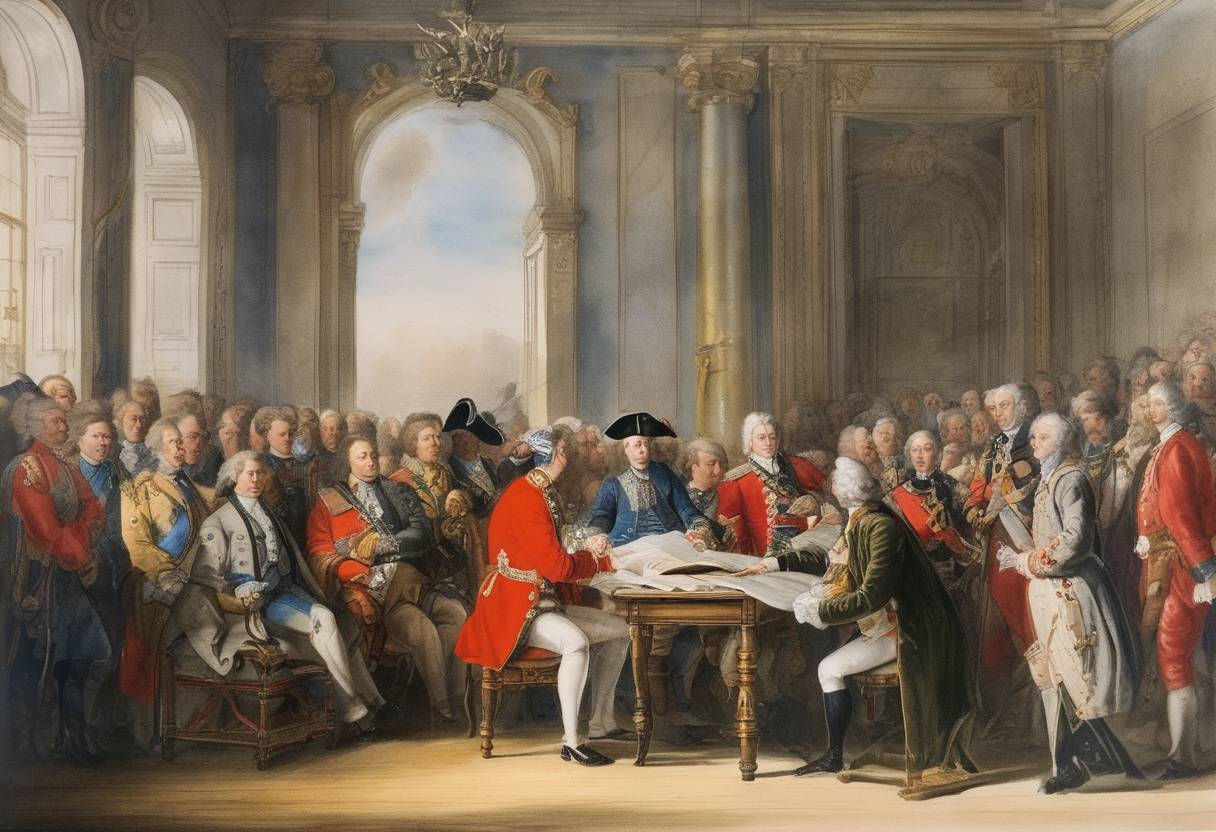
On January 21, 1720, the Treaty of Stockholm was signed between the Kingdom of Sweden and the Kingdom of Prussia, marking a pivotal moment in the Great Northern War (1700–1721). This treaty was part of a series of agreements that sought to conclude the prolonged conflict involving major powers of Northern and Eastern Europe.
The Great Northern War erupted in 1700 as a coalition of Russia, Denmark-Norway, and Saxony-Poland sought to challenge the supremacy of the Swedish Empire in Northern Europe. Over the course of the war, Sweden suffered significant territorial and strategic losses. King Charles XII of Sweden’s death in 1718 precipitated increased efforts for peace.
Territorial Adjustments: Sweden ceded parts of Pomerania, including Stettin, and the islands of Usedom and Wollin, along with several other territories, to Prussia. This transfer provided Prussia with strategic access to the Baltic Sea and facilitated its emergence as a major European power.
Financial Compensations: As part of the agreement, Prussia compensated Sweden financially, which was crucial for the economically strained Swedish state.
Armistice and Peace: The treaty effectively ended hostilities between the two nations, enabling both to focus on internal reconstruction and defense.
The Treaty of Stockholm was one component of the broader peace settlement that included the Treaty of Nystad between Sweden and Russia in 1721. These treaties collectively concluded the Great Northern War, marking the decline of Sweden as a dominant regional power and the rise of Russia and Prussia as key players in European politics.
The diplomatic reconfigurations following the treaty led to a significant realignment of power in Northern Europe. Prussia’s territorial gains under Frederick William I laid the groundwork for its future military and economic strength. Sweden, meanwhile, shifted its focus internally, undertaking reforms to stabilize and revitalize the country after decades of warfare.
Together, these changes set the stage for a new balance of power in Europe, influencing geopolitical dynamics for years to come. The treaty exemplifies the shifting nature of alliances and power structures in early modern European history.