Treaty of Accession - January 17, 1826
1826 · St. Petersburg, Russia
The Treaty of Accession is formally signed, with Russia joining the Greek War of Independence against the Ottoman Empire.
July 7, 1807
The Treaty of Tilsit is signed between Napoleonic France and Russia, establishing the two powers as allies and reorganizing numerous European territories.
Tilsit, Russia | Napoleonic France and Russian Empire
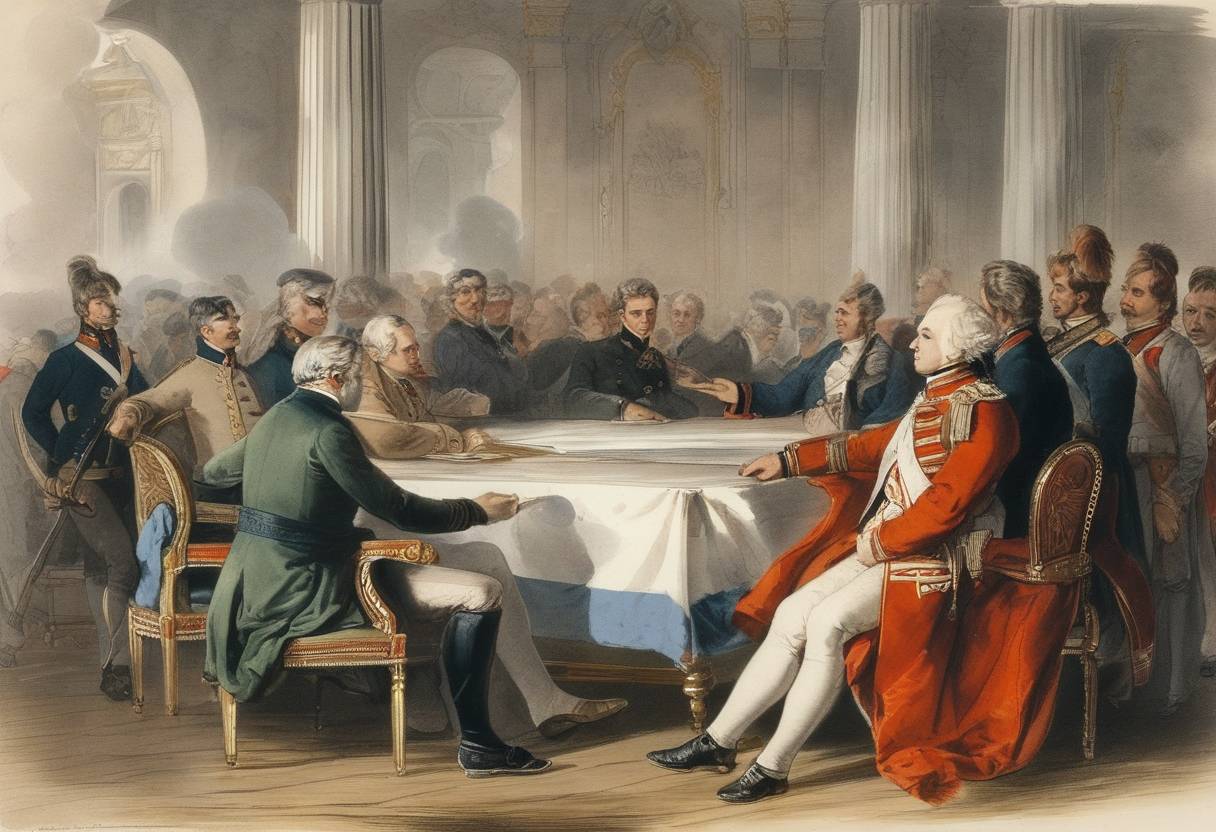
On July 7, 1807, the Treaty of Tilsit was signed between Napoleon Bonaparte’s French Empire and Alexander I’s Russian Empire. This agreement marked a pivotal shift in European geopolitics, setting the stage for the two nations to align their interests and redrawing the continent’s political landscape.
Leading up to the Treaty, Europe was embroiled in a series of conflicts known as the Napoleonic Wars. The French forces, under Napoleon, had secured victories in numerous battles, including the decisive Battle of Friedland against the Russians on June 14, 1807. This defeat prompted Tsar Alexander I to seek peace, facilitating negotiations with Napoleon.
Alliance Formation: The Treaty established an alliance between France and Russia, aiming to counterbalance the influence of the British Empire on the continent. Both nations agreed to support each other politically and militarily against common adversaries.
Territorial Reorganization:
The Treaty of Tilsit had far-reaching implications:
While the Treaty of Tilsit initially strengthened Napoleon’s position in Europe, the geopolitical restructuring and alliances formed ultimately proved unstable, foreshadowing his empire’s eventual decline.
Source: www.britannica.com