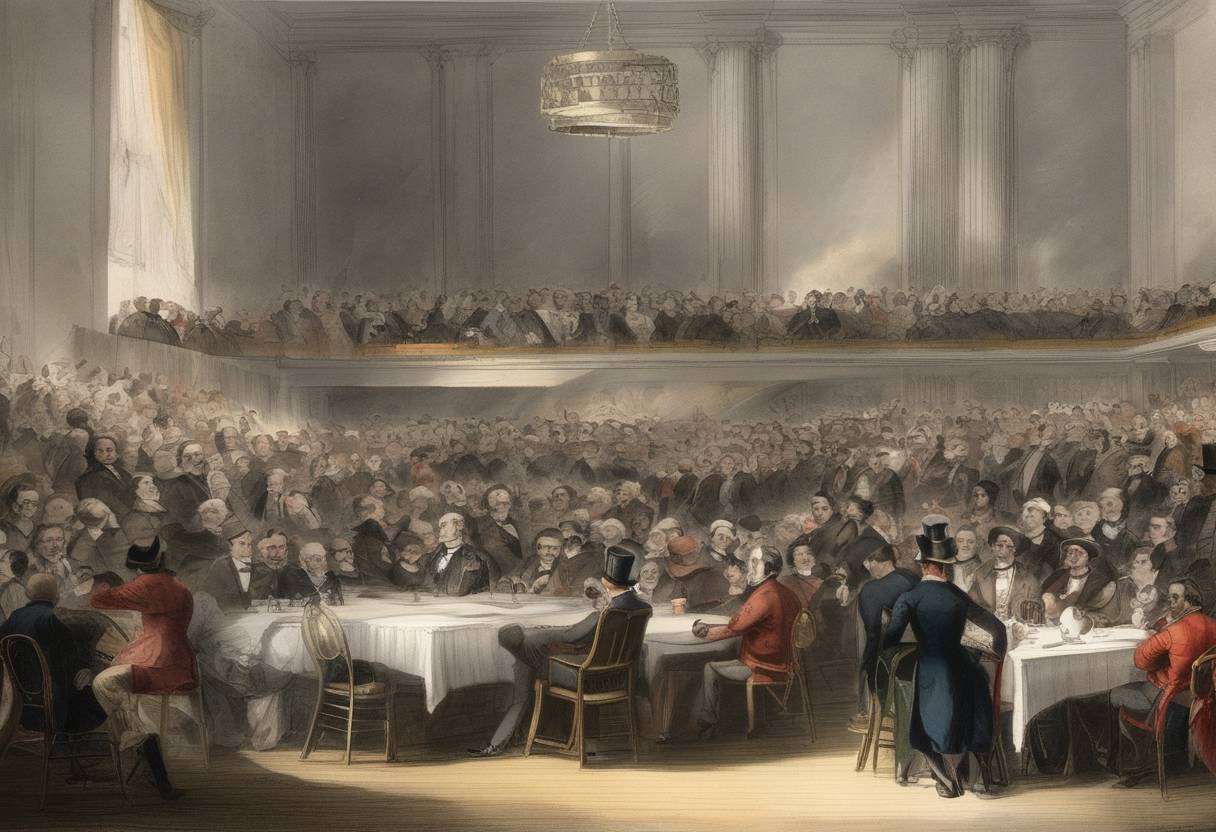
The Know Nothing Party’s First Public Convention
On February 23, 1854, the American Party, more commonly known as the “Know Nothing” movement, held its first public convention in New York City. This gathering was a significant moment in the political landscape of the United States during the mid-19th century. The convention marked the transition of the previously secretive nativist movement into the public political arena, signaling the rise of its influence.
Background
The Know Nothing movement emerged in response to the massive wave of immigration to the United States during the mid-1800s. Many native-born Americans felt threatened by the influx of immigrants, predominantly Irish and German Catholics. This led to the formation of a movement centered around nativism—a political ideology that favored the interests of native inhabitants against those of immigrants.
The movement was originally characterized by its secretive nature. Members often claimed to “know nothing” when questioned about their activities, a tactic that eventually lent the movement its popular name.
The Convention
The February 23, 1854, convention symbolized the Know Nothing movement’s formal entry into the political sphere. This public gathering in New York City was designed to rally support and provide a venue for organizing a coherent political strategy. The convention addressed key nativist concerns, including:
- Restricting Immigration: Proposals were made to enact stricter immigration laws to curb the tide of new arrivals.
- Limiting the Influence of the Catholic Church: The movement aimed to counter what they perceived as undue influence of the Catholic Church in American affairs.
- Reforming Naturalization Laws: The party advocated for extending the period required for immigrants to become naturalized citizens, thereby slowing their political integration and influence.
Broader Historical Context
The American Party capitalized on widespread public sentiment that was wary of the demographic changes sweeping the nation. The rise of the Know Nothing movement reflected broader anxieties about cultural and economic transformations, fears exacerbated by rapid urbanization and industrialization.
Aftermath and Significance
Although the Know Nothing Party experienced a brief period of success—electing several members to government positions and having influence in state politics—its influence waned by the end of the 1850s. The internal divisions over slavery ultimately fragmented the party, with many former members merging into the emerging Republican Party.
The Know Nothing movement underscores the recurring themes of nativism and anti-immigrant sentiment in American history, highlighting tensions that continue to reappear in various forms. Its first public convention remains a notable example of how economic, religious, and cultural anxieties can coalesce into significant political movements, echoing through subsequent eras of American politics.