The Stockton and Darlington Railway's First Chartered Train Service
1826 · Stockton-on-Tees, United Kingdom
The first recorded chartered train passenger service began in England, operated by the Stockton and Darlington Railway.
April 21, 1820
The first known railway timetable is published by the Stockton and Darlington Railway Company in England to outline the train service from Stockton to Darlington.
Stockton, England | Stockton and Darlington Railway Company
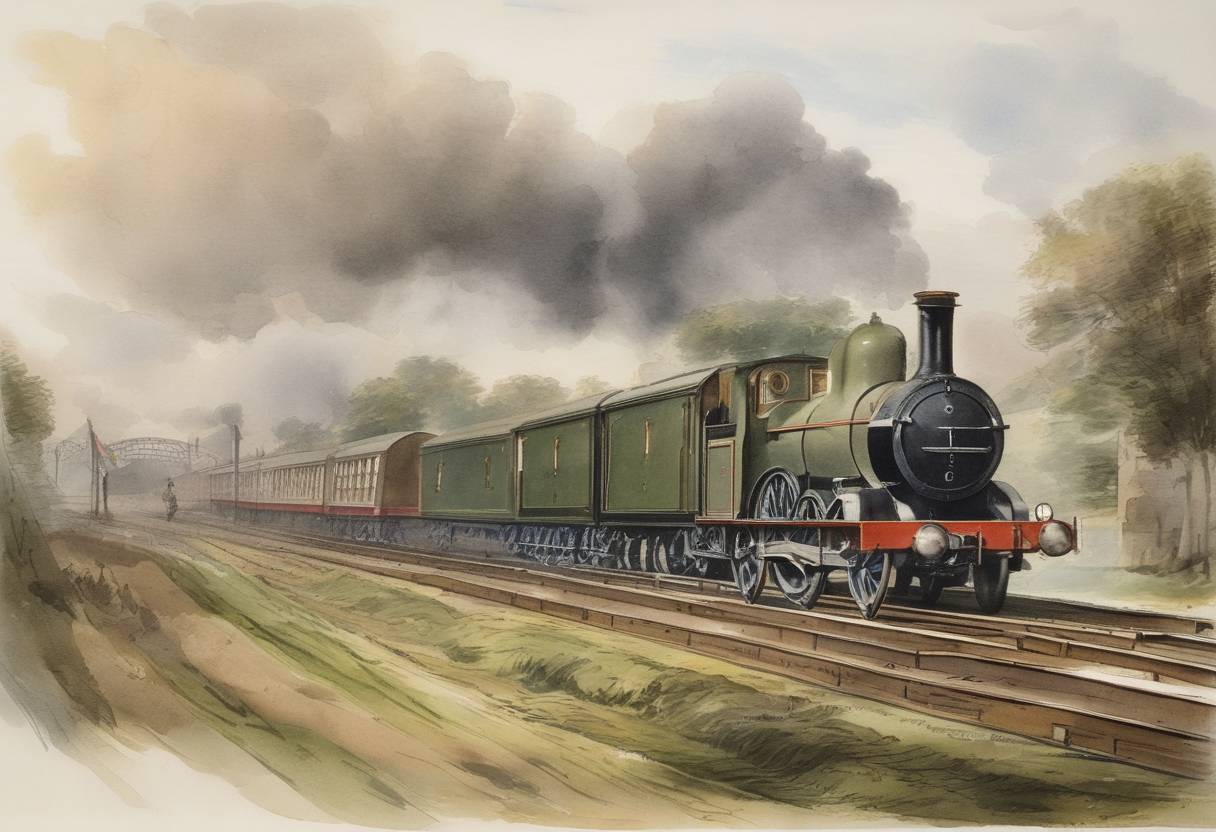
On April 21, 1820, the Stockton and Darlington Railway Company in England published what is believed to be the first known railway timetable. This historic document was issued to inform the public of the train service schedule from Stockton to Darlington and marked a significant milestone in the history of railway transport and public transportation systems.
Stockton and Darlington Railway: The Stockton and Darlington Railway (S&DR) was the world’s first public railway to use steam locomotives and opened on September 27, 1825. The railway was initially intended to transport coal from local mines to ports, significantly reducing costs and facilitating large-scale industrial activities in northern England.
Early Railway Developments: By the early 19th century, the burgeoning Industrial Revolution had sparked innovations in transportation. Railways were emerging as critical infrastructures that promised faster and more efficient movement of goods and passengers, influencing economic and social activities.
Operational Efficiency: The establishment of a regular train schedule improved the railway’s operational efficiency, allowing for systematic organization and better management of railway services, which was crucial for minimizing delays and maximizing resource utilization.
Public Accessibility: Publishing a timetable enhanced public access to railway services by providing a consistent schedule passengers could rely on, thus promoting railway travel as a practical transportation solution.
Impact on Future Transport: The concept of a timetable became a fundamental feature of railway operations worldwide, illustrating the necessity for coordination in public transportation and laying the groundwork for standardized railway systems.
Economic Implications: Introducing regular train schedules facilitated commerce and trade, encouraging economic growth by guaranteeing timely delivery of goods and services.
Social Transformations: Railways enabled increased mobility, influencing migration patterns, urbanization, and cultural exchanges across regions, ultimately contributing to the interconnectedness of communities.
The publication of the first known railway timetable by the Stockton and Darlington Railway Company was a critical innovation in the transportation sector, reflecting the evolving demands of industrial society and ushering in new possibilities for travel commerce and social interaction.
Source: www.nrm.org.uk