The Siege of Quebec Begins - December 9, 1775
1775 · Quebec City, Canada
American Revolutionary War: The Siege of Quebec begins, a joint colonial military campaign aiming to bring Quebec into the rebellious colonies' fold.
October 26, 1689
General William Phips led an expedition to capture Quebec from the French, but the effort was thwarted. This mission was part of King William's War, which saw colonial American and English forces attempt to seize territory from New France.
Quebec City, Canada | New England Colonial Militia
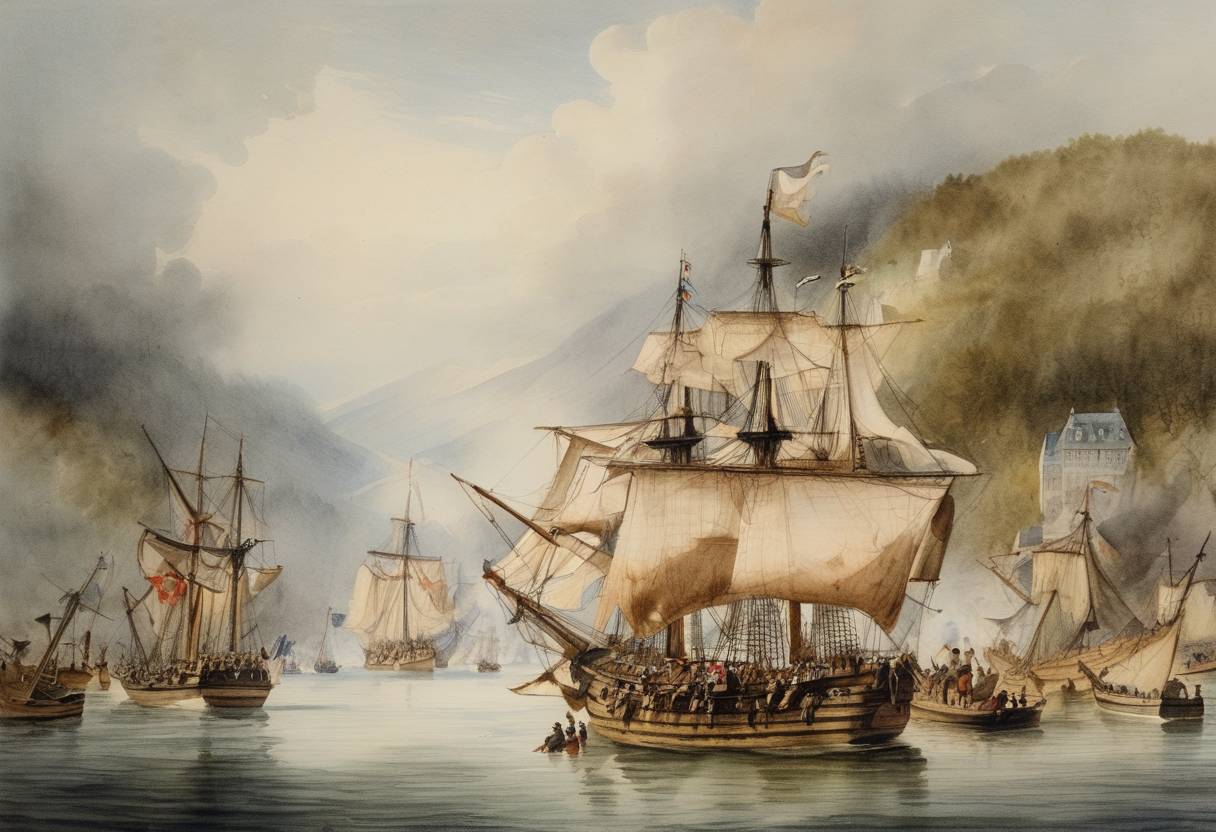
In the context of King William’s War, a pivotal struggle emblematic of the broader conflict between England and France for control of North American territories, October 26, 1689, marked a significant military endeavor. General William Phips, a prominent figure in colonial American military leadership and then the Governor of Massachusetts Bay Colony, spearheaded an ambitious expedition to capture Quebec, the heart of French Canada.
King William’s War (1688–1697) represented the North American theater of the Nine Years’ War, pitting English settlers in New England against French colonists in New France. The war was fueled by territorial disputes and control of the lucrative fur trade. New Englanders perceived the capture of Quebec as a strategic opportunity to eliminate French power in the region.
Under the command of General Phips, an expedition was organized with the support of the Massachusetts Bay Colony and other New England settlers. In April 1690, Phips had successfully taken the French port of Port Royal in Acadia (modern-day Nova Scotia), which emboldened the English authorities to attempt a more ambitious campaign against Quebec.
With an assembly of ships and men, Phips set sail from Boston in September 1690. The main aim was to launch a surprise attack on Quebec before the onset of winter. However, logistical challenges, including inadequate navigation knowledge and supplies, hampered the expedition from the outset.
Arriving at Quebec on October 16, 1690, Phips sent envoys to demand the surrender of the city. The French governor, Count Frontenac, memorably rebuffed the demand. The siege was further marred by poor preparation and the onset of severe weather. The English forces faced strong defensive preparations by the French and were unable to effectively coordinate their assaults. By October 26, 1689, it became apparent that the campaign would not succeed, and Phips was forced to order a retreat.
The failed attempt to capture Quebec marked a significant setback for English colonial aspirations in the North. It highlighted the challenges of coordinating transatlantic military operations and the resolute defense by French forces under Count Frontenac. Despite the failure, the expedition underscored the intense colonial rivalry that would eventually culminate in the French and Indian War of the mid-18th century.
Phips returned to Boston with substantial losses and minimal success, which temporarily diminished his standing though he continued to play an influential role in the colony. The campaign became a learning lesson for both sides, providing strategic insights into future engagements in North America’s colonial struggles.
Source: www.britannica.com