Joko Widodo's Inauguration as President of Indonesia
2014 · Jakarta, Indonesia
Joko Widodo was inaugurated as the President of Indonesia, becoming the first Indonesian president not to come from the country's political elite or military background.
May 25, 2019
Indonesian President Joko Widodo is re-elected for a second term after prevailing in the presidential election.
Jakarta, Indonesia | Government of Indonesia
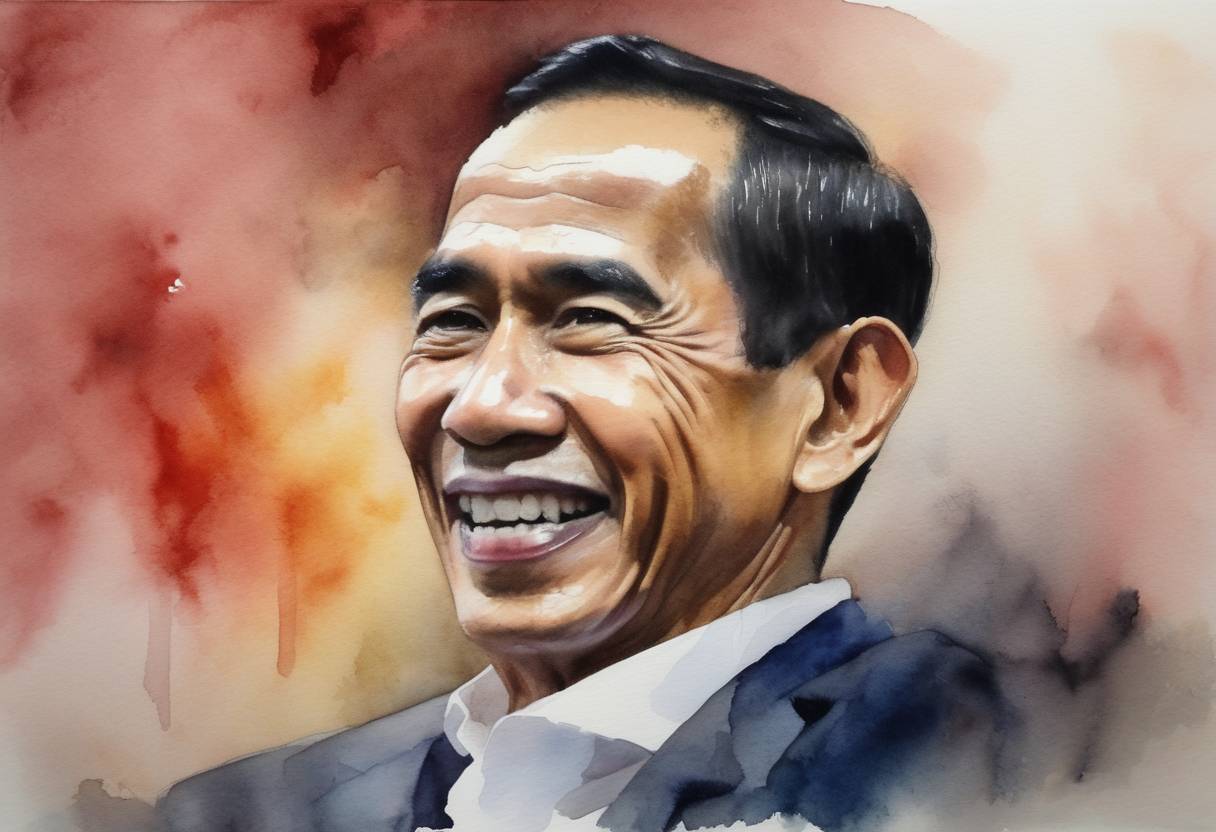
On May 25, 2019, Joko Widodo, commonly known as Jokowi, was formally declared the winner of the Indonesian presidential election, securing a second term in office. The official declaration followed the validation of the Electoral Commission’s results, which had released the election outcome on May 21, asserting Jokowi’s victory.
Jokowi, who first assumed the presidency in 2014, ran for re-election alongside his vice-presidential candidate, Ma’ruf Amin, a prominent Muslim cleric and former chairman of the Indonesian Ulema Council. Their ticket was positioned against the opposition pairing of Prabowo Subianto and Sandiaga Uno. This was the second time Jokowi faced Prabowo, having also competed against him in the 2014 election.
The General Elections Commission (KPU) of Indonesia reported that Jokowi and Ma’ruf Amin secured approximately 55.5% of the votes, translating to over 85 million votes, against Prabowo Subianto and Sandiaga Uno, who garnered around 44.5%, equivalent to about 68 million votes. The election saw a high voter turnout, reflecting strong public engagement in the democratic process.
The 2019 election was characterized by its relatively peaceful conduct, though it was not entirely devoid of tension. Following the announcement of the results, protests ensued in Jakarta, leading to clashes. However, Jokowi’s victory marked the continuation of his administration’s focus on infrastructure development, economic reform, and promoting national unity amid Indonesia’s diverse population.
Jokowi’s leadership in his second term was anticipated to tackle various challenges including strengthening the nation’s economy, addressing human rights concerns, and enhancing the social welfare system. His re-election underscored the public’s trust in his leadership and the desire for stability and continuity in Indonesia’s political landscape.
Source: en.wikipedia.org