George W. Bush's Re-election: November 2, 2004
2004 · Washington D.C., United States
George W. Bush was re-elected as President of the United States, defeating Democratic candidate John Kerry in the presidential election.
November 6, 1956
Dwight D. Eisenhower is re-elected President of the United States, defeating Adlai Stevenson.
Washington D.C., United States | Eisenhower Campaign
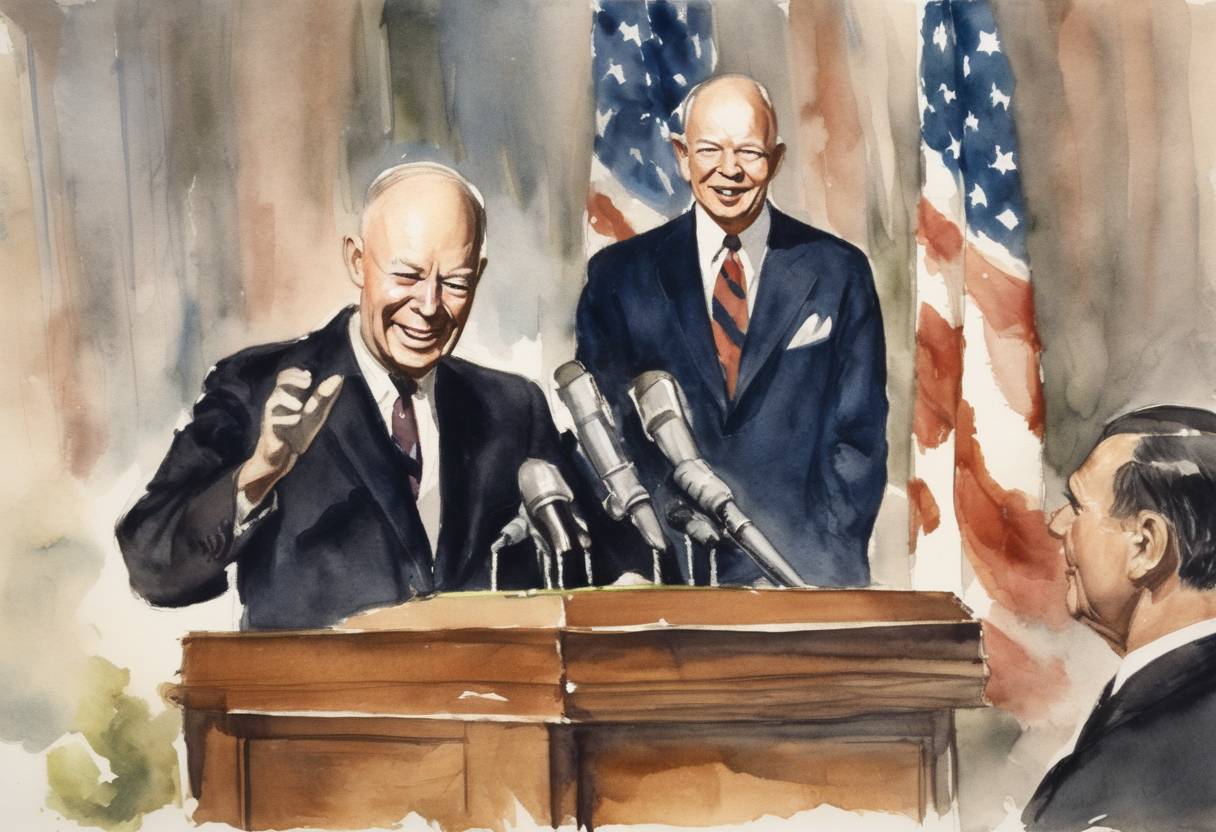
On November 6, 1956, Dwight D. Eisenhower was re-elected as the President of the United States, defeating Democratic candidate Adlai Stevenson in a decisive victory. This election marked Eisenhower’s second term in office, sustaining his popularity following a first term that had largely focused on issues such as ending the Korean War, navigating Cold War tensions, and fostering domestic prosperity.
Dwight D. Eisenhower had previously served as the Supreme Commander of the Allied Expeditionary Force in Europe during World War II, which greatly boosted his public image. His tenure as President was characterized by moderate conservatism and pragmatic governance.
Adlai Stevenson, the former governor of Illinois, was again the Democratic challenger, having lost to Eisenhower in the 1952 election. Stevenson was known for his eloquence and intellectual approach to politics but struggled to connect with mainstream voters against Eisenhower’s more direct and relatable style.
Eisenhower’s campaign focused on continuing the economic growth and stability observed during his first term. Themes of peace, prosperity, and security resonated strongly with the electorate, especially given the ongoing Cold War.
Stevenson advocated for disarmament and increased social programs but faced challenges convincing voters to shift away from the incumbent. Eisenhower’s reputation as a war hero and his role in maintaining peace during the tense international climate favored him heavily.
Eisenhower’s re-election further entrenched the Republican Party’s hold on the presidency during a pivotal period in American history. His second term continued to shape U.S. policies domestically and internationally, seeking to balance strong anti-communism sentiments with peace and economic growth.
This election reaffirmed Eisenhower’s appeal to both parties as a leader able to bridge divides, contributing to his legacy as a pivotal figure in mid-20th-century American politics. His presidency would later be remembered for infrastructure developments, such as the creation of the Interstate Highway System, and for influencing U.S. foreign policy during the Cold War.
Eisenhower’s re-election demonstrated the American electorate’s preference for stability and seasoned leadership amid the uncertainties of the Cold War era.
Source: en.wikipedia.org