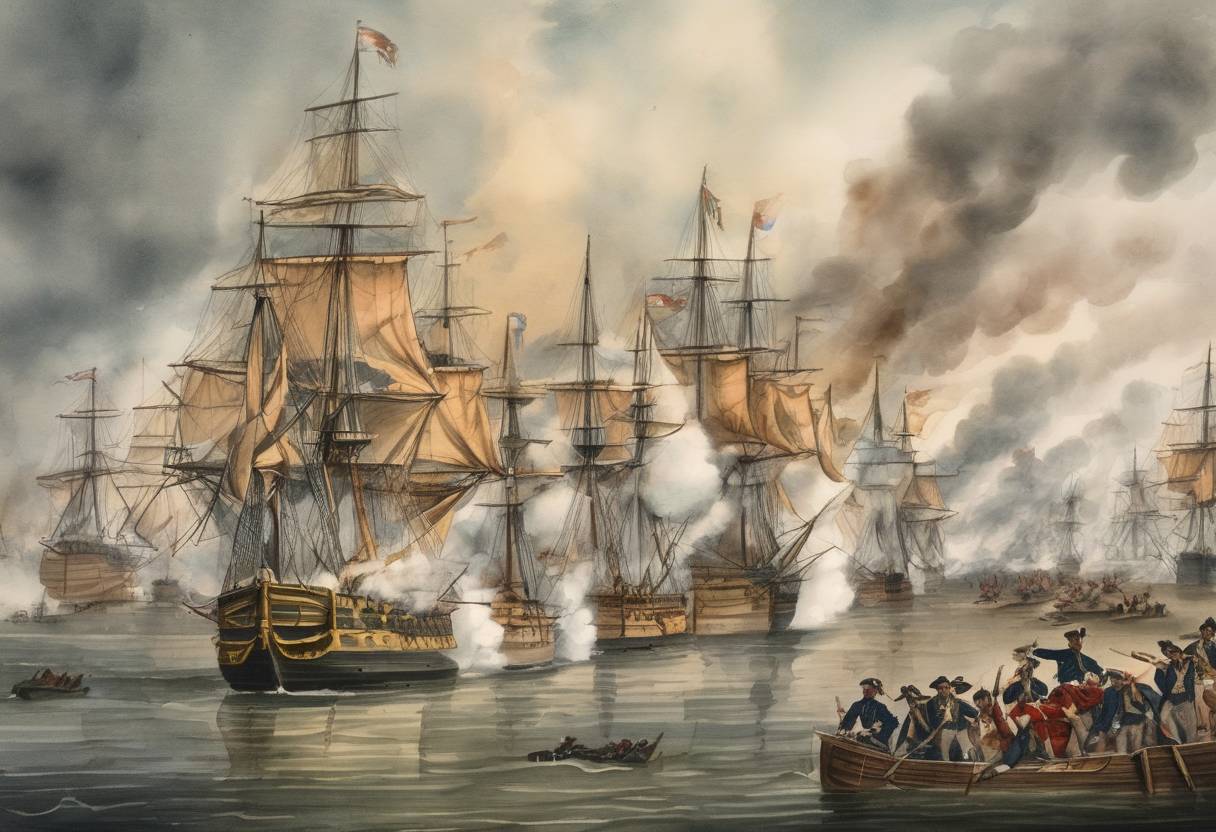
The Battle of Savannah: October 9, 1779
The Battle of Savannah, fought on October 9, 1779, was a significant engagement during the American Revolutionary War. This battle was part of the Southern Campaign and resulted in a decisive victory for the British forces.
Context and Background
- Southern Strategy: By 1778, the British had shifted their focus to the Southern colonies, hoping to rally Loyalist support and regain control. Savannah, Georgia, was captured by the British in December 1778, establishing a strategic foothold in the South.
- Allied Forces: In 1779, the American Continental Army, led by General Benjamin Lincoln, sought to recapture Savannah with the assistance of French forces under the command of Admiral Charles Hector, comte d’Estaing. This Franco-American alliance aimed to weaken British control in the South.
The Battle
- Siege of Savannah: The battle was preceded by a siege that began in September 1779. The Franco-American forces laid siege to the city, hoping to force a British surrender.
- Assault on October 9: On the morning of October 9, the allied forces launched a direct assault on the British defenses. The attack was intended to be a surprise but was hampered by delays and miscommunication.
- British Defense: The British, commanded by General Augustine Prevost, were well-prepared and fortified. They successfully repelled the assault, inflicting heavy casualties on the attacking forces.
Aftermath and Consequences
- Casualties: The Franco-American forces suffered significant losses, with estimates of around 800 casualties, including the death of Polish nobleman and military leader Casimir Pulaski. British casualties were considerably lower.
- Strategic Impact: The failure to recapture Savannah was a major setback for the American and French forces. It solidified British control over Georgia and delayed American efforts to regain momentum in the Southern theater.
- Long-term Effects: Despite the defeat, the alliance between the French and Americans remained strong, and the Southern Campaign continued. The eventual American victory at Yorktown in 1781 would mark a turning point in the war.
Historical Significance
The Battle of Savannah highlighted the challenges faced by the Continental Army and its allies in the Southern colonies. It underscored the importance of coordination and communication in military operations and demonstrated the resilience of British defenses. The battle also reinforced the strategic importance of the Southern colonies in the broader context of the Revolutionary War.