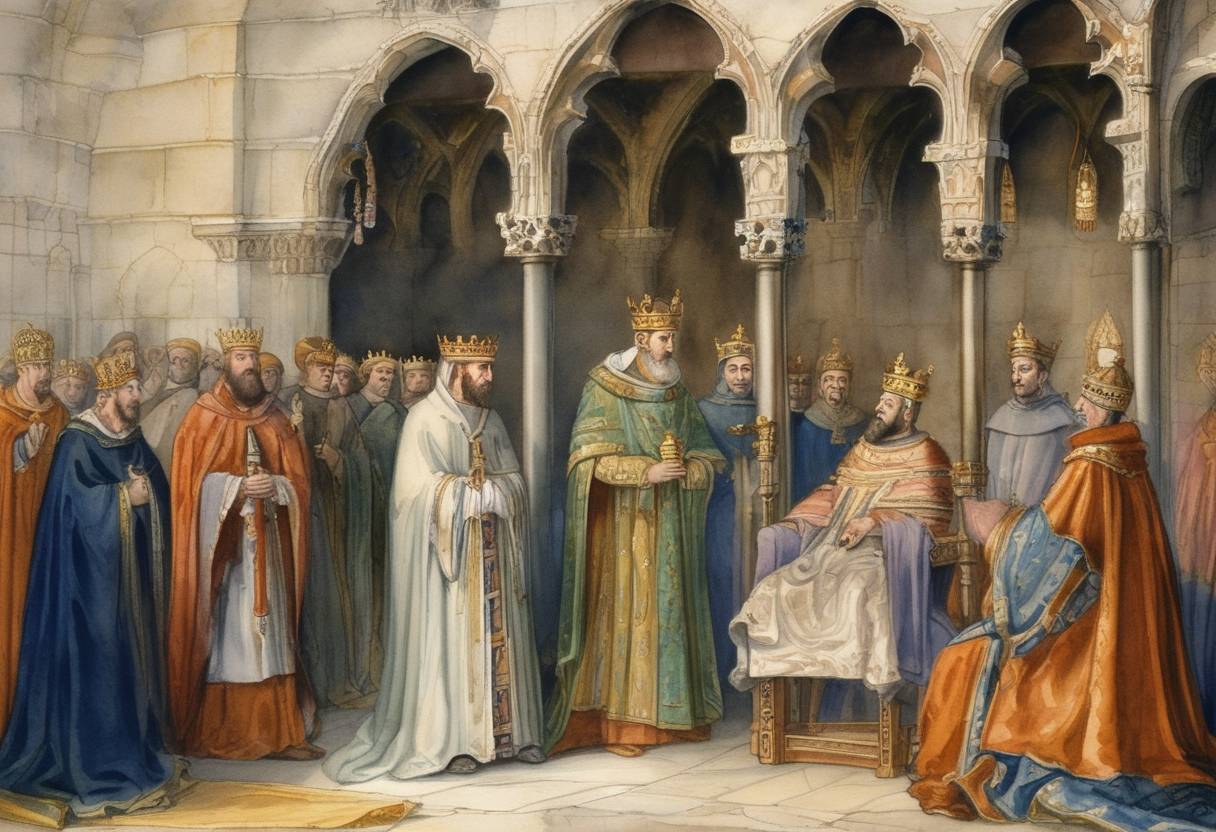
Henry II of England Ordered by Pope Alexander III
Context
On December 29, 1170, Thomas Becket, the Archbishop of Canterbury, was murdered in Canterbury Cathedral by knights loyal to King Henry II of England. This event was a pivotal moment in the conflict between the monarchy and the church over the boundaries of secular and ecclesiastical authority. The murder of Becket sparked outrage across Christendom, leading to severe repercussions for King Henry II.
The Papal Order
On January 29, 1172, in response to the murder, Pope Alexander III imposed penance upon King Henry II. As part of this penance, the Pope demanded that Henry build a monastery in Ireland. This directive was part of a broader effort to show the King’s submission to church authority and to atone for the murder that had deeply scandalized Christendom.
Historical Aftermath
Monastery Construction: The establishment of a monastery was intended as an act of contrition and a means to restore Henry’s and England’s standing with the church. This particular directive is part of the pledges that resulted from negotiations with papal envoys, aiming to resolve tensions between the English crown and the papacy.
Long-term Effects: Henry’s actions following the murder of Becket helped shape the subsequent relationship between the English monarchy and the church. The murder and its fallout highlighted the limitations of monarchical power when challenged by ecclesiastical authority, setting a precedent for future interactions between church and state in medieval Europe.
Legacy of Becket’s Martyrdom: Thomas Becket was canonized in 1173, a mere three years after his death, further amplifying the significance of his martyrdom. His shrine at Canterbury became a major pilgrimage site, symbolizing resistance to secular encroachment on church jurisdiction.
Broader Implications
The order to build the monastery in Ireland and the subsequent actions by Henry II illustrate the powerful influence exerted by the papacy during this period. It underscores the Pope’s authority in demanding penance and reflects the intricate linkages between political power and religious influence in medieval Europe. The event serves as a historical example of the intertwined disputes over jurisdiction and the balance of power between church and state, topics of enduring relevance throughout European history.