1836 · San Antonio, Republic of Texas
The Battle of the Alamo Mission in San Antonio began on October 25, 1836, marking the start of this pivotal conflict in Texas' fight for independence from Mexico.
November 2, 1835
The Texas Revolution sees the Battle of Lipantitlán, resulting in a Texian victory. This battle helps the Texians maintain control of the Nueces Strip, disrupting Mexican troop movements in the region.
Lipantitlán, Mexico | Texian Army
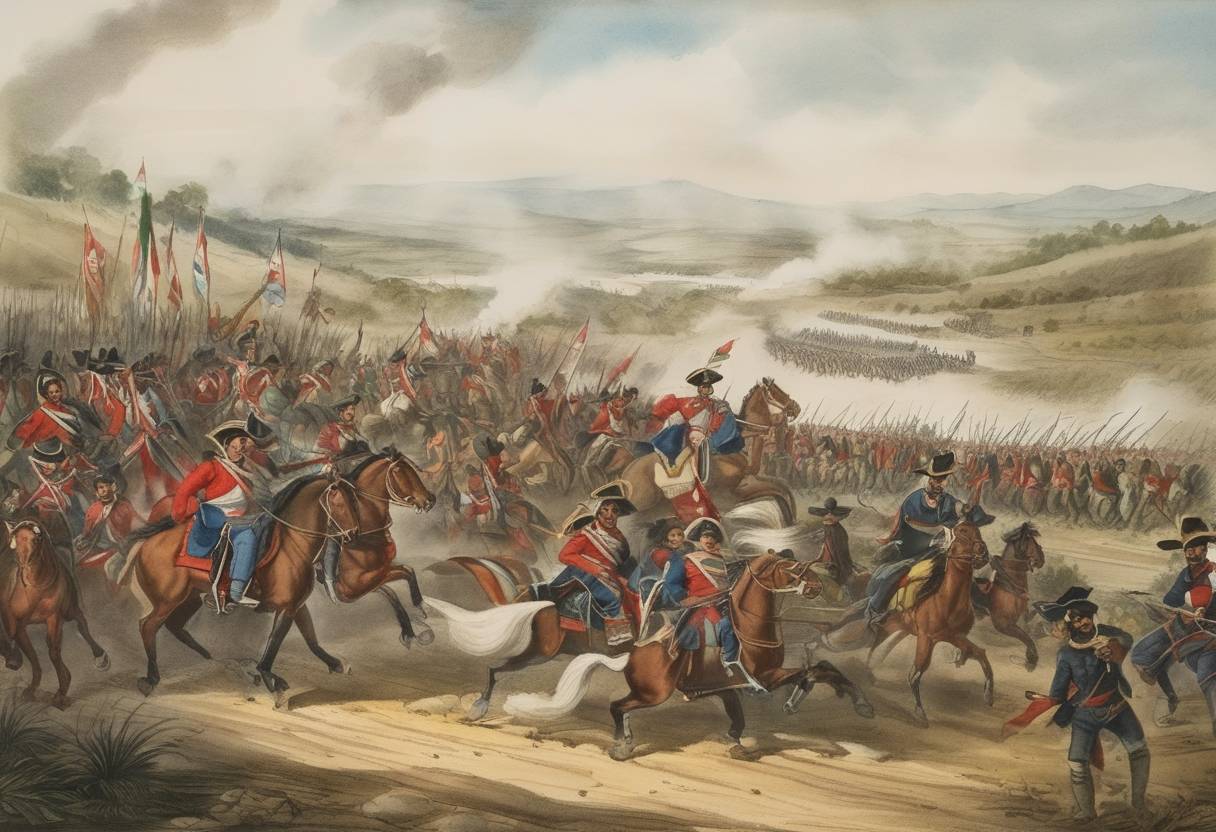
The Battle of Lipantitlán occurred on November 4, 1835, during the Texas Revolution, where Texian forces faced off against Mexican troops. The engagement was a key encounter in the broader struggle for Texian independence and took place near the Nueces River in what is now known as South Texas.
The Texas Revolution was characterized by a series of clashes between Texian settlers and the Mexican government, which sought to reassert control over its northern province, Tejas. Tensions had simmered due to cultural differences, political autonomy, and immigration policies imposed by Mexico on American settlers.
On November 4, 1835, Captain Ira Westover commanded a contingent of approximately 39 Texians to attack the Mexican garrison at Fort Lipantitlán. The battle commenced with the Texians launching a surprise assault on the fortifications.
The Battle of Lipantitlán was a microcosm of the Texian struggle for independence, highlighting the strategic importance of controlling key geographical locations. It demonstrated the Texians’ resolve and capability to challenge a better-equipped Mexican army, contributing to the eventual outcome of the Texas Revolution and the establishment of the Republic of Texas.
Source: www.tshaonline.org