New Jersey Ratifies the United States Constitution
1787 · Trenton, United States
New Jersey becomes the third state to ratify the United States Constitution.
November 21, 1789
North Carolina ratifies the United States Constitution and is admitted as the 12th U.S. state.
Raleigh, USA | United States
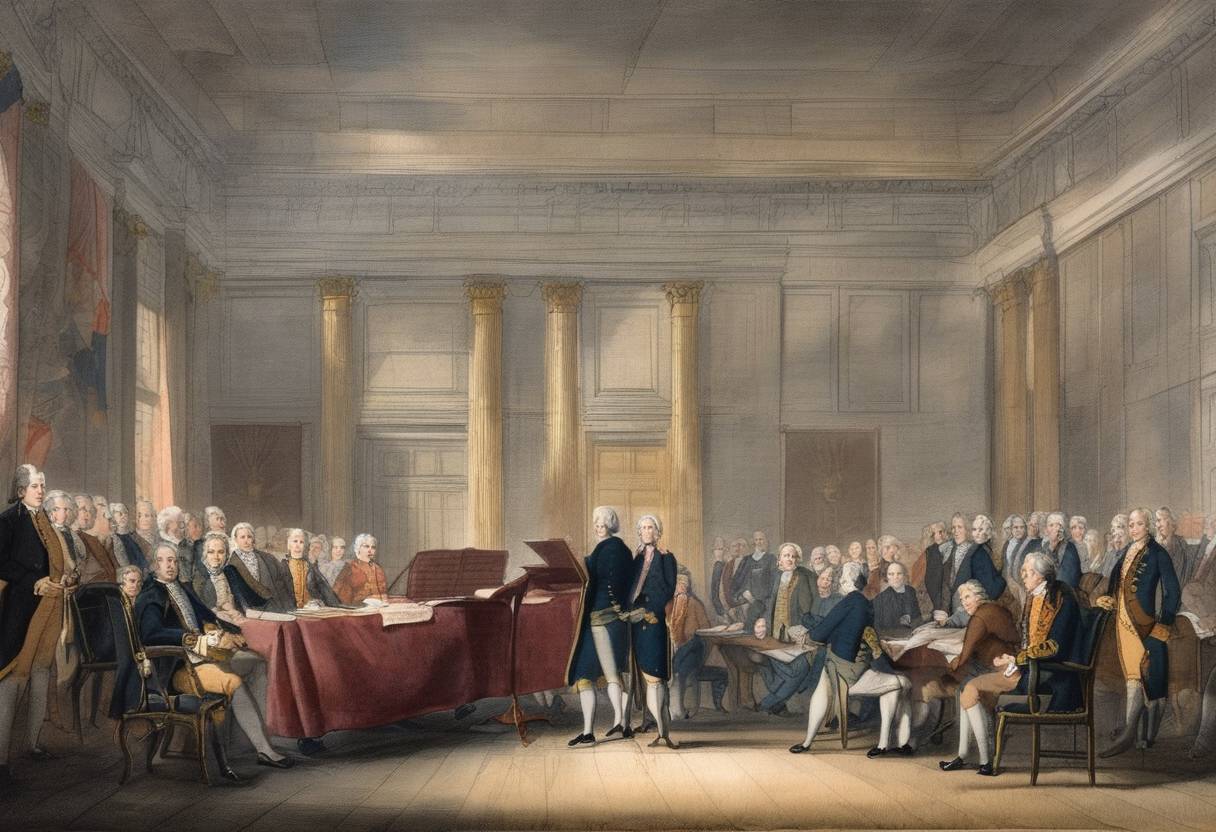
On November 21, 1789, North Carolina became the twelfth state to ratify the United States Constitution and was thereby admitted to the Union. This significant event marked North Carolina’s transition from independent statehood under the Articles of Confederation to being part of the newly structured federal government.
Following the American Revolution, the thirteen original colonies operated under the Articles of Confederation. However, the Articles proved ineffective in providing a robust federal framework. In response, the Constitutional Convention convened in Philadelphia in 1787, drafting the Constitution of the United States, which proposed a stronger federal government.
Initially, North Carolina was hesitant to ratify the Constitution. During the Hillsborough Convention in July 1788, delegates expressed concerns about the lack of explicit protections for individual liberties. Without a Bill of Rights, the convention chose not to ratify the document. Instead, they issued a declaration of rights and proposed multiple amendments.
The absence of North Carolina and Rhode Island placed pressure on both states to join the Union as other states began operating under the new Constitution. The first United States Congress’ decision to draft the Bill of Rights addressed many of North Carolina’s concerns. These proposed amendments helped shift the opinion in favor of ratification.
On November 21, 1789, delegates met again and voted to ratify the Constitution in a decisive move, with a vote of 194 to 77 at the Fayetteville Convention. Their decision not only signified acceptance of the corrected Constitution but also assured their representation in the federal government.
North Carolina’s ratification allowed the state to participate in electing representatives to the United States Congress and in the process of defining the nation’s early legislative framework. The state’s admission reinforced the viability of the U.S. Constitution and demonstrated the ability of the young nation to address internal disagreements through compromise.
North Carolina’s initial reluctance and eventual acceptance underscored the importance of the Bill of Rights in securing civil liberties, an essential element of American democracy. This event highlighted the critical negotiations and guarantees needed to unify the original states under a single Constitution, a foundation that has endured and evolved over more than two centuries.
Source: en.wikipedia.org