The First Allied Troops Enter Nazi Germany: September 11, 1944
1944 · Aachen, Germany
The first Allied troops entered Nazi Germany near Aachen during World War II as part of the Western Allied Invasion of Germany.
February 13, 1945
The bombing of Dresden by Allied forces began during World War II, resulting in a devastating firestorm.
Dresden, Germany | Allied Forces
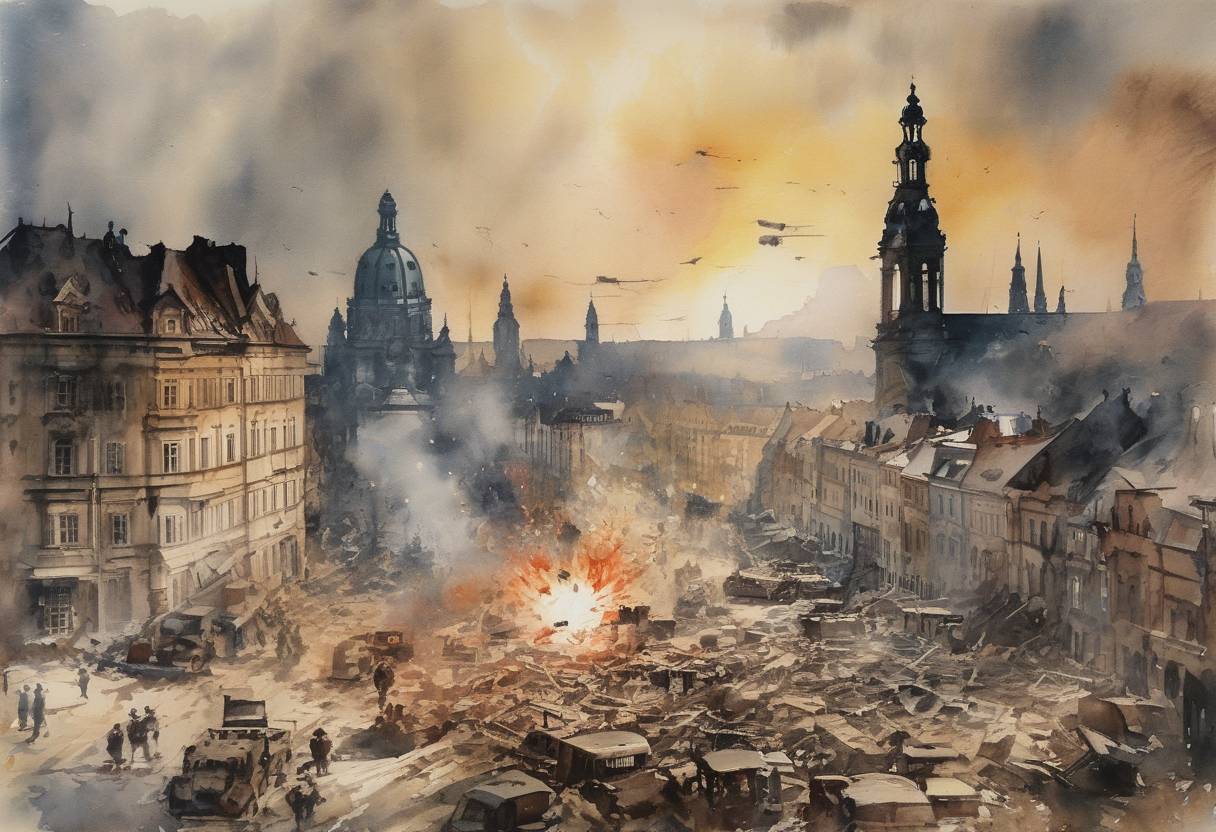
On February 13, 1945, during the final months of World War II, Allied forces commenced a series of air raids on the German city of Dresden. This operation, carried out by the British Royal Air Force (RAF) and the United States Army Air Forces (USAAF), resulted in one of the most controversial and devastating bombing campaigns of the war.
Dresden, known for its architectural beauty and cultural significance, was often referred to as the “Florence on the Elbe.” By 1945, it had become a hub for refugees fleeing the advancing Soviet forces from the east. Despite its cultural status, Dresden was also a significant transportation and communication center for the German war effort.
The decision to bomb Dresden was part of a broader Allied strategy to weaken German morale and disrupt military logistics. The city had largely been spared from previous bombings, making it a prime target for a concentrated attack.
The bombing began on the night of February 13 and continued into the following day. The operation was executed in two main waves:
First Wave (February 13-14, 1945): The initial attack was carried out by the RAF, which dropped approximately 2,700 tons of explosives and incendiary devices. The combination of high-explosive bombs and incendiaries created a firestorm, a phenomenon where intense heat generates its own wind system, engulfing large areas in flames.
Second Wave (February 14-15, 1945): The USAAF followed with daylight raids, targeting the remaining infrastructure and any surviving industrial facilities.
The bombing of Dresden resulted in widespread destruction:
Casualties: Estimates of civilian casualties vary widely, with figures ranging from 25,000 to 35,000 deaths. The exact number remains uncertain due to the influx of refugees and the chaotic conditions following the attack.
Destruction: The firestorm obliterated much of the city center, including many historic buildings and cultural landmarks. The destruction of Dresden became emblematic of the war’s devastation on civilian populations.
Controversy: The bombing of Dresden has been the subject of intense debate. Critics argue that the attack was disproportionate and unnecessary, given the proximity to the end of the war and the city’s limited military significance. Supporters contend that it was a legitimate military target due to its role in the German war effort.
The bombing of Dresden remains a poignant reminder of the horrors of war and the ethical dilemmas faced in wartime decision-making. It has sparked ongoing discussions about the morality of strategic bombing and the impact of war on civilian populations. The event is often cited in debates about the rules of engagement and the protection of cultural heritage during conflicts.
In the broader context of World War II, the bombing of Dresden exemplifies the total war strategy employed by the Allies, aiming to hasten the end of the conflict by crippling Germany’s capacity to continue fighting.
Source: en.wikipedia.org