The Battle of Thermopylae: Conclusion on August 11, 480 BCE
480 · Thermopylae, Greece
The Battle of Thermopylae concludes with a Persian victory over the Greek city-states, led by King Leonidas of Sparta.
July 6, 0371
The Battle of Leuctra took place, where the Theban army, led by Epaminondas, defeated the Spartans, marking a significant shift in Greek power dynamics.
Leuctra, Greece | Theban army
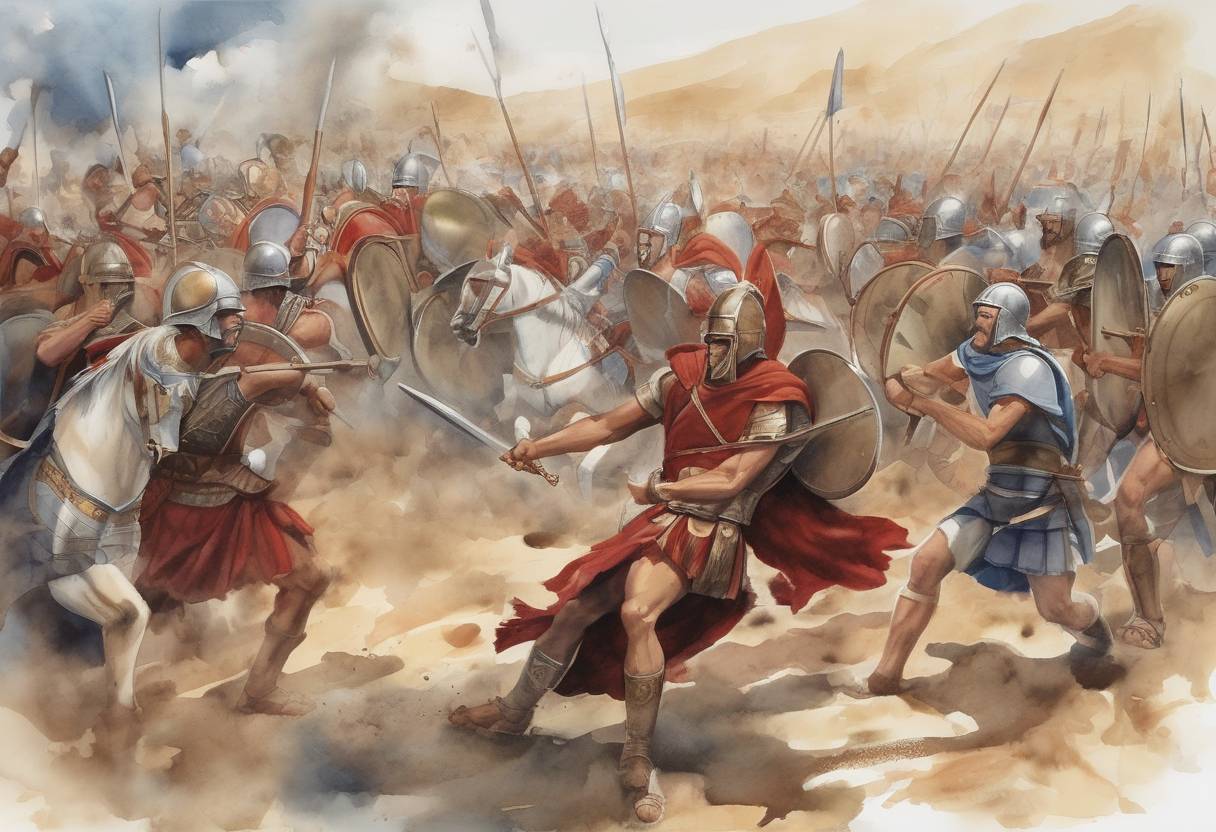
The Battle of Leuctra, fought on July 6, 371 BCE, was a pivotal conflict in ancient Greek history. It marked a significant shift in the power dynamics of Greece, as the Theban army, under the leadership of Epaminondas, achieved a decisive victory over the Spartans. This battle not only altered the balance of power among the Greek city-states but also showcased innovative military tactics that would influence warfare for generations.
The backdrop to the Battle of Leuctra was a period of intense rivalry and shifting alliances among the Greek city-states. Sparta, known for its military prowess, had long dominated the Greek world, particularly after its victory in the Peloponnesian War (431-404 BCE) against Athens. However, Spartan hegemony was increasingly challenged by other city-states, notably Thebes.
Thebes had been growing in power and influence, partly due to its leadership within the Boeotian League, a coalition of city-states in central Greece. Tensions between Thebes and Sparta escalated when Thebes sought greater autonomy and influence, leading to a series of confrontations.
The Battle of Leuctra took place near the village of Leuctra in Boeotia. The Theban army, led by the brilliant general Epaminondas, faced a numerically superior Spartan force. Epaminondas employed innovative tactics that would become legendary in military history.
Oblique Phalanx Formation: Epaminondas arranged his troops in an oblique line, concentrating his forces on the left wing. This formation allowed the Thebans to apply maximum pressure on the Spartan right wing, which was traditionally the strongest part of their army.
Deep Phalanx: The Theban left wing was composed of an unusually deep phalanx, with ranks up to 50 men deep, compared to the typical 8-12 ranks. This concentration of force was aimed directly at the Spartan elite, including their king, Cleombrotus I.
Use of Cavalry: The Theban cavalry played a crucial role in disrupting the Spartan lines, providing support to the infantry and exploiting weaknesses in the Spartan formation.
The combination of these tactics led to a crushing defeat for the Spartans. The Spartan king Cleombrotus I was killed, and the Spartan army suffered heavy casualties.
The victory at Leuctra had profound consequences for the Greek world:
Decline of Spartan Power: The defeat shattered the myth of Spartan invincibility and marked the beginning of the decline of Spartan dominance in Greece.
Rise of Thebes: Thebes emerged as a major power, and under the leadership of Epaminondas, it would continue to challenge Spartan authority and influence throughout Greece.
Military Innovation: The tactics employed by Epaminondas at Leuctra were studied and admired by future military leaders, including Philip II of Macedon and his son Alexander the Great.
Political Repercussions: The battle led to a reconfiguration of alliances and power structures within Greece, setting the stage for further conflicts and the eventual rise of Macedon.
In summary, the Battle of Leuctra was a watershed moment in Greek history, demonstrating the impact of strategic innovation and altering the course of Greek political and military affairs.
Source: en.wikipedia.org