Apollo 11: Launch of the First Manned Moon Landing Mission
1969 · Cape Canaveral, United States
Apollo 11, the first manned mission to land on the Moon, is launched from Kennedy Space Center.
May 25, 1961
U.S. President John F. Kennedy announces the goal of sending an American to the Moon before the end of the decade in a speech to Congress.
Washington, D.C., United States | United States Congress
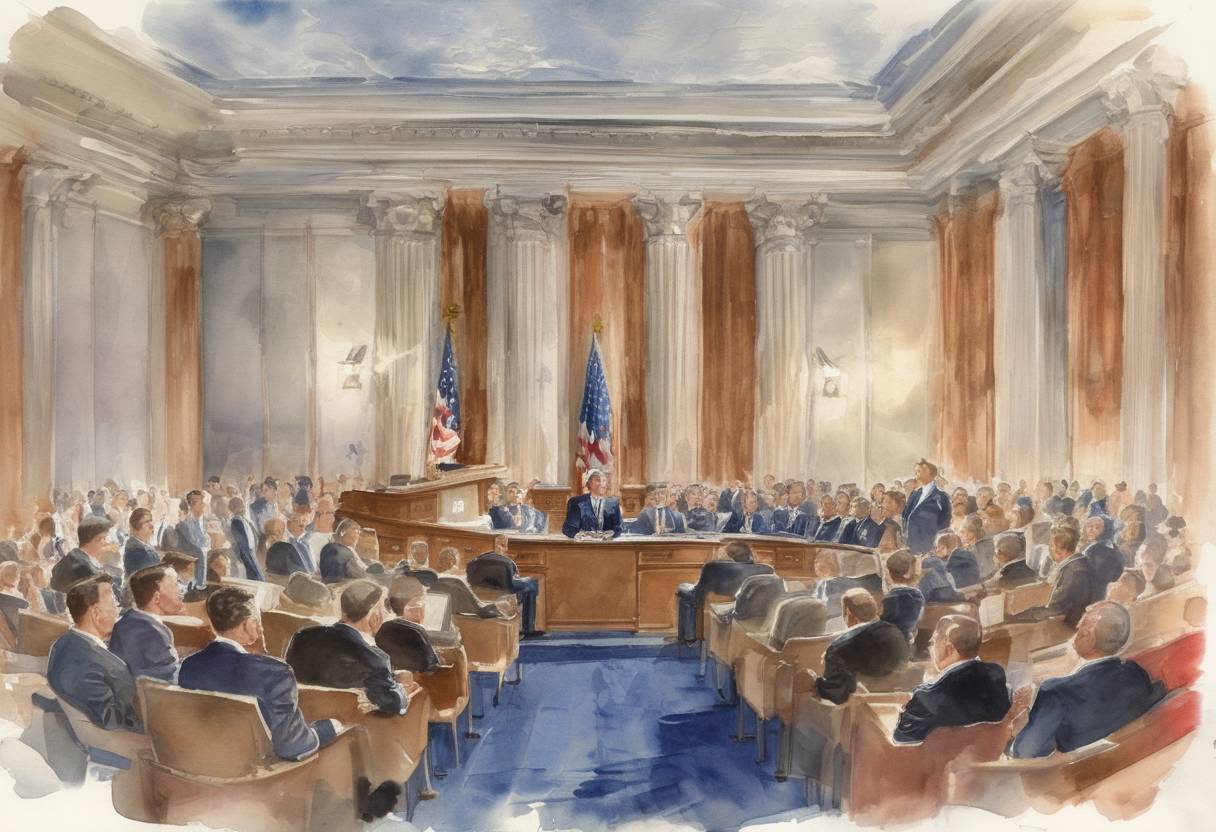
On May 25, 1961, U.S. President John F. Kennedy delivered a historic speech to a joint session of Congress, setting a bold vision for the United States’ space exploration efforts. This address marked a pivotal moment in the Space Race, as Kennedy announced the ambitious goal of sending an American astronaut to the Moon and returning them safely to Earth before the end of the decade.
Cold War Tensions: The early 1960s were marked by intense rivalry between the United States and the Soviet Union, particularly in technological and military advancements. The Soviet Union had taken an early lead in the Space Race with the successful launch of Sputnik in 1957 and the first human, Yuri Gagarin, into space in April 1961.
U.S. Space Program: At the time of Kennedy’s speech, the U.S. space program was still in its nascent stages. NASA, established in 1958, had achieved some early successes, but the Soviet achievements had created a sense of urgency and competition.
National Priority: Kennedy emphasized that space exploration was a matter of national importance, not just for scientific advancement but also for national security and prestige. He framed the Moon mission as a critical component of the broader struggle between freedom and tyranny.
Commitment to the Goal: Kennedy famously stated, “I believe that this nation should commit itself to achieving the goal, before this decade is out, of landing a man on the Moon and returning him safely to the Earth.” This declaration set a clear and ambitious target for NASA and the nation.
Economic and Technological Investment: The President acknowledged the significant financial and technological investments required to achieve this goal. He called for increased funding for NASA and the development of new technologies necessary for space exploration.
Apollo Program: Kennedy’s speech galvanized the Apollo program, which became the centerpiece of NASA’s efforts to reach the Moon. The program saw rapid advancements in technology and engineering, culminating in the successful Apollo 11 mission in July 1969, when Neil Armstrong and Buzz Aldrin became the first humans to walk on the Moon.
Legacy: Kennedy’s vision and leadership are often credited with inspiring a generation of scientists, engineers, and the public to support space exploration. The successful Moon landing was a significant achievement in human history and a triumph for the United States during the Cold War.
Impact on U.S. Space Policy: The speech set a precedent for ambitious space exploration goals and demonstrated the potential for government-led scientific and technological initiatives. It also highlighted the role of space exploration in national identity and international competition.
Kennedy’s May 25, 1961, address remains a defining moment in the history of space exploration, symbolizing the power of visionary leadership and the pursuit of seemingly impossible goals.
Source: en.wikipedia.org