Lewis and Clark Expedition Returns to St. Louis - September 23, 1806
1806 · St. Louis, United States
Lewis and Clark Expedition returned to St. Louis after exploring the Pacific Northwest.
June 4, 1792
Captain George Vancouver claims Puget Sound for Great Britain during his exploration of the Pacific Northwest.
Puget Sound, United States | British Navy
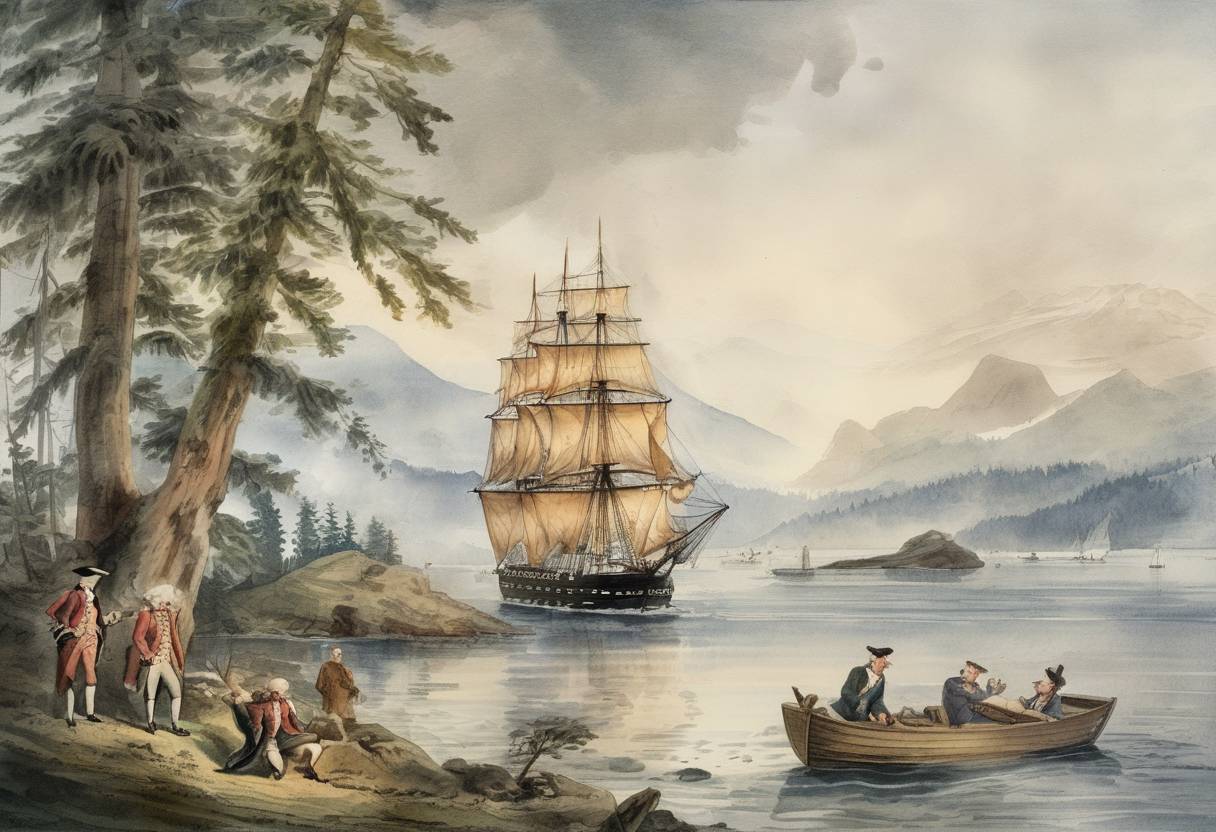
Captain George Vancouver was a British officer of the Royal Navy, best known for his exploration of the Pacific Northwest coast of North America. His voyages were part of a broader effort by European powers to explore and claim territories in the New World during the late 18th century. Vancouver’s expedition was tasked with surveying the Pacific coast from California to Alaska, a region largely unexplored by Europeans at the time.
Vancouver’s expedition set sail from England in 1791, with two ships, HMS Discovery and HMS Chatham. The mission was to chart the coastline, establish British claims, and seek the Northwest Passage—a fabled sea route connecting the Atlantic and Pacific Oceans.
On June 4, 1792, Captain George Vancouver and his crew entered a large inland body of water, which he named Puget Sound in honor of Lieutenant Peter Puget, one of his officers who had explored the area. This date was significant as it coincided with the birthday of King George III, adding symbolic weight to the act of claiming the territory for Great Britain.
Vancouver’s exploration of Puget Sound was thorough, as he meticulously charted the intricate network of inlets and islands. His detailed maps and journals provided the first comprehensive European account of the region, which would later prove invaluable for navigation and settlement.
The claim of Puget Sound for Great Britain was part of a larger geopolitical struggle between European powers, particularly Britain and Spain, over control of the Pacific Northwest. Vancouver’s expedition helped solidify British interests in the area, which would later influence the boundary negotiations between the United States and British North America.
Vancouver’s work laid the groundwork for future British and American exploration and settlement in the region. His detailed charts remained the standard for navigation in the area for many years.
The exploration of Puget Sound and the broader Pacific Northwest by Vancouver and his crew had lasting impacts. It contributed to the eventual establishment of British Columbia and the expansion of British influence in the Pacific. The region’s rich natural resources and strategic location would later become significant factors in its development.
Vancouver’s legacy endures today, with numerous geographic features and locations named in his honor, including the city of Vancouver in British Columbia and Vancouver Island. His contributions to the exploration and mapping of the Pacific Northwest remain a pivotal chapter in the history of North American exploration.
Source: en.wikipedia.org