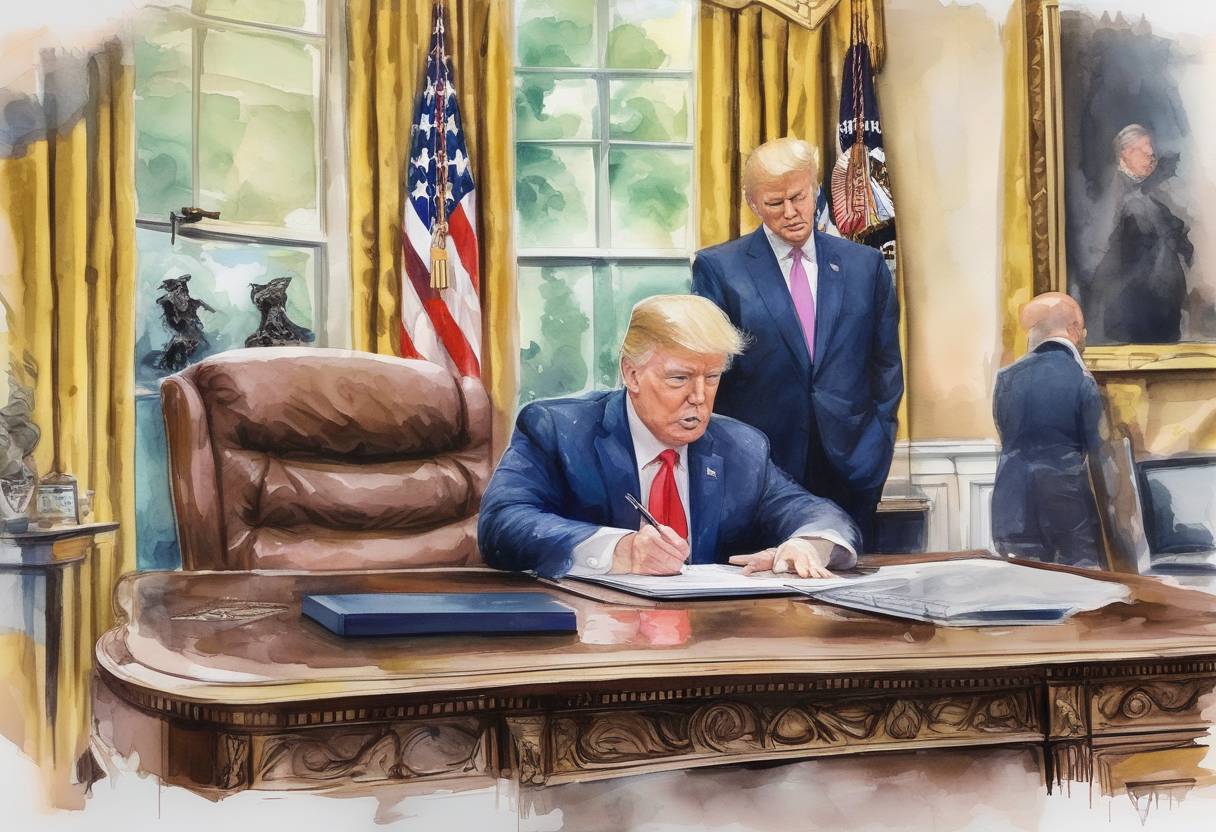
March 23, 2018: President Donald Trump Signs $1.3 Trillion Spending Bill
On March 23, 2018, U.S. President Donald Trump signed a $1.3 trillion omnibus spending bill, averting a government shutdown just hours before the deadline. This decision came after President Trump had initially threatened to veto the bill, citing concerns over insufficient funding for his proposed border wall and dissatisfaction with certain spending allocations.
Context and Background
- Budget Negotiations: The spending bill was the result of extensive negotiations between Republicans and Democrats in Congress. It aimed to fund the federal government through the end of the fiscal year, September 30, 2018.
- Previous Shutdowns: The government had faced a brief shutdown earlier in January 2018 due to disagreements over immigration and budgetary issues. The urgency to avoid another shutdown added pressure to pass the omnibus bill.
Key Provisions of the Bill
- Defense Spending: The bill allocated significant funds to the military, increasing defense spending by $80 billion, which was a priority for the Trump administration.
- Domestic Programs: It also included increased funding for domestic programs, such as infrastructure, opioid addiction treatment, and school safety measures.
- Border Security: While the bill provided \(1.6 billion for border security, it fell short of the \)25 billion Trump had requested for the construction of a border wall along the U.S.-Mexico border.
President Trump’s Reaction
- Initial Veto Threat: On the morning of March 23, President Trump tweeted a threat to veto the bill, expressing frustration over the lack of full funding for the border wall and the absence of a solution for the Deferred Action for Childhood Arrivals (DACA) program.
- Signing the Bill: Despite his reservations, Trump ultimately signed the bill, citing the necessity of funding the military and avoiding a government shutdown. In a press conference, he expressed his displeasure with the bill but emphasized the importance of national security.
Aftermath and Significance
- Political Reactions: The signing of the bill drew mixed reactions. Some conservatives criticized the increased spending and lack of fiscal restraint, while others were relieved that a shutdown was averted. Democrats were generally supportive of the increased domestic spending but remained critical of the border security provisions.
- Future Implications: The event highlighted ongoing tensions within the Republican Party and between the executive and legislative branches over budget priorities and immigration policy. It also underscored the complexities of bipartisan negotiations in a divided Congress.
The signing of the $1.3 trillion spending bill on March 23, 2018, was a pivotal moment in the Trump administration, reflecting the challenges of governance and the balancing act required to maintain government operations while addressing diverse political agendas.