Ranger 7: First Close-Up Photographs of the Moon
1964 · Moon, N/A
NASA's Ranger 7 spacecraft transmitted the first close-up photographs of the Moon's surface, marking a significant achievement in space exploration.
April 26, 1962
The Ranger 4 spacecraft, launched by NASA, crashes into the Moon, becoming the first U.S. spacecraft to reach another celestial body.
, United States | NASA
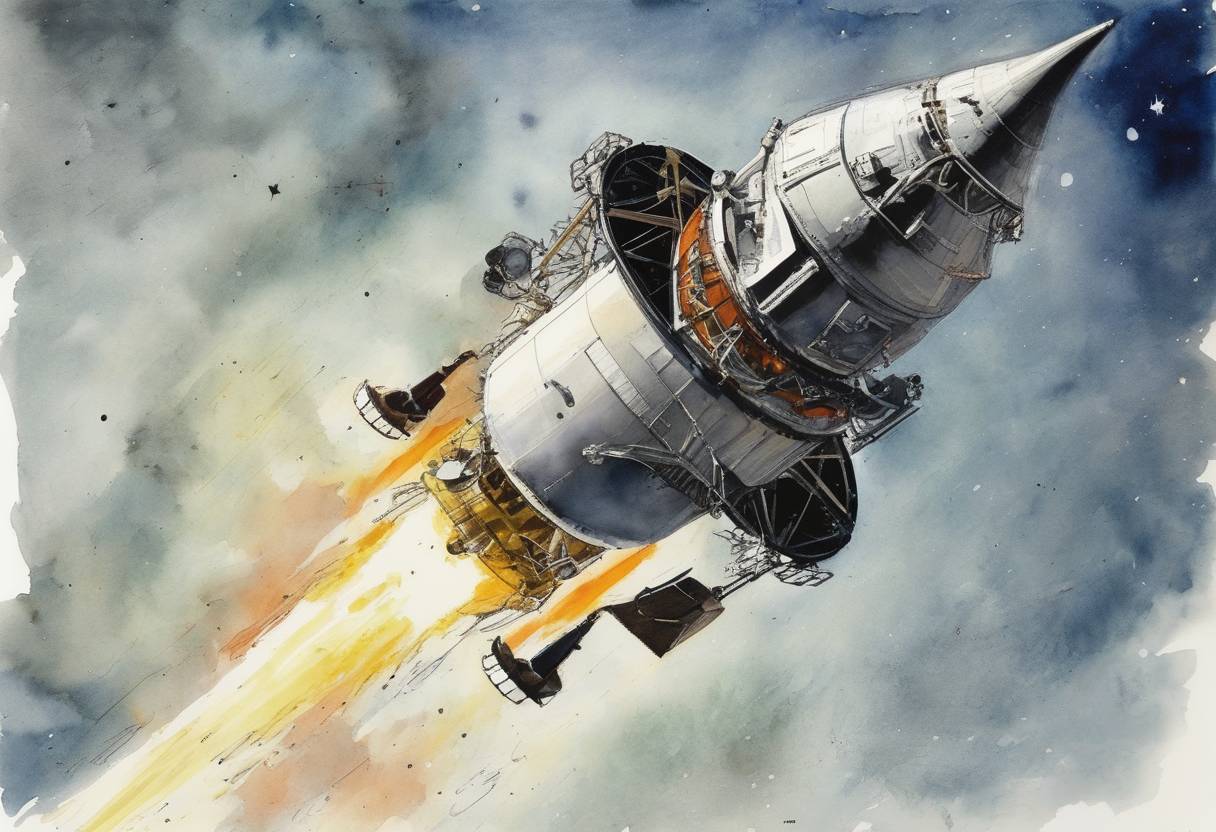
On April 26, 1962, NASA’s Ranger 4 spacecraft made history by becoming the first U.S. spacecraft to reach another celestial body, despite its mission not going entirely as planned. This event marked a significant milestone in the United States’ efforts to explore outer space and contributed to the broader context of the Space Race during the Cold War era.
The Ranger program was initiated by NASA in the late 1950s with the goal of developing a series of spacecraft designed to capture images of the lunar surface and gather scientific data. The program was part of the United States’ response to the Soviet Union’s early successes in space exploration, including the launch of Sputnik in 1957 and the first human in space, Yuri Gagarin, in 1961.
Launch and Trajectory: Ranger 4 was successfully launched from Cape Canaveral, Florida. The spacecraft was intended to follow a trajectory that would allow it to capture images of the Moon’s surface before crashing into it.
Technical Malfunction: Shortly after launch, Ranger 4 experienced a critical failure. A malfunction in its onboard computer system prevented the spacecraft from executing its planned maneuvers and transmitting data back to Earth.
Impact on the Moon: Despite the malfunction, Ranger 4 continued on its trajectory and impacted the far side of the Moon on April 26, 1962. It became the first U.S. spacecraft to reach another celestial body, although it did not fulfill its primary mission objectives.
Technical Lessons: The failure of Ranger 4 provided NASA with valuable insights into spacecraft design and mission planning. These lessons were crucial for the success of subsequent missions in the Ranger program and other lunar exploration efforts.
Space Race Context: The achievement of reaching the Moon, even without successful data transmission, was a symbolic victory for the United States during the Space Race. It demonstrated the capability of American technology to reach celestial bodies beyond Earth.
Future Missions: The Ranger program continued with subsequent missions, leading to successful lunar impacts and data transmission. These missions laid the groundwork for the later Apollo missions, which ultimately achieved human landings on the Moon.
In summary, while Ranger 4 did not accomplish all its scientific goals, its impact on the Moon represented a pivotal moment in space exploration history, highlighting both the challenges and potential of interplanetary exploration.
Source: en.wikipedia.org