The Battle of Placentia - October 16, 456
456 · Placentia, Italy
The Battle of Placentia took place, where the Roman general Ricimer defeated the Vandals under King Gaiseric.
May 31, 0455
The Sack of Rome by the Vandals began. The Vandal King Genseric led his forces into the city, which was left defenseless after the assassination of Emperor Petronius Maximus. The Vandals looted Rome for two weeks, taking valuable treasures and captives.
Rome, Western Roman Empire | Vandals
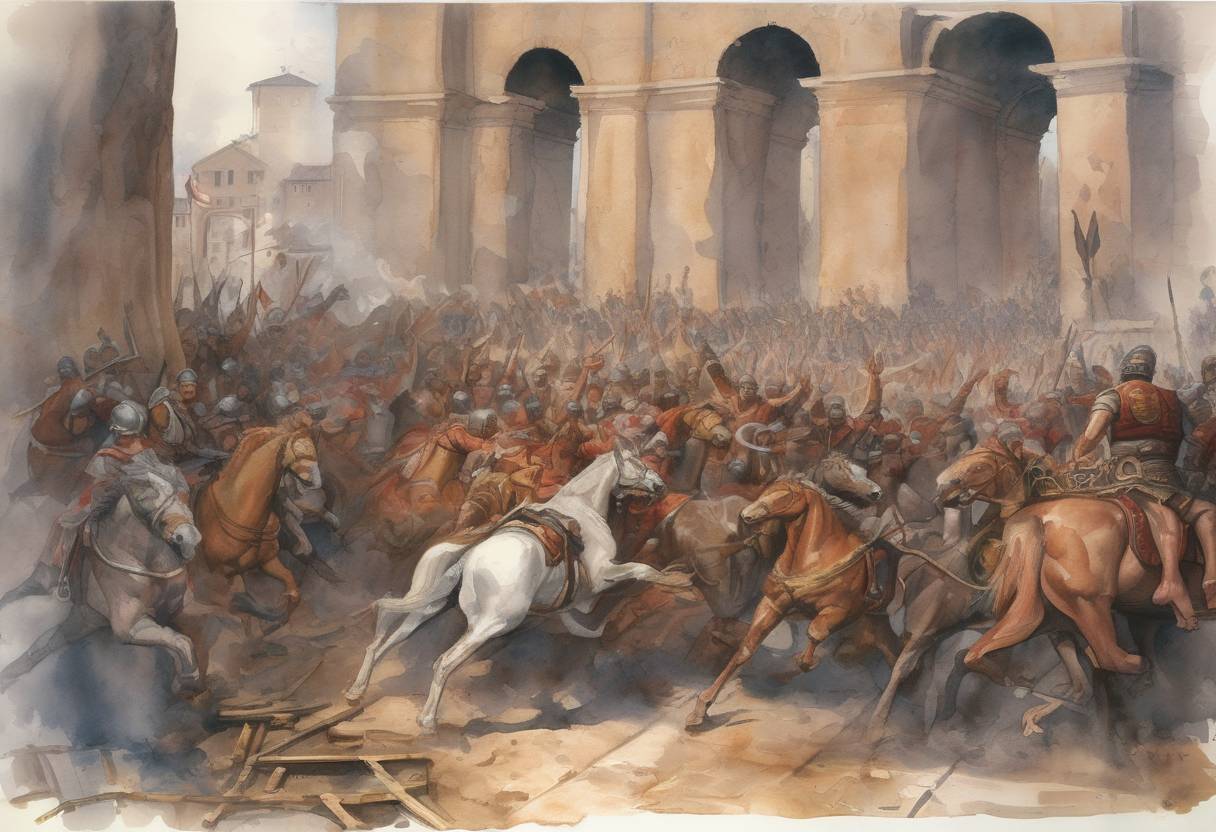
On May 31, 455, the Vandal King Genseric led his forces into Rome, marking the beginning of a significant and devastating event in the history of the Western Roman Empire known as the Sack of Rome. This event unfolded in a period of political instability and vulnerability for the empire.
Political Instability: The Western Roman Empire was in a state of decline, plagued by internal strife, economic troubles, and external threats. The assassination of Emperor Petronius Maximus on May 31, 455, left Rome without a strong leader, exacerbating its vulnerability.
Vandal Power: The Vandals, a Germanic tribe, had established a powerful kingdom in North Africa under the leadership of King Genseric. They had previously seized control of the rich provinces of North Africa, including Carthage, which became their capital in 439.
Treaty with Rome: Prior to the sack, the Vandals had a treaty with the Roman Empire, which was supposed to ensure peace. However, the political chaos following Maximus’s assassination nullified any agreements, providing Genseric with an opportunity to strike.
Entry into Rome: On May 31, 455, Genseric’s forces entered Rome, which was left defenseless due to the lack of a coordinated military response. The absence of a strong central authority in the city made it an easy target for the Vandals.
Looting and Destruction: Over the course of two weeks, the Vandals systematically looted the city. They took valuable treasures, including religious artifacts and artworks, and captured numerous inhabitants to be sold as slaves. Despite the extensive looting, historical accounts suggest that the Vandals did not engage in wanton destruction of buildings or widespread violence against the population, unlike the earlier sack by the Visigoths in 410.
Impact on Rome: The sack was a severe blow to the prestige and stability of the Western Roman Empire. It highlighted the empire’s inability to defend its capital and underscored the decline of Roman power in the West.
Vandal Influence: The successful sack further solidified the Vandals’ position as a dominant force in the Mediterranean. Their control over key territories in North Africa allowed them to disrupt Roman trade and exert influence over the region.
Legacy: The term “vandalism” is derived from this event, reflecting the lasting impression of the Vandals’ actions on cultural memory. The sack of 455 is often cited as a symbol of the decline and fall of the Western Roman Empire, which would officially come to an end in 476 with the deposition of the last Roman emperor, Romulus Augustulus.
The Sack of Rome by the Vandals remains a pivotal moment in the history of the late Roman Empire, illustrating the complex interplay of internal decay and external pressures that contributed to its eventual collapse.
Source: en.wikipedia.org