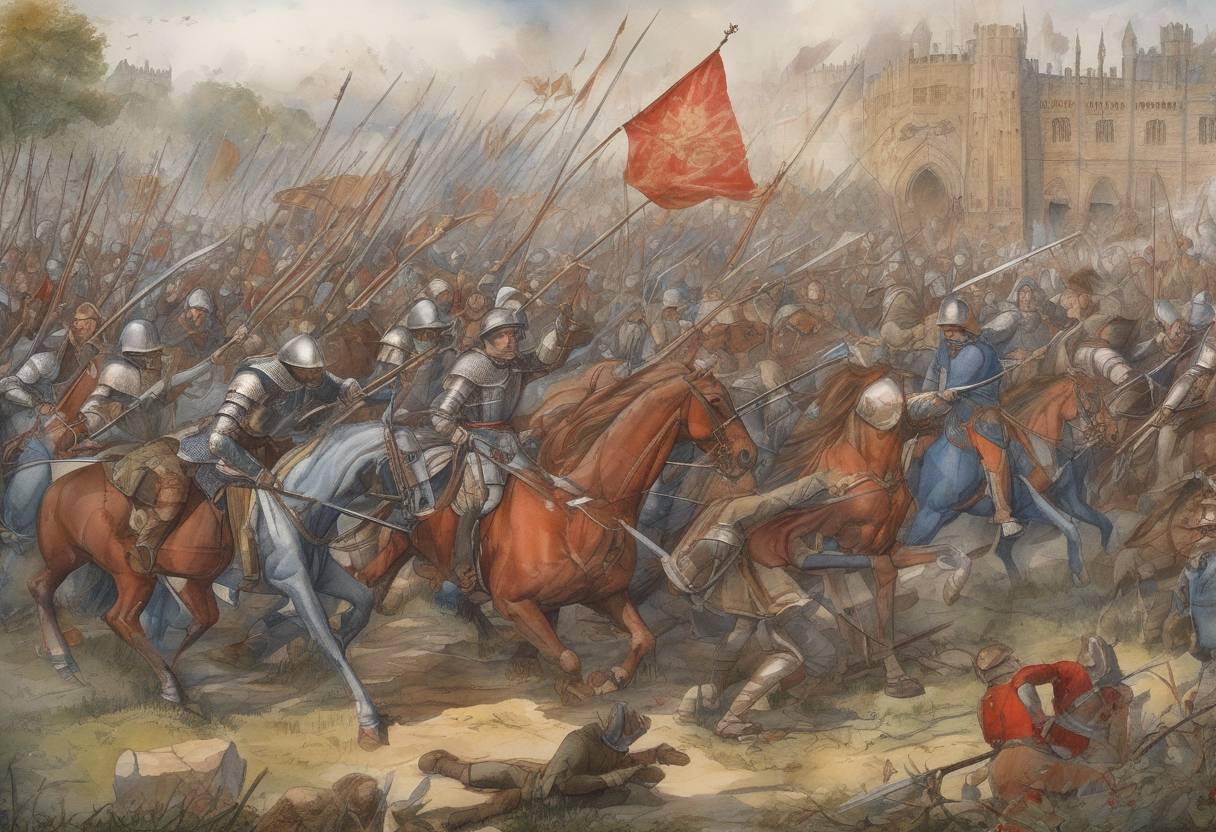
The Battle of Shrewsbury: July 21, 1403
The Battle of Shrewsbury, fought on July 21, 1403, was a pivotal conflict in English history, though it is often mistakenly associated with the Wars of the Roses. In fact, it was part of the earlier series of civil conflicts during the reign of King Henry IV, known as the Percy Rebellion.
Context and Background
- King Henry IV’s Reign: Henry IV ascended to the English throne in 1399 after deposing Richard II. His reign was marked by instability and rebellion, as various factions contested his legitimacy.
- The Percy Family: The Percy family, powerful nobles in Northern England, initially supported Henry IV’s claim to the throne. However, tensions arose due to disputes over money, power, and influence, leading to their rebellion against the king.
- King Henry IV: The reigning monarch, whose authority was challenged by the Percy family.
- Henry ‘Hotspur’ Percy: The eldest son of the Earl of Northumberland, a charismatic and ambitious leader who spearheaded the rebellion against Henry IV.
The Battle
- Location: The battle took place near Shrewsbury in Shropshire, England.
- Forces: King Henry IV’s royal army faced off against the rebel forces led by Henry ‘Hotspur’ Percy.
- Outcome: The battle was fiercely contested, with significant casualties on both sides. Ultimately, King Henry IV’s forces emerged victorious.
Aftermath and Significance
- Death of Hotspur: Henry ‘Hotspur’ Percy was killed during the battle, dealing a significant blow to the rebellion.
- Consolidation of Power: The victory at Shrewsbury helped Henry IV consolidate his power, though his reign continued to face challenges.
- Legacy: The battle is remembered for its intense combat and the dramatic fall of Hotspur, a figure later immortalized in William Shakespeare’s play “Henry IV, Part 1.”
While the Battle of Shrewsbury was not part of the Wars of the Roses, it was a crucial moment in the early 15th century that highlighted the ongoing struggles for power and stability in England.