Pope Stephen I Begins His Papacy - May 12, 254
254 · Rome, Roman Empire
Pope Stephen I begins his papacy.
January 3, 0236
Pope Anterus is succeeded by Pope Fabian after his death, marking a significant transition in the early Christian Church.
Rome, Roman Empire | Catholic Church
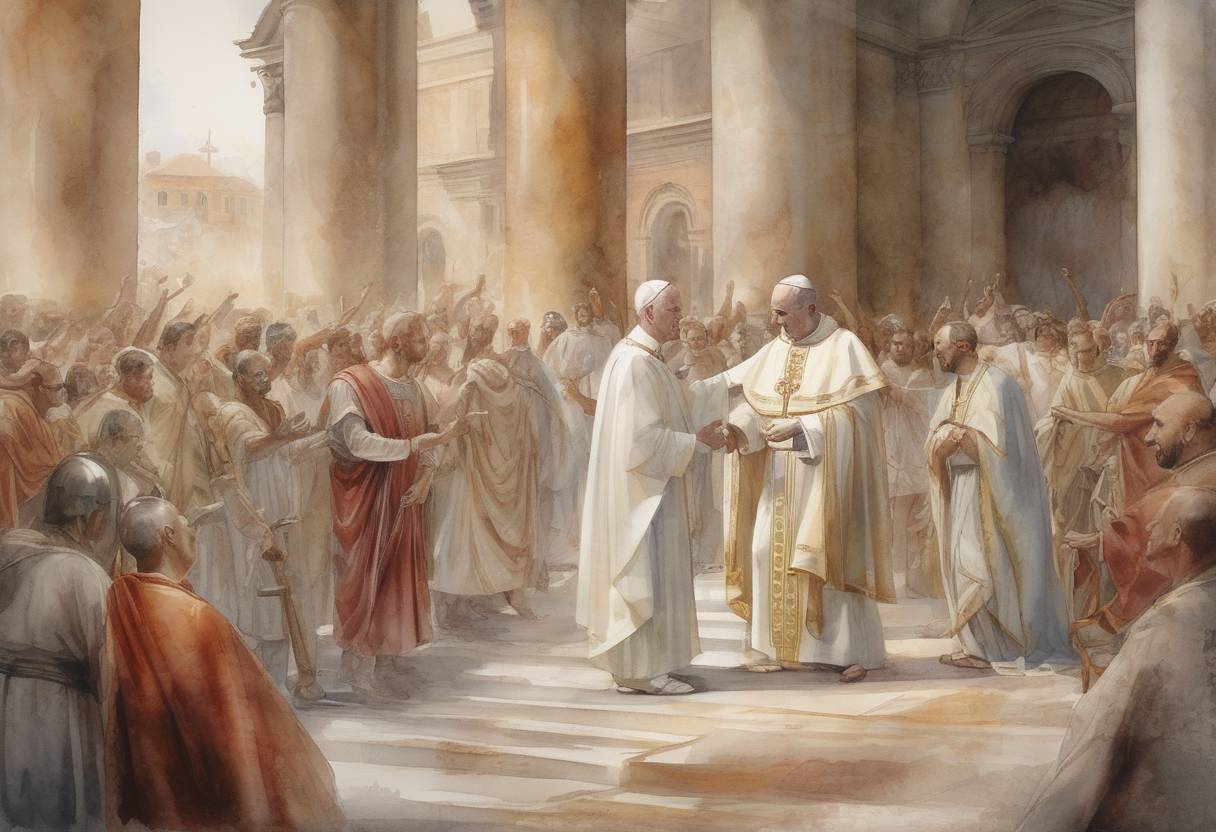
On January 3, 236, a significant transition in the early Christian Church took place with the succession of Pope Fabian following the death of Pope Anterus. This event marked an important moment in the history of the papacy and the development of the early Church.
Pope Anterus: Anterus served as the Bishop of Rome for a brief period, from November 21, 235, until his death on January 3, 236. His papacy lasted only about 43 days, making it one of the shortest in papal history. Little is known about his actions during his time as pope, but he is noted for his efforts to collect the acts of the martyrs, a task that underscored the importance of preserving the history and testimonies of early Christian martyrs.
Context of the Early Church: The early 3rd century was a time of significant challenge and growth for the Christian Church. Christians faced periodic persecutions under Roman rule, and the Church was still in the process of defining its doctrines and organizational structure.
Pope Fabian’s Election: Following the death of Anterus, the election of his successor took place. According to the early Church historian Eusebius, Fabian’s election was marked by a remarkable event. It is said that during the assembly to elect the new pope, a dove descended and settled on Fabian’s head, which was interpreted as a sign of divine favor. Despite being a layman and not initially considered a candidate, this sign led to his unanimous election as the new Bishop of Rome.
Pope Fabian’s Contributions: Fabian’s papacy lasted from 236 to 250, a period during which he made significant contributions to the organization and administration of the Church. He is credited with dividing Rome into seven ecclesiastical districts, each overseen by a deacon, to better manage the growing Christian community. Fabian also played a role in the development of the Church’s hierarchical structure and was involved in the appointment of bishops in various regions.
Strengthening the Church: Fabian’s leadership helped to strengthen the organizational framework of the Church, which was crucial for its survival and growth during times of persecution. His administrative reforms laid the groundwork for future developments in Church governance.
Martyrdom and Legacy: Pope Fabian’s papacy ended with his martyrdom during the Decian persecution in 250. He is remembered as a martyr and was later canonized as a saint. His feast day is celebrated on January 20.
The transition from Pope Anterus to Pope Fabian represents a pivotal moment in the early Church’s history, highlighting the challenges and resilience of the Christian community during a formative period.
Source: en.wikipedia.org