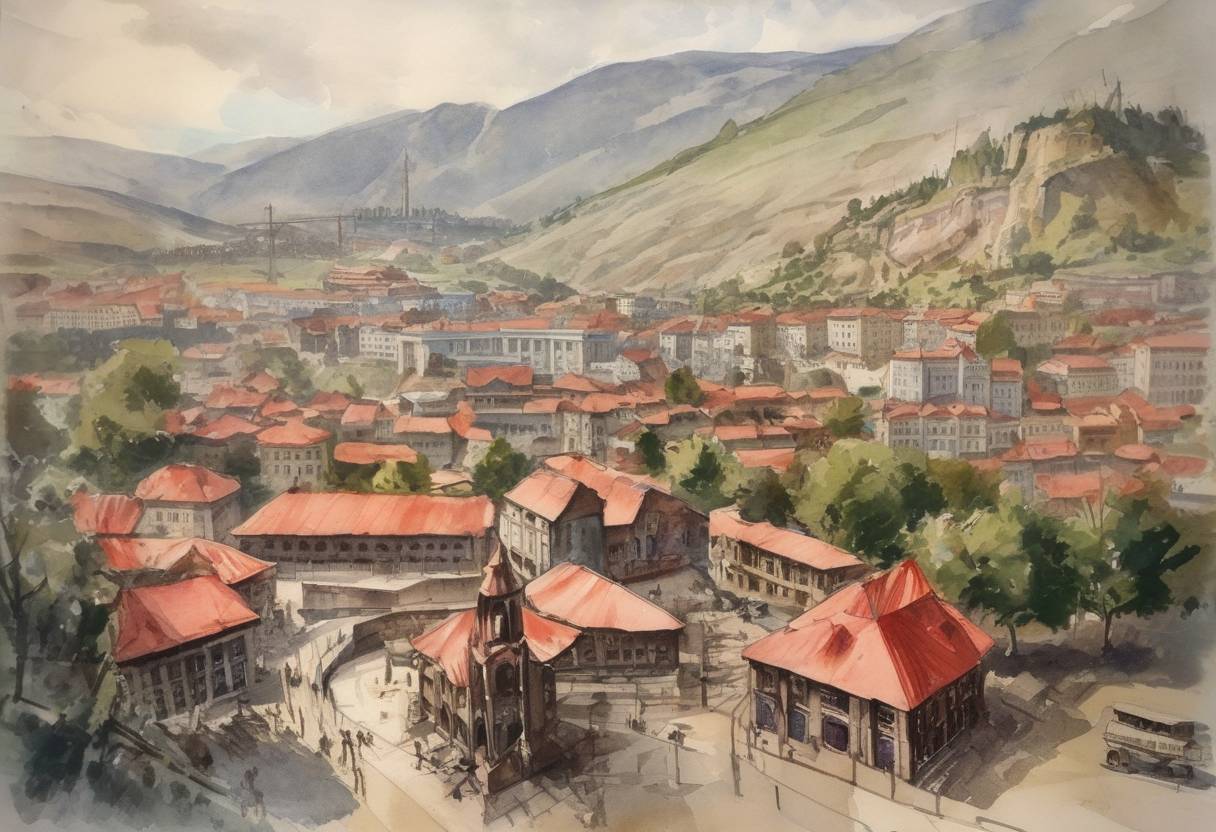
Soviet Occupation of Tbilisi - February 25, 1921
On February 25, 1921, the Soviet Red Army occupied Tbilisi, the capital of the Democratic Republic of Georgia, marking a significant turning point in the region’s history. This event effectively ended Georgia’s brief period of independence and led to the establishment of a Soviet government.
Historical Context
- Post-World War I Era: Following the Russian Revolution of 1917 and the subsequent collapse of the Russian Empire, various regions sought independence. Georgia declared its independence on May 26, 1918, forming the Democratic Republic of Georgia.
- Geopolitical Tensions: The newly independent state faced numerous challenges, including territorial disputes with neighboring countries and internal political instability. The Bolshevik government in Russia viewed the independent states in the Caucasus as strategically important and sought to bring them under Soviet control.
Key Events Leading to the Occupation
- Bolshevik Ambitions: The Soviet leadership aimed to spread communism and consolidate power in the former territories of the Russian Empire. The Caucasus region, including Georgia, was a target for Soviet expansion.
- Military Campaign: In early 1921, the Soviet Red Army launched a military campaign against Georgia. The campaign was justified by the Soviets as a response to alleged provocations and the need to support local communist movements.
- Battle for Tbilisi: The Red Army advanced into Georgian territory, facing resistance from the Georgian military. Despite the efforts of the Georgian forces, the Soviets captured Tbilisi on February 25, 1921.
Aftermath and Consequences
- Establishment of Soviet Rule: Following the occupation, a Soviet government was established in Georgia. The Democratic Republic of Georgia was dissolved, and the country was incorporated into the Soviet Union as the Georgian Soviet Socialist Republic.
- Impact on Georgian Society: The Soviet regime implemented significant political, economic, and social changes. Land reforms, nationalization of industries, and suppression of political dissent were part of the broader Sovietization process.
- Long-term Implications: The occupation and subsequent incorporation into the Soviet Union had lasting effects on Georgia’s national identity and political landscape. It remained a part of the Soviet Union until its dissolution in 1991, when Georgia regained its independence.
Broader Historical Significance
The occupation of Tbilisi and the establishment of Soviet control over Georgia were part of the larger Soviet strategy to consolidate power in the Caucasus region. This event exemplifies the broader geopolitical struggles of the early 20th century and the expansionist policies of the Soviet Union. It also highlights the complex interplay between national independence movements and the influence of major powers during this period.