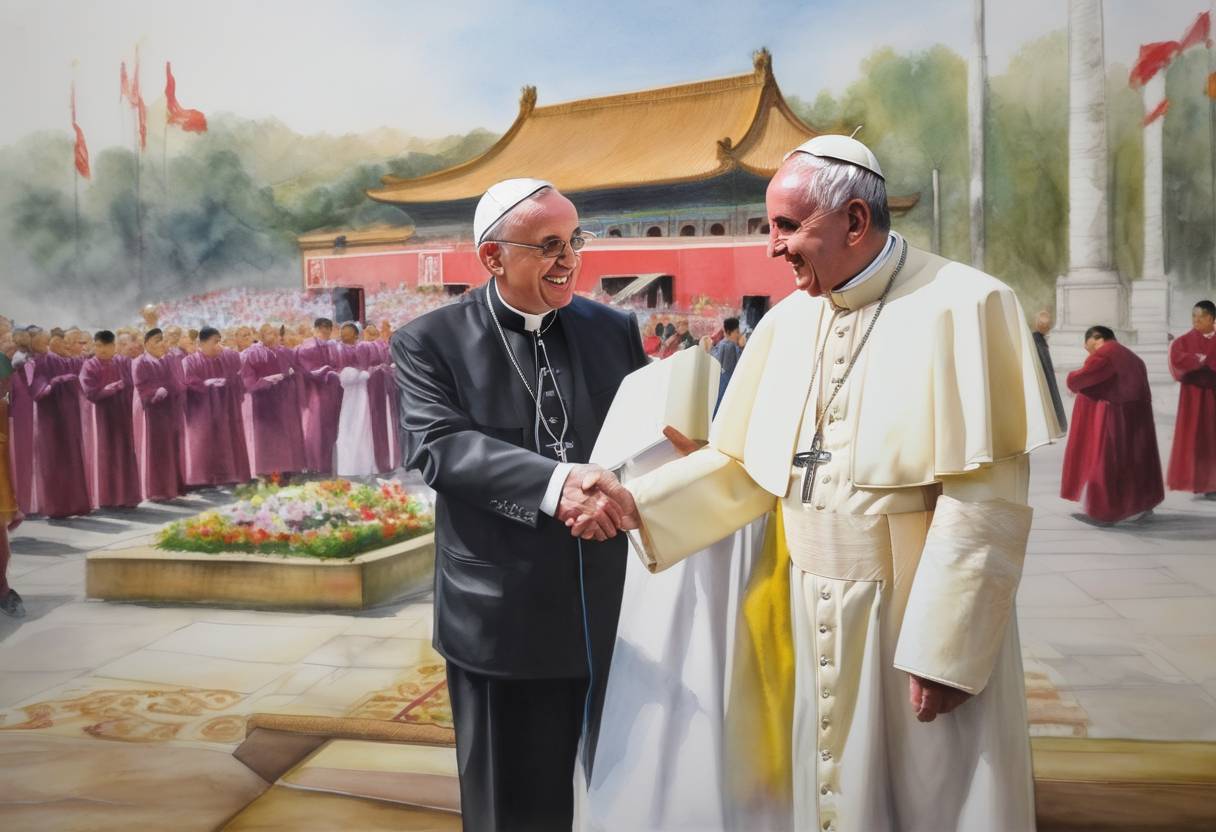
China and the Vatican Agreement on the Appointment of Bishops
On September 21, 2018, a landmark provisional agreement was signed between the Holy See and the People’s Republic of China concerning the appointment of Roman Catholic bishops. This agreement marked a significant development in the relationship between the Vatican and China, which had been fraught with tension since the establishment of the People’s Republic in 1949.
Background
Historically, the Chinese government has insisted on maintaining control over religious affairs within its borders, leading to the creation of the state-sanctioned Chinese Patriotic Catholic Association. This body operates independently of Vatican oversight, appointing its own bishops without papal approval. Conversely, many Chinese Catholics remained loyal to the Vatican, practicing their faith in “underground” churches.
Key Details of the Agreement
The 2018 agreement represented a compromise between China’s demand for sovereignty over religious matters and the Vatican’s desire to maintain ecclesiastical authority:
Bishop Appointments: For the first time, both China and the Vatican agreed on a process of mutual consultation for the selection and consecration of bishops. While the Pope retains the final say, China’s government presents a candidate from whom the Pope can choose.
Recognition of Bishops: The Vatican agreed to recognize several bishops previously appointed by Beijing without papal approval, thus regularizing their status within the Catholic Church.
Broader Implications
Improved Relations: The agreement aimed to improve diplomatic relations between the Vatican and China, which had not had formal ties since 1951. It was seen as a step toward normalization and potential restoration of full diplomatic relations.
Impact on Chinese Catholics: By addressing the contentious issue of bishop appointments, the agreement hoped to ease tensions between the state-recognized church and underground communities, fostering unity among Chinese Catholics.
Criticism and Concerns: The agreement generated mixed reactions. Supporters viewed it as a pragmatic approach to securing religious freedom for Catholics in China, while critics expressed concerns about yielding too much church authority to the Chinese government.
Subsequent Developments
The initial agreement was set for a two-year renewable term, with discussions for its renewal or modification contingent on its implementation and real-world outcomes. Renewals have occurred since the initial signing, reflecting ongoing negotiations and the complexities of balancing religious autonomy with state interests. The agreement continues to be a subject of interest and debate within the Catholic Church and the international community.