President Harry S. Truman's First Televised White House Address
1947 · Washington, D.C., United States
President Harry S. Truman delivered the first televised White House address, urging Americans to conserve food to aid post-war Europe.
October 11, 1947
President Harry S. Truman holds the first televised Oval Office address, emphasizing the need to prevent food shortages in Europe.
Washington, D.C., United States | U.S. Presidency
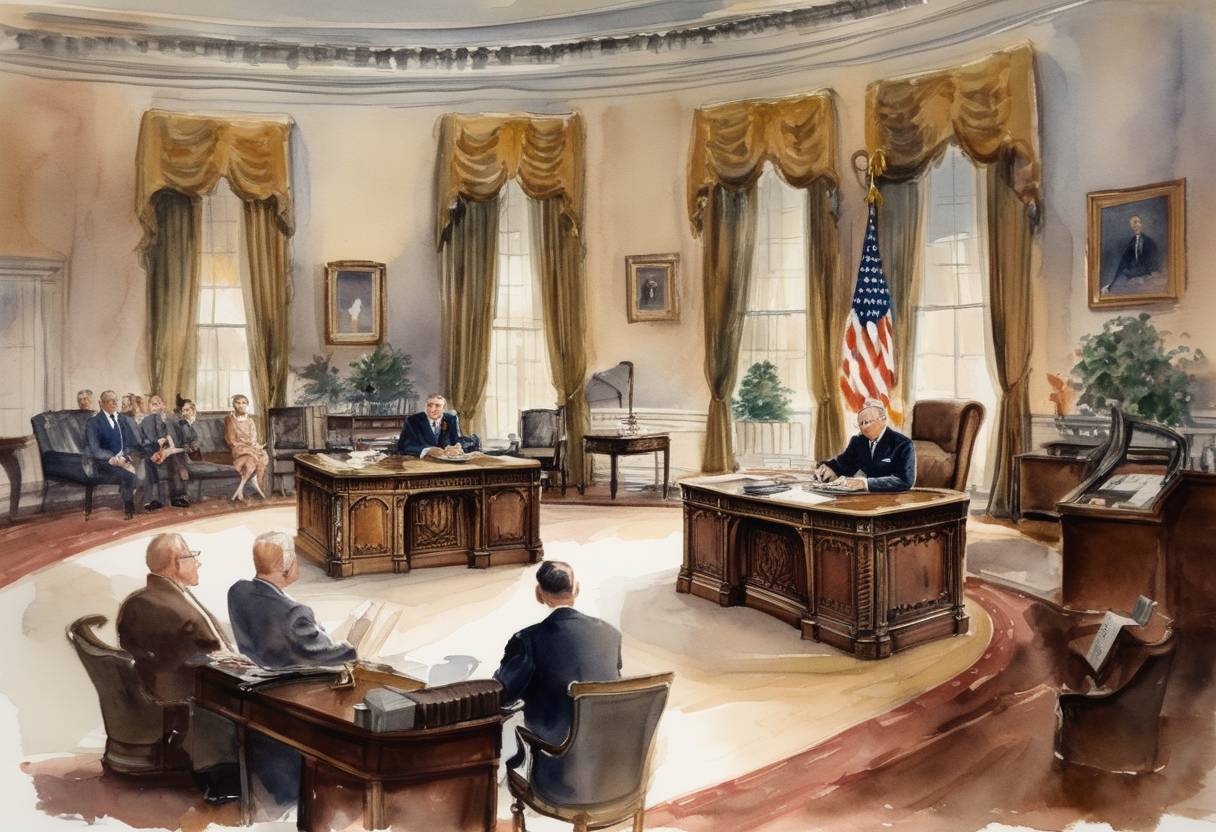
On October 11, 1947, President Harry S. Truman delivered the first televised address from the Oval Office, marking a pivotal moment in both political communication and the history of broadcast media. This historic event underscored the transformation of the presidency into a more personal and direct conduit to the American public through emerging technology.
Post-World War II Europe was grappling with immense devastation, severe economic instability, and widespread food shortages. In response, the United States initiated numerous aid programs to support European recovery, most notably the Marshall Plan, which was announced earlier that year, in June 1947.
In his address, President Truman emphasized the urgent need for the United States to assist in preventing food shortages in European countries. He appealed directly to the American people, highlighting their role in supporting humanitarian efforts abroad. Truman called for conservation measures, encouraging the reduction of grain consumption and the careful management of resources to aid foreign nations in dire need.
Truman’s use of television for this address represented a pioneering approach to presidential communication, signifying an evolution from radio, which had been the primary medium of communication for his predecessors. This move enhanced the immediacy and impact of his message, allowing him to reach a broader audience with an innovative personal appeal.
The address contributed to bolstering public awareness and support for U.S. involvement in European recovery initiatives. This moment also laid the groundwork for future presidents to utilize television as a powerful tool for direct communication with the public, influencing both domestic policy and international relations.
The event stands as an early example of how television began to shape political discourse and public engagement, paving the way for future presidential administrations to harness the medium’s potential in the coming decades. Truman’s initiative was a crucial step in fostering greater understanding and action regarding global interdependence during the post-war era.
Source: www.trumanlibrary.gov