The Inauguration of The Sunday Times on October 20, 1822
1822 · London, United Kingdom
The Sunday Times, a prominent British newspaper, was first published in London.
December 6, 1821
The first edition of the Manchester Guardian was published. This publication later became known as The Guardian, a major British daily and online newspaper known for its left-leaning stance and extensive coverage of international and domestic news.
Manchester, United Kingdom | The Manchester Guardian
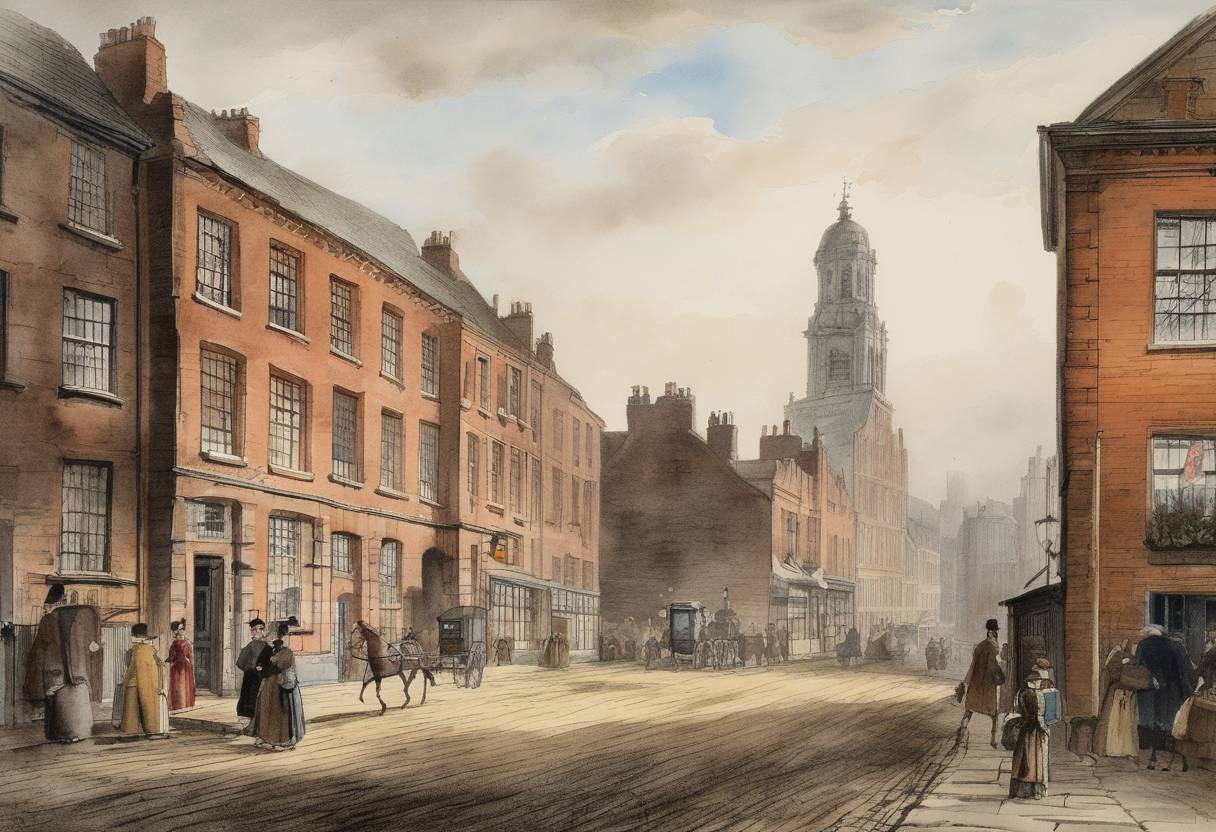
On June 5, 1821, the first edition of the Manchester Guardian was published, marking the beginning of a publication that would grow to become one of the most influential newspapers in the United Kingdom, now known simply as The Guardian. Founded by John Edward Taylor, the Manchester Guardian was established in the aftermath of the Peterloo Massacre of 1819, a tragedy that highlighted the need for a platform to champion reformist and liberal causes.
The early 19th century in Britain was a period characterized by significant social and political upheaval. The Industrial Revolution was transforming the economy, while political unrest grew among those demanding more democratic representation amid oppressive policies by the British government. The Peterloo Massacre, in which cavalry charged into a crowd of peaceful protestors in Manchester, leaving many dead or injured, played a critical role in the founding of the Guardian. It highlighted the urgent need for a publication committed to reporting free from the influence of the state and established local elites.
Originally published weekly, the first edition of the Manchester Guardian cost seven pence. It contained a mix of local and national news, along with editorials that reflected its reformist stance. John Edward Taylor, along with several reformist cohorts, sought to provide an alternative voice to the existing press aligned with government and conservative interests. The newspaper rapidly gained a reputation for its high standards of journalism and moral compass, which placed it in contrast to many of its contemporaries.
Over time, the Manchester Guardian expanded its reach beyond the confines of northwestern England. It transitioned to a daily publication in 1855, responding to the abolition of stamp duty and changes in media consumption patterns. The newspaper continued to adhere to the liberal values of its founders, supporting various reform movements throughout the 19th and 20th centuries, including campaigns for women’s suffrage and social justice.
In 1959, the Manchester Guardian rebranded itself as The Guardian, reflecting its broadened scope and national influence. Under the guidance of its subsequent editors, it has maintained its commitment to independent journalism, often taking bold editorial stances and engaging in detailed investigative work. Its legacy of progressive ideals and journalistic excellence firmly established it as a key organ of British media.
Today, The Guardian remains a pivotal institution, consistently engaging with global audiences through both its print and digital offerings. It is renowned for its in-depth analysis, commitment to climate reporting, and comprehensive coverage of both international and domestic news, continuing the mission envisioned by John Edward Taylor on that pivotal day in June 1821.
Source: www.theguardian.com