1331 · Płowce, Poland
The Battle of Płowce, part of the Polish-Teutonic Wars, was fought between the Kingdom of Poland and the Teutonic Order, ending with a Polish victory.
September 27, 1331
In the Battle of Płowce, Polish forces led by Władysław I the Elbow-high, King of Poland, clashed with the Teutonic Knights. Although the battle was difficult, it ended in a strategic victory for the Polish troops.
Płowce, Poland | Polish Kingdom
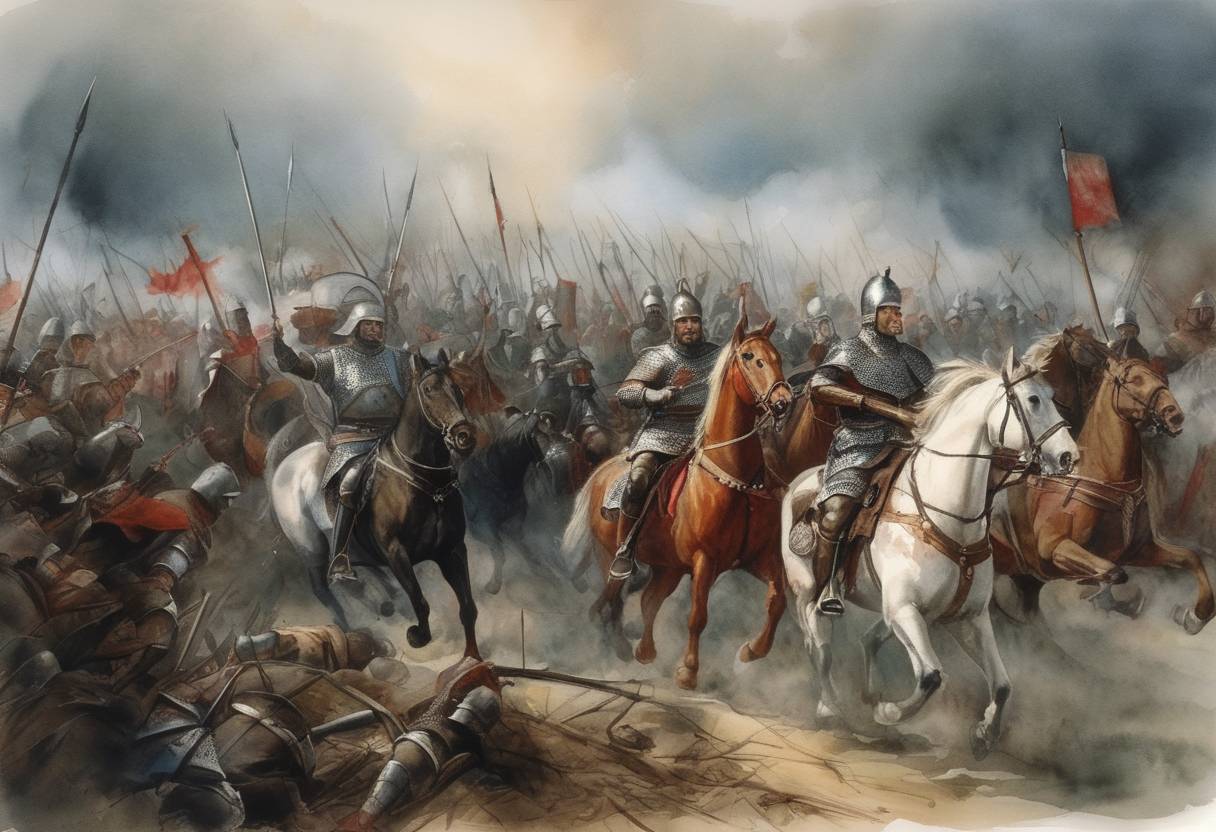
On September 27, 1331, the Battle of Płowce was fought between Polish forces led by King Władysław I Łokietek, commonly known as Władysław the Elbow-high, and the Teutonic Knights. This engagement occurred amidst a broader period of conflict between the Kingdom of Poland and the Teutonic Order, which were entangled in territorial disputes and a struggle for regional dominance in medieval Central Europe.
In the early 14th century, the Polish kingdom, under the relatively new leadership of King Władysław I, sought to consolidate and secure its territories against the external threats posed by the Teutonic Knights. The Knights, a militarized religious order, had established a powerful presence in Prussia and frequently engaged in campaigns against neighboring states. Tensions had been escalating due to the territorial ambitions of the Teutonic Order, leading to multiple skirmishes and conflicts over land.
The Battle of Płowce unfolded near the village of Płowce in north-central Poland. Władysław I, recognizing the strategic importance of thwarting the Teutonic advance into Polish lands, gathered his forces to confront the Knights. The engagement was characterized by intermittent and fierce combat, with both sides experiencing significant casualties.
The Polish troops executed a surprise attack on the morning of September 27, catching a part of the Teutonic forces off guard. Despite this, the battle was hard-fought, involving bitter and chaotic fighting. The Teutonic Knights, known for their disciplined and heavily armored cavalry, presented a formidable opposition.
The battle concluded with a tactical Polish victory. Although not decisively conclusive in terms of altering territorial control, the success at Płowce was strategically significant for the Polish. It demonstrated that the Teutonic Knights could be effectively challenged and disrupted in the field.
This victory bolstered the morale of the Polish kingdom and reinforced Władysław’s position as a capable ruler able to defend Polish interests. The consequence of this battle also had broader implications for the ongoing Polish-Teutonic conflict, serving as a testament to the resilience and capability of the Polish forces against one of the most powerful military orders of the time.
The battle did not end hostilities between the two sides, but it was a pivotal moment in the prolonged struggle that continued to shape the geopolitical landscape of the region throughout the 14th century.
Source: en.wikipedia.org