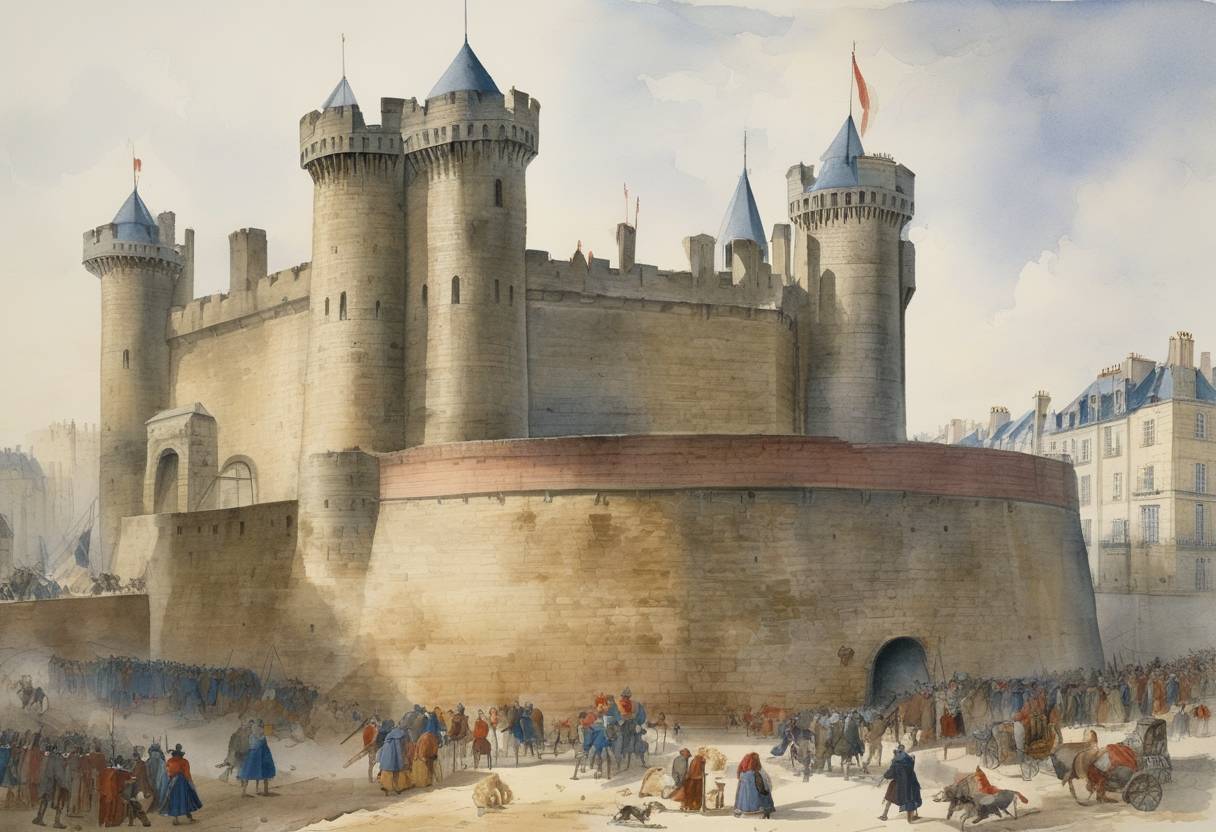
Construction of the Bastille
The construction of the Bastille began on December 27, 1370, under the orders of Charles V of France. This event marked an important development in the defensive architecture of Paris, driven by the need to fortify the city against English forces during the Hundred Years’ War.
Context and Purpose
Background: During the 14th century, Europe was embroiled in conflicts, especially the protracted series of wars between the Kingdom of England and the Kingdom of France known as the Hundred Years’ War. Paris, the French capital, needed stronger defenses against potential invasions and attacks.
Architectural Significance: The Bastille was originally conceived as a fortress to protect the eastern approach to Paris, particularly the strategic city gate at the end of the Rue Saint-Antoine. It was intended to reinforce the city walls and fortify the defenses.
Construction Features: The fortress was designed with eight massive towers and thick stone walls, constructed by the architect Hugues Aubriot. Its formidable structure was indicative of medieval military architectural practices, focused on defense and strategic placement.
Evolution of the Bastille
Transition to State Prison: As decades passed, the Bastille transitioned from a purely defensive structure to a state prison by the 17th century. It became infamous as a symbol of the absolute monarchy and the arbitrary justice associated with the reign of the Bourbons.
Role in French History: The Bastille held numerous political prisoners over the years, often by direct orders of the king without any judicial process. Its reputation as a fortress of tyranny grew, contributing to its symbolic significance.
Significance and Legacy
Cultural and Political Symbol: The Bastille’s transformation from a fortress to a state prison contributed significantly to its symbolic role in French history. It became a potent emblem of royal despotism and the repression of individual freedoms.
Demolition and Commemoration: The storming of the Bastille on July 14, 1789, marked the beginning of the French Revolution. Although it was originally constructed to protect the King’s interests, its fall came to symbolize the end of monarchical tyranny and the birth of the republic. The Bastille was subsequently dismantled, but its legacy endures, with July 14 celebrated annually as Bastille Day, a national holiday in France.
The initial construction of the Bastille under Charles V was a pivotal moment in the architectural and political evolution of Paris, leaving an indelible mark on French history.