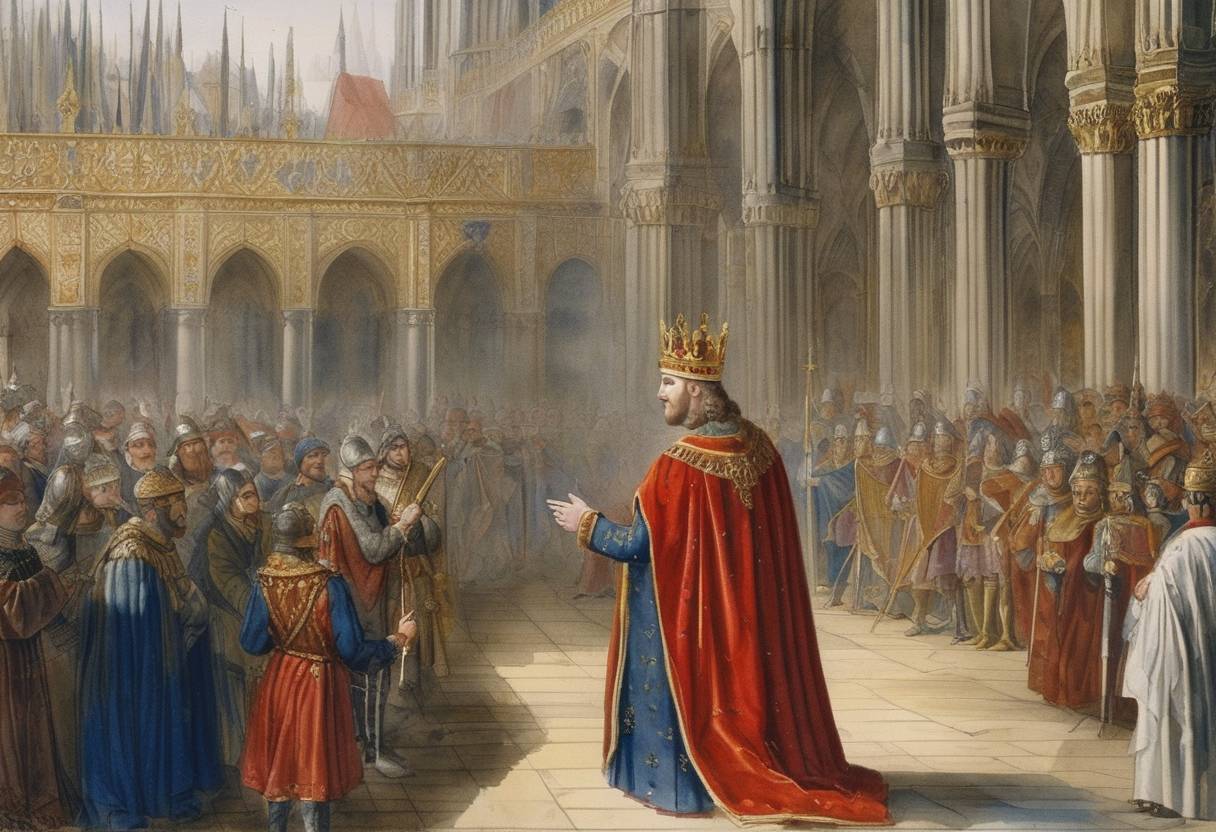
John II Becomes King of France
On August 28, 1350, John II, known as John the Good, ascended to the throne of France following the death of his father, King Philip VI. His reign came at a turbulent time in French history, and he inherited immense challenges, particularly those posed by the prolonged conflict known as the Hundred Years’ War.
Context and Background
John II was born on April 26, 1319, in the midst of a Europe that was already fraught with political tensions. His father, Philip VI, was the first king of the Valois dynasty, and part of his reign was dominated by the outbreak and continuation of the Hundred Years’ War against England, which began in 1337. This war stemmed from territorial disputes and claims to the French crown by English monarchs.
Ascension to the Throne
John’s accession to the throne came with deep-seated challenges. Philip VI’s rule was marred by significant military defeats, notably at the Battle of Crécy in 1346, where French forces were decisively beaten by the English. These defeats weakened the French monarchy’s power and credibility, adding pressure on John II as he assumed the mantle of kingship.
Reign and Challenges
John II’s reign was characterized by efforts to regain control and restore the prestige of the French crown:
Military Struggles: John II continued the ongoing conflict with England, facing setbacks such as the capture of Calais by the English. The war severely drained French resources and exposed vulnerabilities within the French feudal system.
Economic Strain: The cost of warfare and the economic impact of the Black Death, which decimated the population in the late 1340s, posed additional challenges. This period saw inflation and social unrest intensify as peasants and urban workers struggled under heavy taxation.
Diplomatic Endeavors: John attempted to strengthen France’s position through diplomatic marriages and alliances but often faced internal opposition and limited success.
Capture and Ransom: One of the most dramatic episodes of his reign was his capture by the English at the Battle of Poitiers in 1356. His subsequent imprisonment and the Treaty of Brétigny (1360) significantly impacted his reign, leading to a large ransom being paid for his release and territorial concessions to England.
Consequences and Legacy
John II’s reign highlighted the profound complexities of European medieval politics and the enduring struggle for supremacy between France and England. While his rule saw continued military and financial strain, it also set the stage for future generations. His son, Charles V, would later work to stabilize France and reclaim lost territories.
John’s legacy as “John the Good” suggests a recognition of his personal virtues in striving against overwhelming odds, despite the mixed outcomes of his efforts. His reign remains a pivotal chapter in the narrative of the Hundred Years’ War and the Valois line’s struggle to consolidate power in France.