1542 · Linlithgow, Scotland
Princess Mary Stuart was born, who would later become Mary, Queen of Scots, a significant figure in the history of Scotland and England.
December 15, 1542
Mary, Queen of Scots, is born. She would become a significant figure in the history of Scotland and England, noted for her tumultuous reign and tragic demise.
Linlithgow, Scotland | the House of Stuart
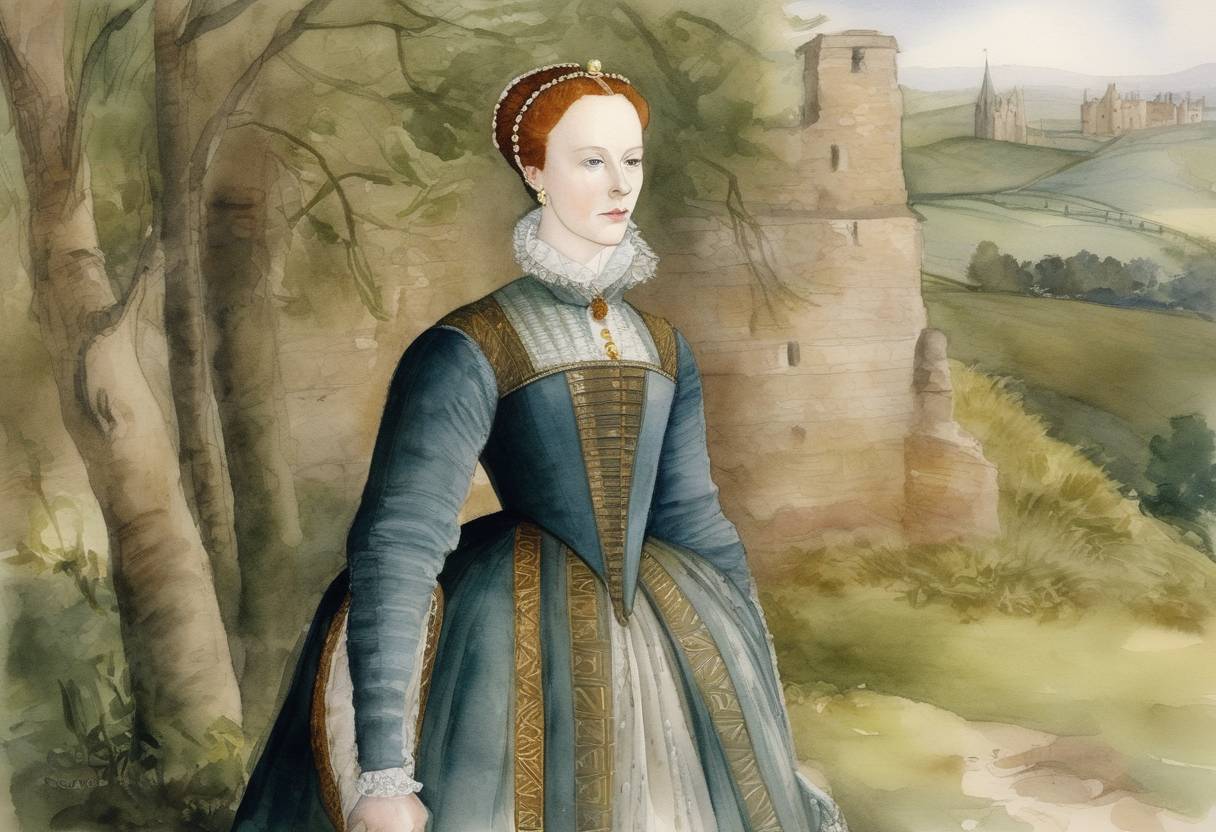
Mary, Queen of Scots, was born on December 8, 1542, at Linlithgow Palace, Scotland. She was the only legitimate child of King James V of Scotland and his second wife, Mary of Guise. Mary’s birth came during a turbulent period in Scottish history, marked by political strife and conflict with England.
The birth of Mary Stuart was set against the backdrop of the ongoing “Rough Wooing,” a campaign led by King Henry VIII of England aimed at forcing a marriage alliance between Scotland and England. Shortly after Mary’s birth, her father, King James V, died on December 14, 1542, possibly influenced by the disastrous Scottish defeat at the Battle of Solway Moss. Mary’s ascension to the throne as an infant Queen further complicated Scotland’s political landscape.
Mary’s early life was dominated by regency due to her minority. During this time, Scotland was governed by regents, one of whom was Mary of Guise, her mother, who ruled on her behalf after resolving early disputes and consolidating power. Mary was promised in marriage to the Dauphin of France, Francis, under the Treaty of Haddington in 1548, resulting in her being sent to France at a young age.
Mary’s life was one of intrigue and complexity; her time in France, her marriage to Francis II, and her eventual return to a Scotland embroiled in religious and political turmoil marked her reign. Her marriage to Lord Darnley and the subsequent scandal surrounding his murder, her forced abdication, and imprisonment by Elizabeth I of England were notable events that shaped not only her life but also the historical landscape of the British Isles.
Mary’s execution in 1587, ordered by her cousin Elizabeth I, was a momentous event with significant historical repercussions. It underscored the intense rivalry and religious conflicts between Catholic and Protestant factions and paved the way for the eventual unification of the English and Scottish crowns under her son, James VI and I.
Mary, Queen of Scots remains a significant figure in history due to her dramatic life, her disputed legacy, and her impact on the dynastic politics of Britain. Her birth on December 8, 1542, marks the start of a life that would leave an indelible mark on the annals of British history.
Source: en.wikipedia.org