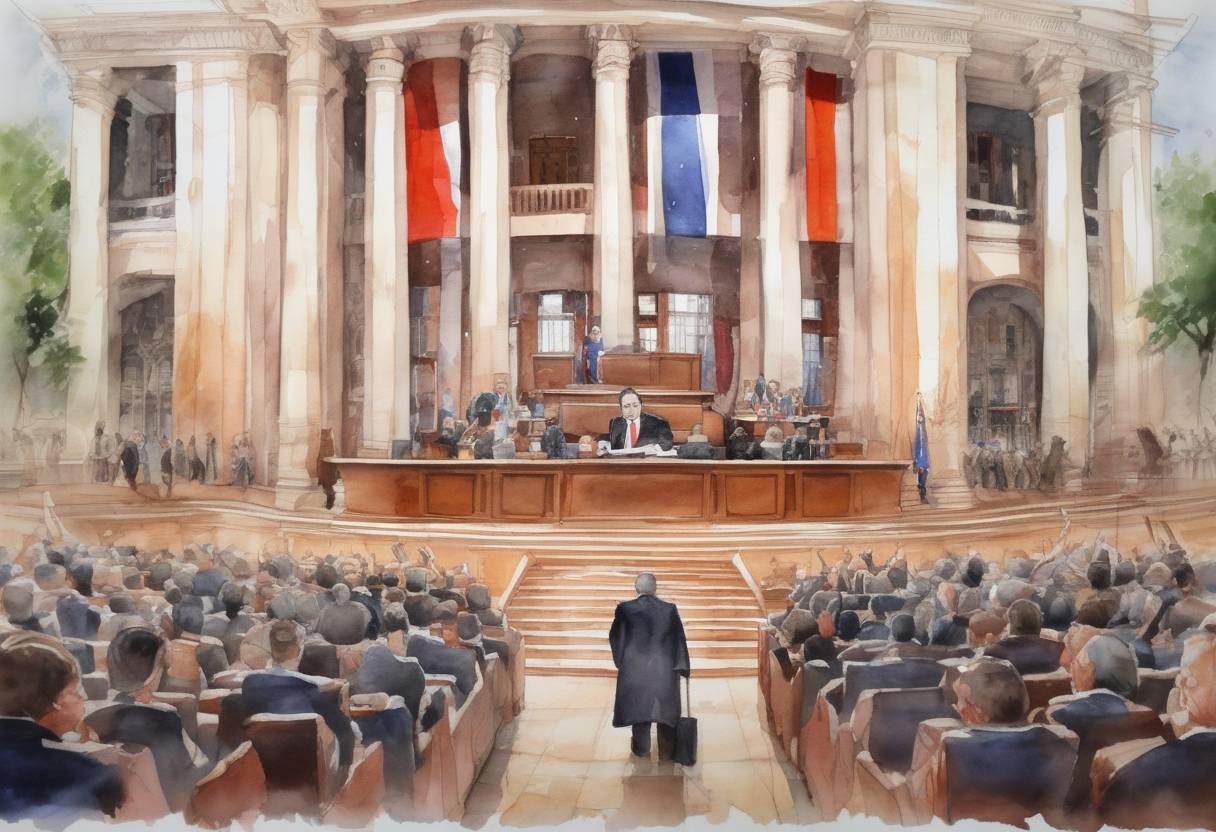
Impeachment of President Fernando Lugo - June 22, 2012
On June 22, 2012, the Paraguayan Senate voted to impeach President Fernando Lugo, leading to his removal from office and sparking a significant political crisis in the country. This event marked a pivotal moment in Paraguay’s political history, with both immediate and long-term implications.
Background
Fernando Lugo, a former Roman Catholic bishop, was elected as President of Paraguay in 2008, ending over six decades of rule by the Colorado Party. His election was seen as a shift towards more progressive policies, focusing on social reforms and addressing inequality. However, Lugo’s presidency was marred by political challenges, including a lack of majority support in Congress and tensions with the traditional political elite.
Events Leading to Impeachment
The immediate catalyst for Lugo’s impeachment was a violent clash on June 15, 2012, between police and landless farmers in the Curuguaty district, which resulted in the deaths of 17 people. This incident intensified existing political tensions and was used by Lugo’s opponents as a justification for his removal.
The Paraguayan Congress, dominated by opposition parties, quickly moved to impeach Lugo. The Chamber of Deputies voted overwhelmingly in favor of impeachment on June 21, 2012, citing “poor performance of duties” as the reason. The Senate followed suit the next day, conducting a rapid trial that lasted only a few hours.
The Impeachment Vote
On June 22, 2012, the Paraguayan Senate voted 39-4 to impeach President Lugo. The speed and manner of the proceedings drew criticism both domestically and internationally, with many arguing that Lugo was denied a fair trial and adequate time to prepare a defense.
Aftermath and Consequences
Immediate Impact: Vice President Federico Franco, a member of the Liberal Party and a former ally turned critic of Lugo, was sworn in as President. This transition was met with protests from Lugo’s supporters and accusations of a parliamentary coup.
International Reaction: The impeachment was widely condemned by regional organizations and countries, including the Union of South American Nations (UNASUR) and the Organization of American States (OAS). Paraguay was temporarily suspended from the Mercosur trade bloc and UNASUR.
Long-term Effects: The political crisis highlighted deep-seated divisions within Paraguay and raised questions about the stability of its democratic institutions. It also set a precedent for the use of impeachment as a political tool in the region.
Conclusion
The impeachment of Fernando Lugo remains a controversial chapter in Paraguayan history. It underscores the challenges of governance in a politically fragmented environment and the potential for constitutional mechanisms to be leveraged for political gain. The event continues to be a point of reference in discussions about democracy and political accountability in Latin America.