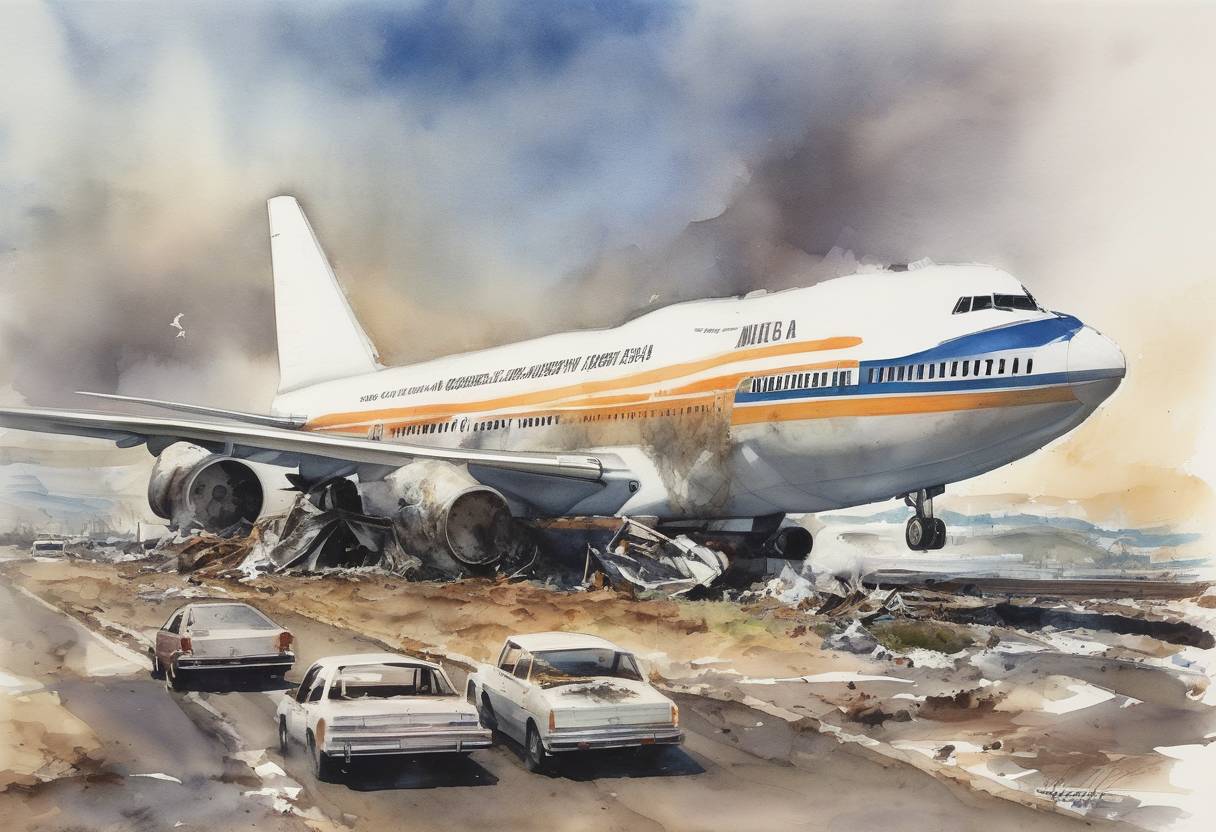
The Tenerife Airport Disaster: March 27, 1977
On March 27, 1977, the deadliest aviation accident in history occurred at Los Rodeos Airport (now Tenerife North Airport) on the Spanish Canary Island of Tenerife. This tragic event involved the collision of two Boeing 747 jumbo jets on the runway, resulting in 583 fatalities.
Background
The disaster unfolded amidst a series of unfortunate circumstances. Both aircraft involved were diverted to Tenerife due to a terrorist incident at their original destination, Gran Canaria Airport. The two planes were:
- KLM Flight 4805: A charter flight from Amsterdam, Netherlands, operated by KLM Royal Dutch Airlines.
- Pan Am Flight 1736: A scheduled flight from Los Angeles to New York, with a stopover in Tenerife, operated by Pan American World Airways.
Key Events Leading to the Collision
Diversion and Congestion: The temporary closure of Gran Canaria Airport led to an unexpected influx of aircraft at the smaller Los Rodeos Airport, which was not equipped to handle such traffic. This resulted in significant congestion on the taxiways and apron.
Weather Conditions: The airport was enveloped in dense fog, severely reducing visibility. This played a critical role in the events that followed.
Communication Breakdown: Miscommunications between the KLM and Pan Am crews and the air traffic control tower contributed to the disaster. Language barriers and non-standard phraseology were factors.
Taxiing and Takeoff: The Pan Am aircraft was taxiing on the runway, attempting to locate the exit, while the KLM aircraft was preparing for takeoff on the same runway. Due to the fog, neither crew could see the other.
Critical Misunderstanding: The KLM captain mistakenly believed he had received clearance for takeoff. As the KLM aircraft accelerated down the runway, the Pan Am crew spotted the oncoming plane and attempted to turn off the runway, but it was too late.
The Collision
The KLM aircraft collided with the Pan Am plane at high speed, resulting in a catastrophic explosion and fire. All 248 people on board the KLM flight perished, while 335 of the 396 occupants of the Pan Am flight were killed. Only 61 people survived, all from the Pan Am aircraft.
Aftermath and Consequences
Investigation and Findings: The investigation highlighted several contributing factors, including communication failures, pilot error, and inadequate airport infrastructure. The KLM captain’s premature takeoff was identified as a critical error.
Changes in Aviation Protocols: The disaster led to significant changes in international aviation regulations. Improvements were made in cockpit communication protocols, emphasizing the use of standardized phraseology to prevent misunderstandings.
Technological Advancements: The accident accelerated the development and implementation of ground radar systems at airports, which help air traffic controllers monitor aircraft movements in low visibility conditions.
Legacy: The Tenerife disaster remains a somber reminder of the importance of clear communication and rigorous safety protocols in aviation. It has had a lasting impact on the industry, shaping policies and practices to enhance passenger safety worldwide.
The Tenerife airport disaster stands as a pivotal moment in aviation history, underscoring the critical need for effective communication and coordination in complex environments.