Pope Benedict XVI's Resignation: February 28, 2013
2013 · Vatican City, Vatican City
Pope Benedict XVI resigns from the papacy, becoming the first pope to do so since Gregory XII in 1415.
April 2, 2005
Pope John Paul II passed away at the age of 84, ending a papacy that began in 1978. He was the first non-Italian pope in 455 years and played a significant role in the fall of communism in Eastern Europe.
Vatican City, Vatican City | The Vatican
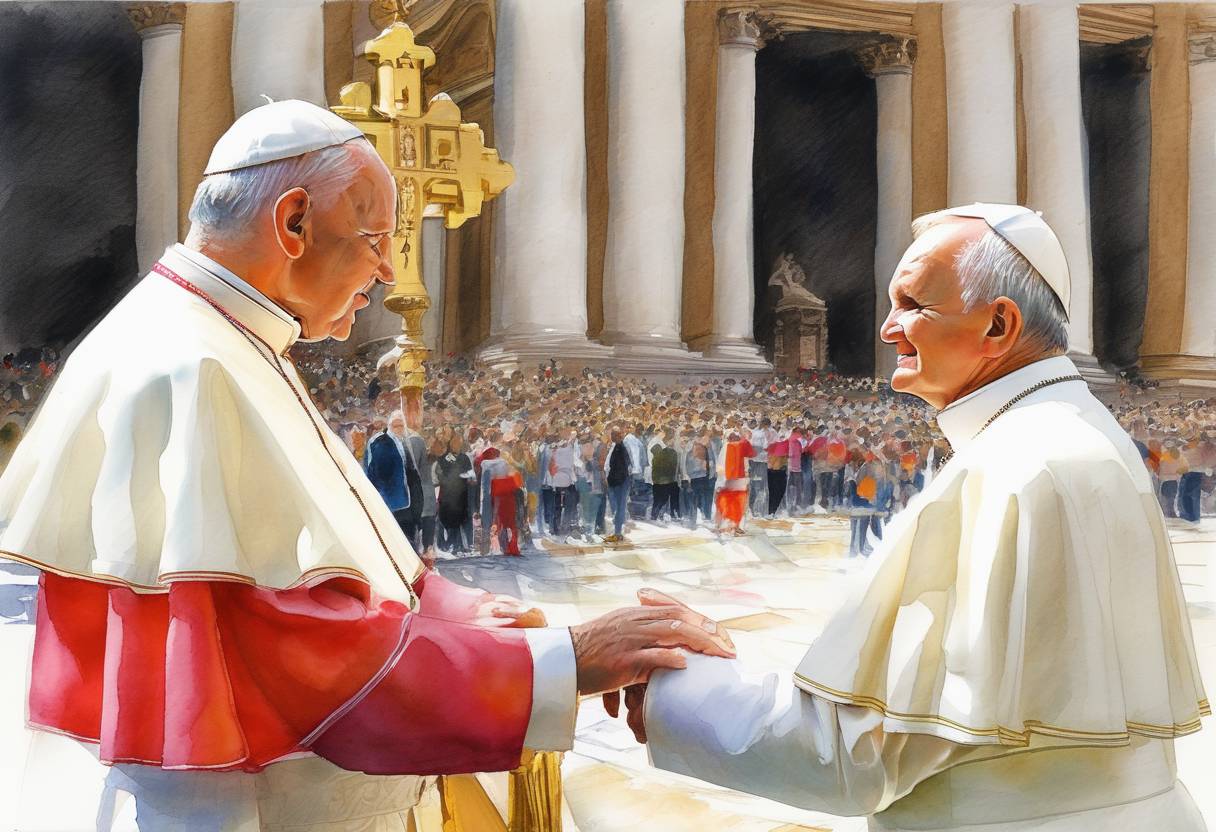
On April 2, 2005, Pope John Paul II passed away at the age of 84, marking the end of a papacy that had begun on October 16, 1978. His death concluded a remarkable 26-year tenure as the head of the Roman Catholic Church, during which he became one of the most influential figures of the 20th century.
Pope John Paul II, born Karol Józef Wojtyła in Poland, was the first non-Italian pope in 455 years, breaking a long-standing tradition within the Catholic Church. His election came at a time of significant global change, particularly in Eastern Europe, where the Cold War was a dominant force.
Role in the Fall of Communism: Pope John Paul II is widely credited with playing a pivotal role in the fall of communism in Eastern Europe. His support for the Solidarity movement in Poland, a labor and political movement that opposed communist rule, was instrumental. His 1979 visit to Poland inspired a surge of national pride and resistance against the communist regime.
Interfaith Dialogue: Throughout his papacy, John Paul II worked to improve relations between the Catholic Church and other religious communities. He was the first pope to visit a synagogue and a mosque, emphasizing the importance of interfaith dialogue and understanding.
Global Influence: John Paul II was a vocal advocate for human rights and dignity, traveling extensively to promote peace and reconciliation. His numerous international trips helped to raise the profile of the papacy on the global stage.
Theology and Doctrine: He was known for his conservative stance on theological issues, maintaining traditional Catholic teachings on matters such as contraception, abortion, and the ordination of women.
The death of Pope John Paul II was met with an outpouring of grief from Catholics and non-Catholics alike. His funeral, held on April 8, 2005, was attended by millions, including numerous world leaders, reflecting his global impact.
His legacy is marked by his efforts to bridge divides between different faiths and political ideologies, as well as his role in the peaceful end of communist rule in Eastern Europe. He was canonized as a saint in the Catholic Church on April 27, 2014, further solidifying his enduring influence.
Pope John Paul II’s papacy remains a significant period in the history of the Catholic Church and the world, characterized by his commitment to peace, human rights, and the spiritual renewal of the Church.
Source: www.britannica.com