The Battle of Chrysopolis: Constantine's Consolidation of Power
324 · Chrysopolis, Roman Empire
Constantine the Great defeated Licinius in the Battle of Chrysopolis, consolidating his control over the Roman Empire.
July 25, 0306
Constantine I was proclaimed Roman Emperor by his troops.
Eboracum (modern-day York), Roman Empire | Roman Army
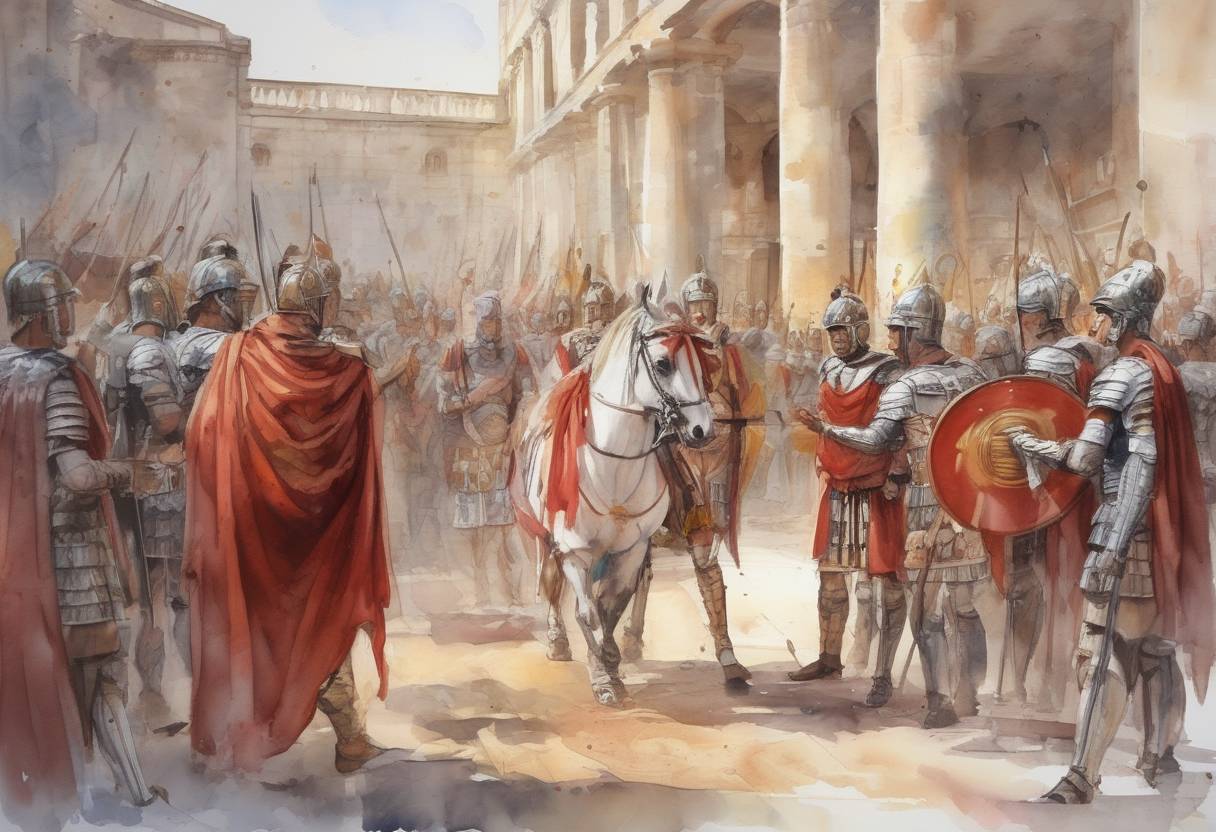
On July 25, 306 AD, Constantine I, also known as Constantine the Great, was proclaimed Roman Emperor by his troops. This pivotal event occurred in the city of Eboracum, present-day York, in Roman Britain. The proclamation marked the beginning of Constantine’s rise to power, which would eventually lead to significant transformations within the Roman Empire.
Tetrarchy System: At the time, the Roman Empire was governed by the Tetrarchy, a system established by Emperor Diocletian to bring order to the vast empire. It divided power among two senior emperors (Augusti) and two junior emperors (Caesars).
Constantius Chlorus: Constantine’s father, Constantius Chlorus, was one of the Caesars and was stationed in the western part of the empire. He was a key figure in the Tetrarchy and had been involved in military campaigns in Britain.
Death of Constantius: Constantius Chlorus died on July 25, 306, while on a campaign in Britain. His death created a power vacuum and an opportunity for Constantine.
Support of the Troops: Upon the death of his father, Constantine was immediately supported by the legions stationed in Eboracum. The soldiers, loyal to Constantius and impressed by Constantine’s leadership qualities, proclaimed him Augustus (senior emperor).
Legitimacy and Rivalry: Although Constantine’s proclamation was not initially recognized by the other members of the Tetrarchy, it set the stage for a series of civil wars. Constantine’s claim was strengthened by his lineage and the support of his father’s troops.
Consolidation of Power: Over the next two decades, Constantine would engage in a series of military and political maneuvers to consolidate his power. He eventually emerged as the sole ruler of the Roman Empire after defeating his rivals, including Maxentius and Licinius.
Christianity and the Empire: Constantine is perhaps best known for his role in the spread of Christianity. In 313 AD, he issued the Edict of Milan, granting religious tolerance throughout the empire and ending the persecution of Christians.
Foundation of Constantinople: Constantine founded the city of Constantinople (modern-day Istanbul) in 330 AD, which would become a new capital for the Roman Empire and a center of Christian culture.
Legacy: Constantine’s reign marked a turning point in Roman history. His support for Christianity and the establishment of Constantinople had lasting impacts on the religious and cultural landscape of Europe.
Constantine’s proclamation as emperor on July 25, 306, was a crucial moment that set the stage for his transformative rule and the eventual Christianization of the Roman Empire. His legacy continues to influence both religious and secular history.
Source: en.wikipedia.org