Nelson Mandela's Arrest on August 5, 1962
1962 · Howick, South Africa
Nelson Mandela was arrested by South African police near Howick and charged with inciting workers to strike and leaving the country without a passport.
March 21, 1960
The Sharpeville massacre occurred in South Africa when police opened fire on a crowd of black protesters, killing 69 people. The protest was against the apartheid pass laws, and the event became a turning point in the struggle against apartheid.
Sharpeville, South Africa | South African Police
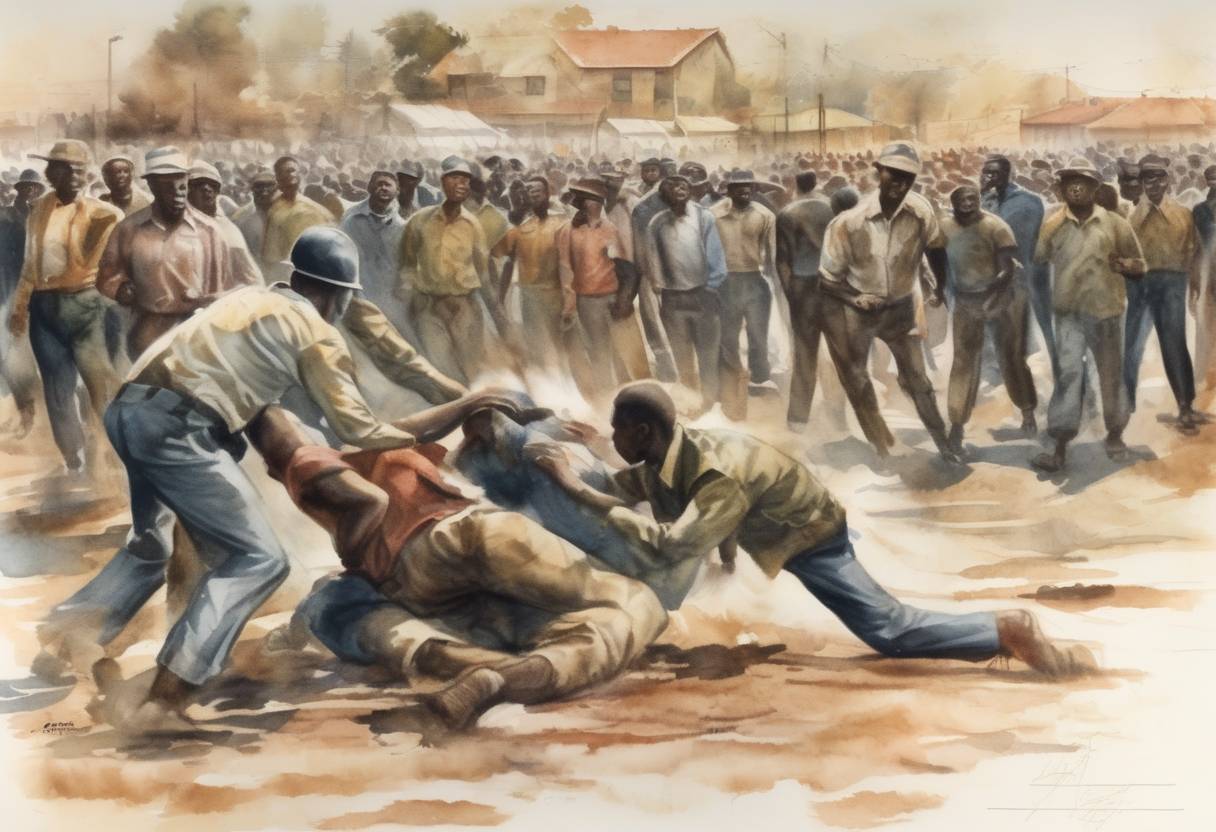
On March 21, 1960, a tragic and pivotal event unfolded in the township of Sharpeville, South Africa, marking a significant turning point in the struggle against apartheid. This event, known as the Sharpeville Massacre, involved the killing of 69 black South Africans by police forces during a protest against the apartheid pass laws.
The apartheid regime in South Africa enforced a system of racial segregation and discrimination, with the pass laws being one of its most oppressive tools. These laws required black South Africans to carry passbooks, which restricted their movement and employment opportunities. The pass laws were a symbol of the broader systemic oppression faced by the black majority.
On March 21, 1960, the Pan Africanist Congress (PAC), a breakaway faction from the African National Congress (ANC), organized a nationwide protest against the pass laws. The strategy was for black South Africans to leave their passbooks at home and present themselves for arrest, thereby overwhelming the system.
In Sharpeville, a township near Vereeniging in the Transvaal province, a large crowd gathered outside the local police station. Estimates suggest that between 5,000 and 7,000 people participated in the protest. The atmosphere was initially peaceful, with demonstrators singing and chanting.
Tensions escalated as the crowd grew, and the police, feeling threatened, called for reinforcements. The situation deteriorated rapidly when police opened fire on the unarmed protesters. In a matter of minutes, 69 people were killed, and approximately 180 were injured. Many of the victims were shot in the back as they tried to flee the scene.
The Sharpeville Massacre shocked the world and drew international condemnation. It highlighted the brutal nature of the apartheid regime and galvanized global opposition to South Africa’s racial policies. The event marked a turning point in the anti-apartheid struggle:
International Reaction: The massacre prompted widespread protests and condemnation from the international community. The United Nations Security Council passed Resolution 134, which expressed grave concern over the situation in South Africa.
Domestic Impact: Within South Africa, the massacre led to increased repression. The government declared a state of emergency and banned both the ANC and the PAC, driving the anti-apartheid movement underground.
Shift in Tactics: The Sharpeville Massacre convinced many activists that peaceful protest alone would not dismantle apartheid. This realization led to a shift towards armed resistance, with groups like the ANC’s Umkhonto we Sizwe (Spear of the Nation) adopting sabotage and guerrilla tactics.
Legacy: March 21 is now commemorated as Human Rights Day in South Africa, serving as a reminder of the sacrifices made in the fight for freedom and equality.
The Sharpeville Massacre remains a poignant symbol of the struggle against apartheid and a testament to the resilience and courage of those who fought for justice in South Africa.
Source: en.wikipedia.org