Gerald Ford Pardons Richard Nixon: September 8, 1974
1974 · Washington, D.C., United States
U.S. President Gerald Ford pardons former President Richard Nixon for any crimes he may have committed while in office.
August 8, 1974
U.S. President Richard Nixon announced his resignation, effective the following day, due to the Watergate scandal, becoming the first U.S. president to resign from office.
Washington, D.C., United States | United States Government
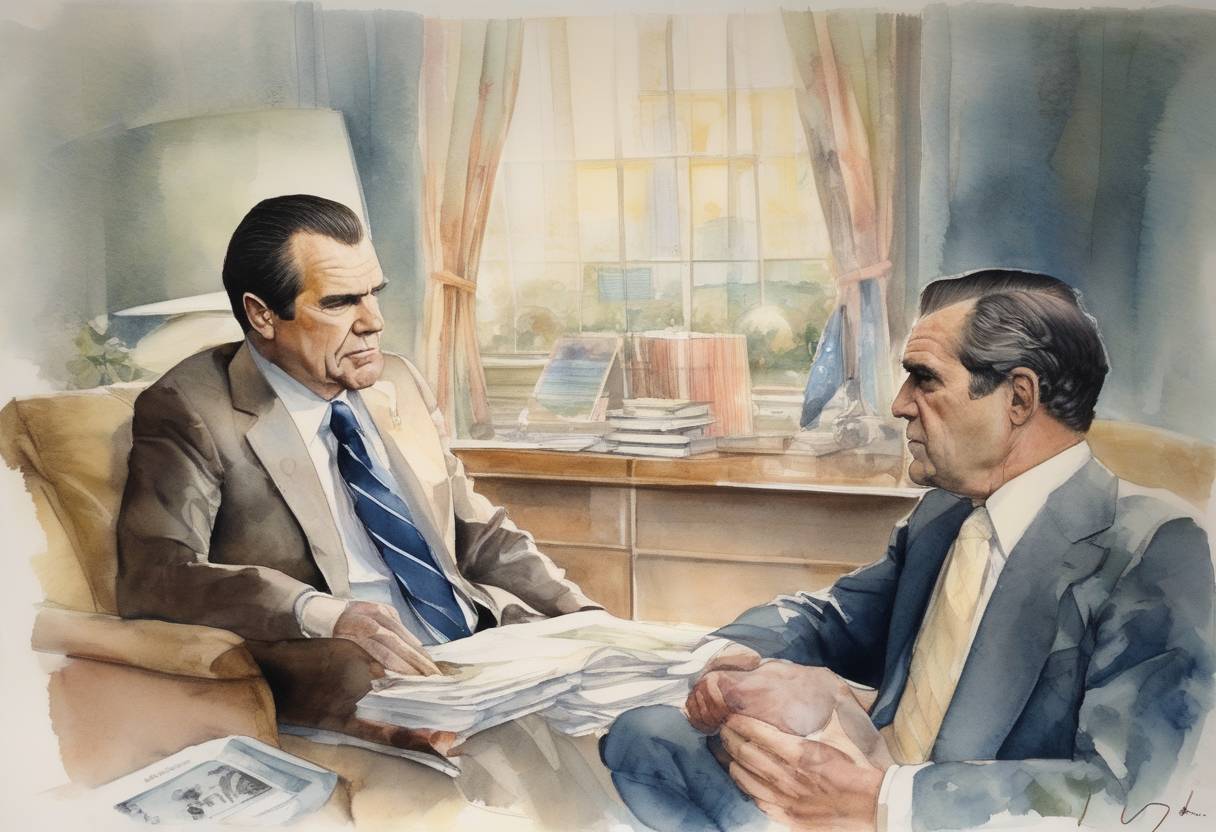
On August 8, 1974, U.S. President Richard Nixon announced his resignation from the presidency, effective the following day. This historic event marked the first time a sitting U.S. president resigned from office. Nixon’s decision came in the wake of the Watergate scandal, a political scandal that had engulfed his administration and eroded his support in Congress and among the American public.
The Watergate scandal began with a break-in at the Democratic National Committee headquarters at the Watergate office complex in Washington, D.C., on June 17, 1972. The subsequent investigation revealed that members of Nixon’s re-election campaign had been involved in the break-in and that there was a concerted effort to cover it up.
Key events leading up to Nixon’s resignation include:
Faced with the near certainty of impeachment by the House of Representatives and conviction by the Senate, Nixon chose to resign. On the evening of August 8, 1974, he delivered a televised address to the nation from the Oval Office. In his speech, Nixon stated:
“I have never been a quitter. To leave office before my term is completed is abhorrent to every instinct in my body. But as President, I must put the interests of America first. America needs a full-time President and a full-time Congress, particularly at this time with problems we face at home and abroad.”
Nixon’s resignation had profound implications for American politics and the presidency. It led to increased skepticism of government officials and prompted reforms aimed at increasing transparency and accountability in government. The scandal also underscored the importance of the rule of law and the checks and balances inherent in the U.S. political system.
Nixon’s resignation remains a pivotal moment in U.S. history, illustrating the potential consequences of political misconduct and the resilience of democratic institutions.
Source: www.britannica.com