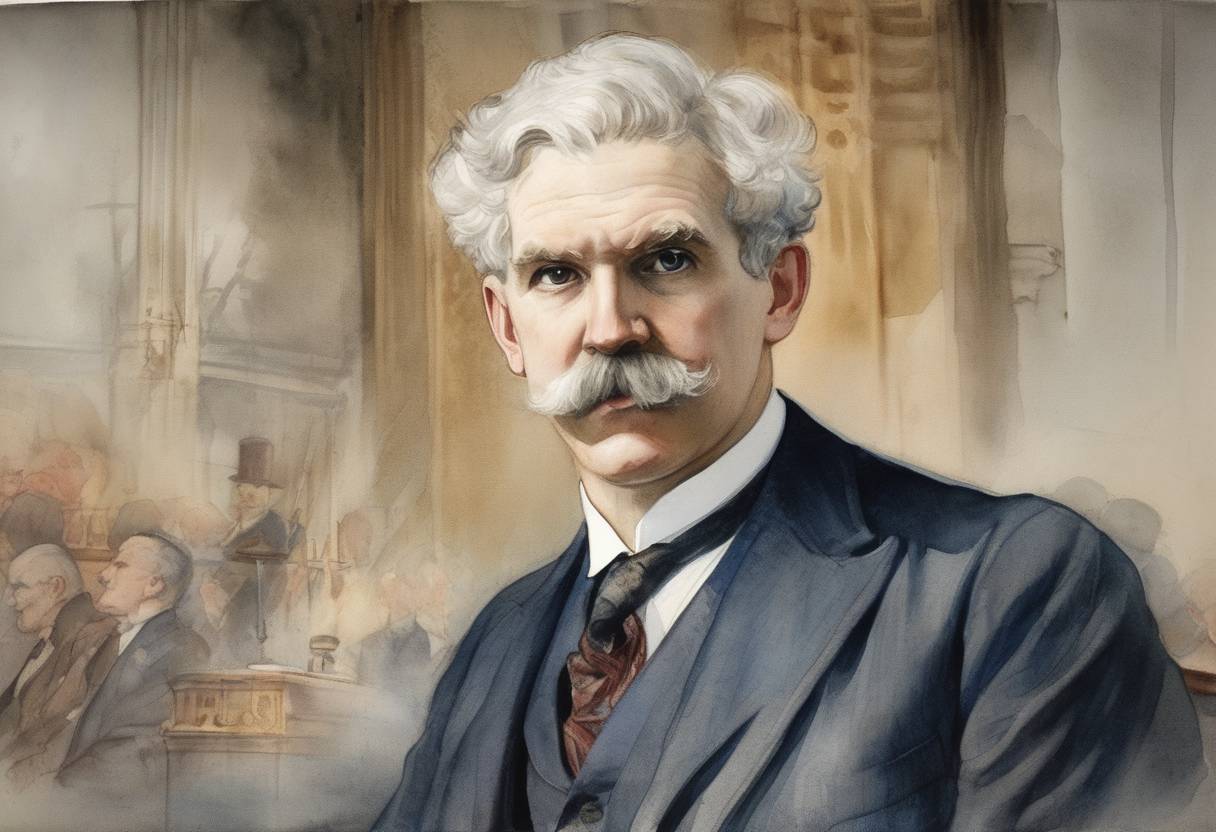
Ramsay MacDonald Becomes the First Labour Prime Minister of the United Kingdom
On January 22, 1924, Ramsay MacDonald made history by becoming the first Labour Prime Minister of the United Kingdom. This event marked a significant shift in British politics, as it was the first time that the Labour Party, representing the working class and trade unions, held the highest office in the British government.
Context Leading Up to the Event
Post-World War I Britain: The aftermath of World War I had left Britain grappling with economic difficulties, social unrest, and demands for reform. The war had accelerated changes in the social fabric, with increased calls for workers’ rights and social justice.
Rise of the Labour Party: The Labour Party, founded in 1900, had been steadily gaining support, particularly from the working class and trade unions. By the early 1920s, it had become a significant political force, challenging the dominance of the Conservative and Liberal parties.
1923 General Election: The general election of December 1923 resulted in a hung parliament. The Conservative Party, led by Stanley Baldwin, failed to secure a majority. The Labour Party, with 191 seats, emerged as the second-largest party, while the Liberals held the balance of power.
Key Events on January 22, 1924
Formation of the Government: With the Conservatives unable to form a stable government, King George V invited Ramsay MacDonald to form a government. MacDonald accepted, leading a minority Labour government with the tacit support of the Liberal Party.
Cabinet Composition: MacDonald’s cabinet included several notable figures, such as Philip Snowden as Chancellor of the Exchequer and Arthur Henderson as Home Secretary. The government was tasked with addressing pressing issues such as unemployment, housing, and industrial relations.
Significance and Aftermath
Policy Initiatives: Although the Labour government was short-lived, it introduced several progressive policies, including housing reforms and efforts to improve workers’ rights. It also made strides in foreign policy, notably recognizing the Soviet Union and advocating for disarmament.
Fall of the Government: The government lasted only until November 1924, when it was brought down by the “Zinoviev Letter” scandal and a vote of no confidence. Despite its brief tenure, the Labour government set a precedent for future Labour administrations.
Long-term Impact: MacDonald’s premiership demonstrated that the Labour Party was a viable governing party, paving the way for future Labour governments. It also highlighted the shifting political landscape in Britain, with increased representation for the working class.
Ramsay MacDonald’s ascent to the role of Prime Minister was a landmark moment in British history, reflecting broader social and political changes in the early 20th century. His leadership, albeit brief, laid the groundwork for the Labour Party’s future influence in British politics.