The Wola Massacre - August 5, 1944
1944 · Warsaw, Poland
Polish insurgents in the Wola district of Warsaw encounter a massacre by units under the command of SS-Gruppenführer Heinz Reinefarth and Oskar Dirlewanger.
April 13, 1943
The discovery of the Katyn massacre was announced by Nazi Germany, revealing the mass graves of Polish officers killed by the Soviet Union during World War II.
Katyn, Poland | Nazi Germany
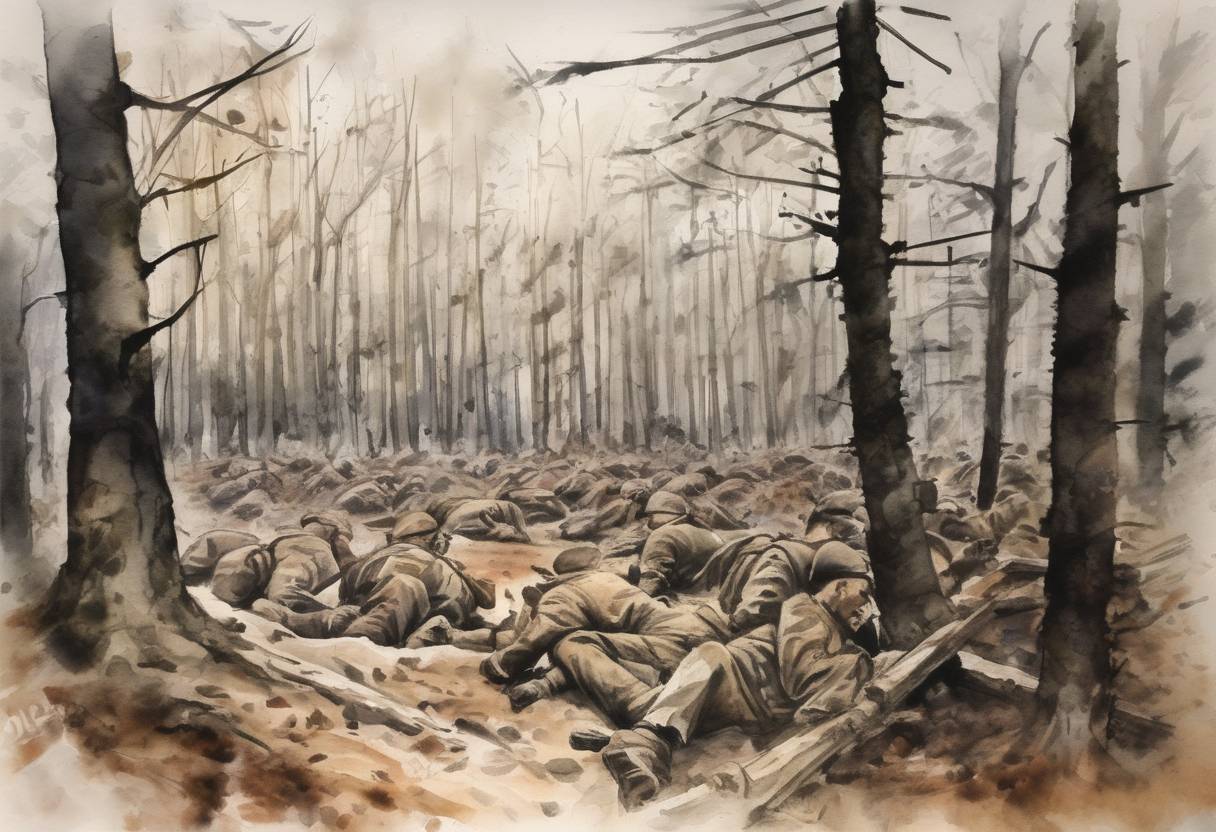
On April 13, 1943, Nazi Germany announced the discovery of mass graves in the Katyn Forest, near Smolensk in western Russia. These graves contained the bodies of thousands of Polish military officers and intelligentsia who had been executed by the Soviet Union during World War II. This event, known as the Katyn Massacre, became a significant and contentious issue during and after the war.
Soviet Invasion of Poland (1939): Following the Molotov-Ribbentrop Pact, the Soviet Union invaded eastern Poland in September 1939, shortly after Nazi Germany invaded from the west. This led to the capture of thousands of Polish military personnel and civilians.
NKVD’s Role: The Soviet secret police, the NKVD, was responsible for the detention and interrogation of Polish prisoners. In March 1940, the Soviet Politburo, led by Joseph Stalin, approved the execution of approximately 22,000 Polish officers, police, and intelligentsia, who were seen as a potential threat to Soviet control.
German Discovery: In early 1943, German forces, having invaded the Soviet Union in 1941, discovered the mass graves in the Katyn Forest. The Nazis used this discovery as a propaganda tool to drive a wedge between the Allies, particularly between the Soviet Union and Poland’s government-in-exile.
Announcement: On April 13, 1943, the German government publicly announced the discovery, blaming the Soviet Union for the massacre. This announcement was broadcast via German radio and was intended to undermine the Soviet Union’s moral standing among the Allies.
Soviet Denial: The Soviet Union denied responsibility, claiming that the massacre had been carried out by the Germans in 1941. This denial persisted for decades, with the Soviet government maintaining this narrative until 1990.
Allied Tensions: The announcement strained relations between the Soviet Union and the Polish government-in-exile, which demanded an investigation by the International Red Cross. The Soviets responded by severing diplomatic relations with the Polish government-in-exile.
Post-War Impact: The truth about the Katyn Massacre remained a point of contention during the Cold War. It wasn’t until 1990 that the Soviet government officially acknowledged and condemned the NKVD’s responsibility for the executions.
The Katyn Massacre and its subsequent cover-up highlighted the brutal realities of totalitarian regimes during World War II and the complex political dynamics among the Allies. It remains a poignant symbol of the suffering endured by Poland during the war and the broader struggles for truth and justice in the face of political expediency.
Source: en.wikipedia.org