The Treaty of Paris and the Anglo-Spanish War (1654–1660)
1657 · Paris, France
The Treaty of Paris is signed, ending the Anglo-Spanish War (1654–1660) between France and Spain.
February 24, 1303
The Treaty of Paris was signed, ending the Anglo-French War (1294–1303). It restored peace between England and France, with England relinquishing claims to certain territories in exchange for the return of Gascony.
Paris, France | Kingdom of England and Kingdom of France
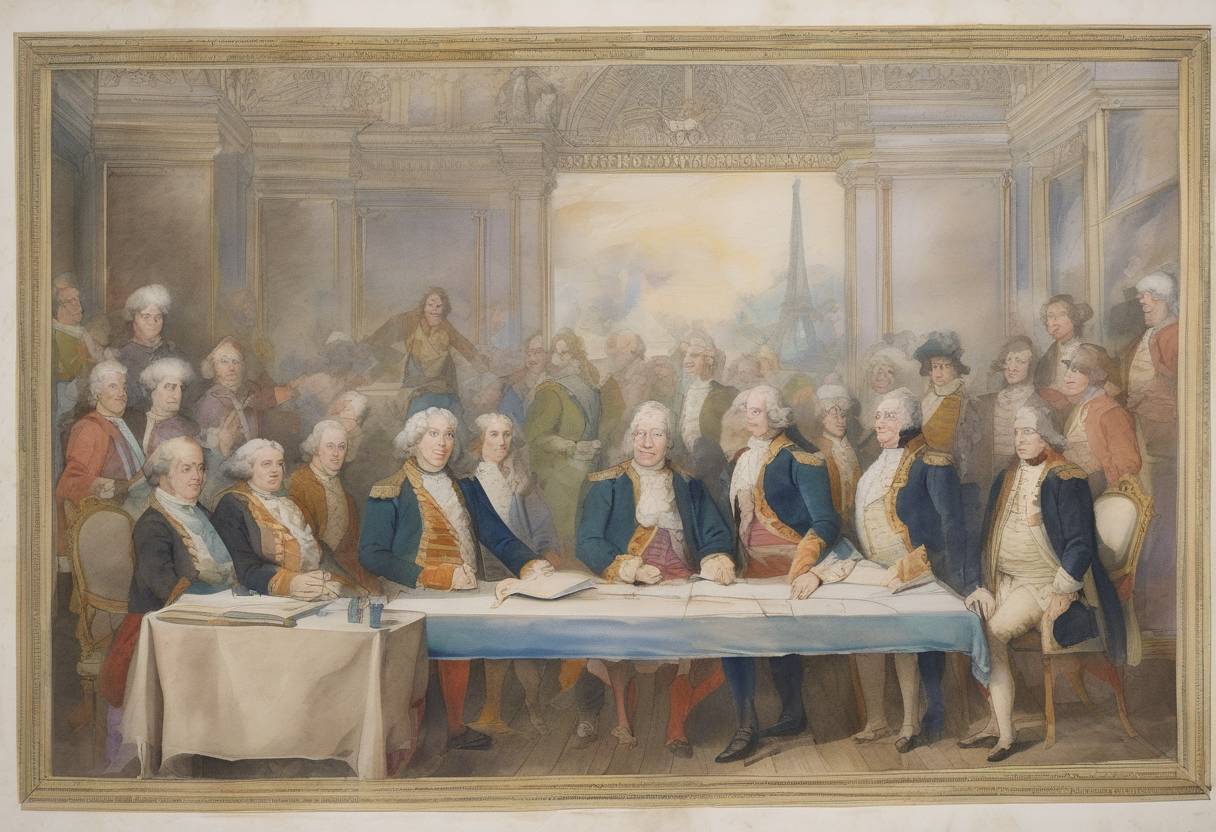
On February 24, 1303, the Treaty of Paris was signed, marking the end of the Anglo-French War that spanned from 1294 to 1303. This treaty was a significant diplomatic agreement between England and France, aimed at restoring peace and redefining territorial claims between the two kingdoms.
The Anglo-French War (1294–1303) was primarily a conflict over territorial disputes and feudal allegiances. The war began when tensions escalated due to King Edward I of England’s claims over the Duchy of Aquitaine, a region in southwestern France, which he held as a vassal to the French king. The conflict was further fueled by maritime disputes and the complex feudal relationships that characterized medieval Europe.
Restoration of Gascony: One of the central outcomes of the treaty was the return of the Duchy of Gascony to English control. This was a crucial concession by the French, as Gascony was a valuable and strategically important region for England.
Territorial Adjustments: In exchange for the return of Gascony, England relinquished claims to certain territories in France. This was part of a broader effort to stabilize relations and prevent further conflicts over land.
Marriage Alliance: The treaty also included a marriage alliance between the two royal families. Edward I’s son, the future Edward II, was betrothed to Isabella of France, the daughter of King Philip IV of France. This alliance was intended to strengthen the peace and foster goodwill between the two nations.
The Treaty of Paris in 1303 temporarily eased tensions between England and France, allowing both kingdoms to focus on internal affairs and other external threats. However, the peace was fragile and did not resolve the underlying issues of territorial claims and feudal allegiances, which would later contribute to the outbreak of the Hundred Years’ War in 1337.
The marriage alliance between Edward II and Isabella of France had significant historical consequences. Their son, Edward III, would later claim the French throne, citing his maternal lineage, which became one of the catalysts for the Hundred Years’ War.
In summary, the Treaty of Paris (1303) was a pivotal moment in medieval European diplomacy, reflecting the complex interplay of power, territory, and dynastic politics that characterized the era.
Source: en.wikipedia.org