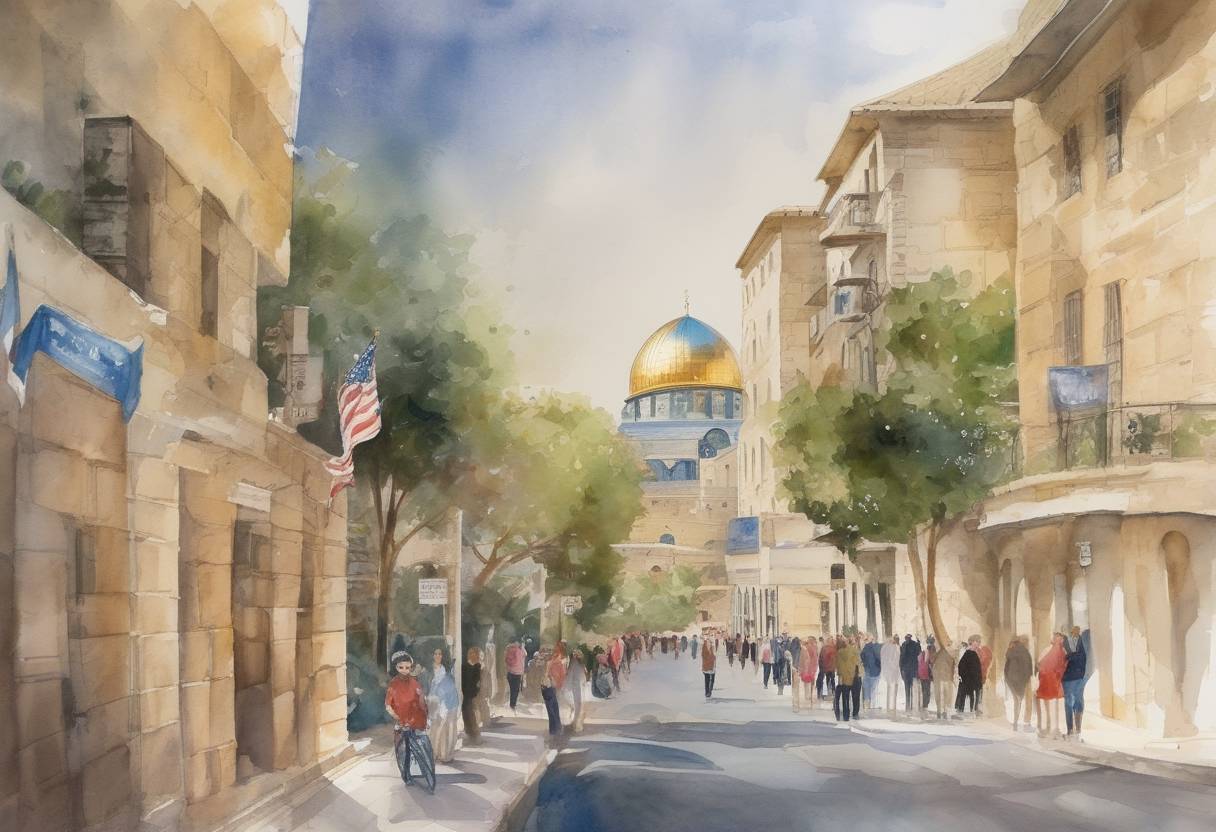
Opening of the U.S. Embassy in Jerusalem on May 14, 2018
On May 14, 2018, the United States officially opened its embassy in Jerusalem, marking a significant shift in American foreign policy. This move was the culmination of a decision announced by President Donald Trump on December 6, 2017, to recognize Jerusalem as the capital of Israel, diverging from the long-standing U.S. policy of maintaining its embassy in Tel Aviv.
Context and Background
Historical Significance of Jerusalem: Jerusalem holds profound religious and historical significance for Jews, Christians, and Muslims. It has been a focal point of the Israeli-Palestinian conflict, with both Israelis and Palestinians claiming it as their capital.
U.S. Policy Pre-2018: Prior to this decision, U.S. policy, like that of most other countries, was to keep its embassy in Tel Aviv, reflecting the international consensus that the status of Jerusalem should be determined through negotiations.
The 1995 Jerusalem Embassy Act: The U.S. Congress passed this act, which recognized Jerusalem as Israel’s capital and called for the embassy to be moved there. However, successive presidents had signed waivers delaying the move, citing national security concerns.
Key Events on May 14, 2018
Embassy Opening Ceremony: The ceremony was attended by U.S. officials, including Ivanka Trump and Jared Kushner, as well as Israeli leaders. President Trump addressed the event via video, reaffirming the U.S. commitment to peace in the region.
Protests and Violence: The embassy opening coincided with the 70th anniversary of Israel’s founding, a day Palestinians commemorate as the Nakba, or “catastrophe,” marking their displacement. This led to widespread protests, particularly in Gaza, where clashes with Israeli forces resulted in significant casualties.
International Reaction
Criticism and Support: The decision was met with international criticism, with many countries expressing concern that it could undermine peace efforts. The United Nations General Assembly passed a resolution condemning the U.S. decision. However, the move was praised by Israeli leaders and supported by a few other countries.
Diplomatic Repercussions: Several countries, including Turkey and South Africa, recalled their ambassadors from Israel in protest. The move also strained U.S. relations with some of its traditional allies in the Middle East and Europe.
Aftermath and Broader Significance
Impact on Peace Process: The embassy move was seen as a significant obstacle to the Israeli-Palestinian peace process, as Palestinians viewed it as a unilateral decision undermining their claims to East Jerusalem.
Subsequent Developments: Following the U.S. move, a few other countries, such as Guatemala, also relocated their embassies to Jerusalem, though most countries have maintained their embassies in Tel Aviv.
The opening of the U.S. embassy in Jerusalem remains a pivotal moment in Middle Eastern geopolitics, reflecting broader shifts in U.S. foreign policy and its implications for the Israeli-Palestinian conflict.