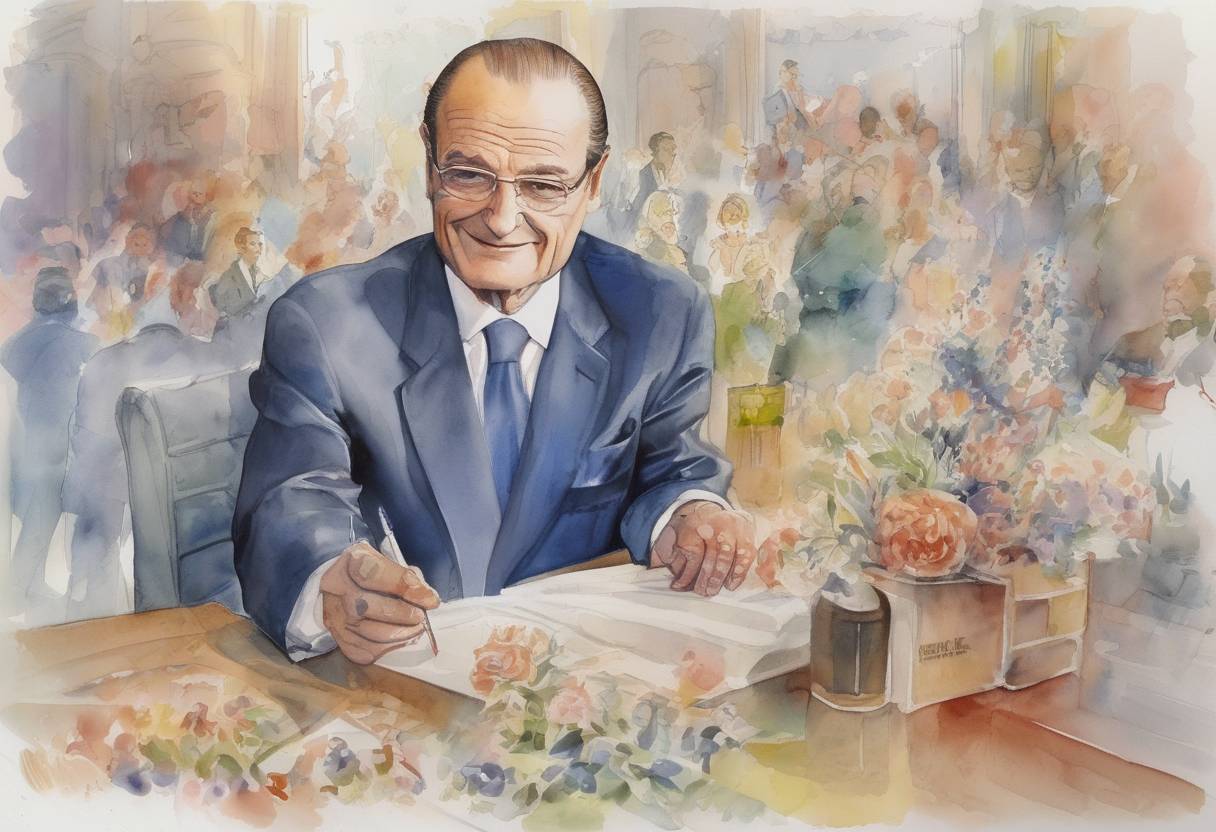
Jacques Chirac’s Re-election on May 5, 2002
On May 5, 2002, Jacques Chirac was re-elected as the President of France, securing a second term in office. This election was particularly notable due to the unexpected presence of far-right candidate Jean-Marie Le Pen in the runoff, which marked a significant moment in French political history.
Context Leading Up to the Election
First Round Surprise: The first round of the presidential election, held on April 21, 2002, shocked the nation when Jean-Marie Le Pen, leader of the National Front, advanced to the runoff. Le Pen’s platform was characterized by anti-immigration and nationalist rhetoric, which resonated with a segment of the electorate but was controversial to many others.
Elimination of Lionel Jospin: The incumbent Prime Minister and Socialist Party candidate, Lionel Jospin, was unexpectedly eliminated in the first round, finishing third behind Chirac and Le Pen. This outcome was partly attributed to a fragmented left-wing vote, with multiple candidates splitting the support base.
The Runoff Election
Broad Coalition Against Le Pen: In response to Le Pen’s advancement, a broad coalition of political parties and civil society groups rallied behind Chirac, despite some ideological differences. This coalition was driven by a desire to prevent a far-right presidency, leading to widespread demonstrations and the slogan “Vote for the crook, not the fascist.”
Chirac’s Landslide Victory: Jacques Chirac won the runoff with an overwhelming majority, securing approximately 82% of the vote. This decisive victory was one of the largest margins in French presidential election history, reflecting the electorate’s rejection of Le Pen’s extremist policies.
Aftermath and Significance
Political Realignment: The 2002 election prompted significant introspection within the French political landscape, particularly among left-wing parties, which sought to understand and address the factors leading to their poor performance.
Rise of Far-Right Politics: Although Le Pen was defeated, his advancement to the second round signaled a growing acceptance of far-right politics in France, a trend that would continue to influence French and European politics in subsequent years.
Chirac’s Second Term: During his second term, Chirac focused on various domestic and international issues, including social reforms and France’s role in global affairs, notably opposing the 2003 Iraq War.
Jacques Chirac’s re-election in 2002 remains a pivotal moment in French political history, illustrating the complexities of electoral dynamics and the enduring impact of far-right ideologies on mainstream politics.