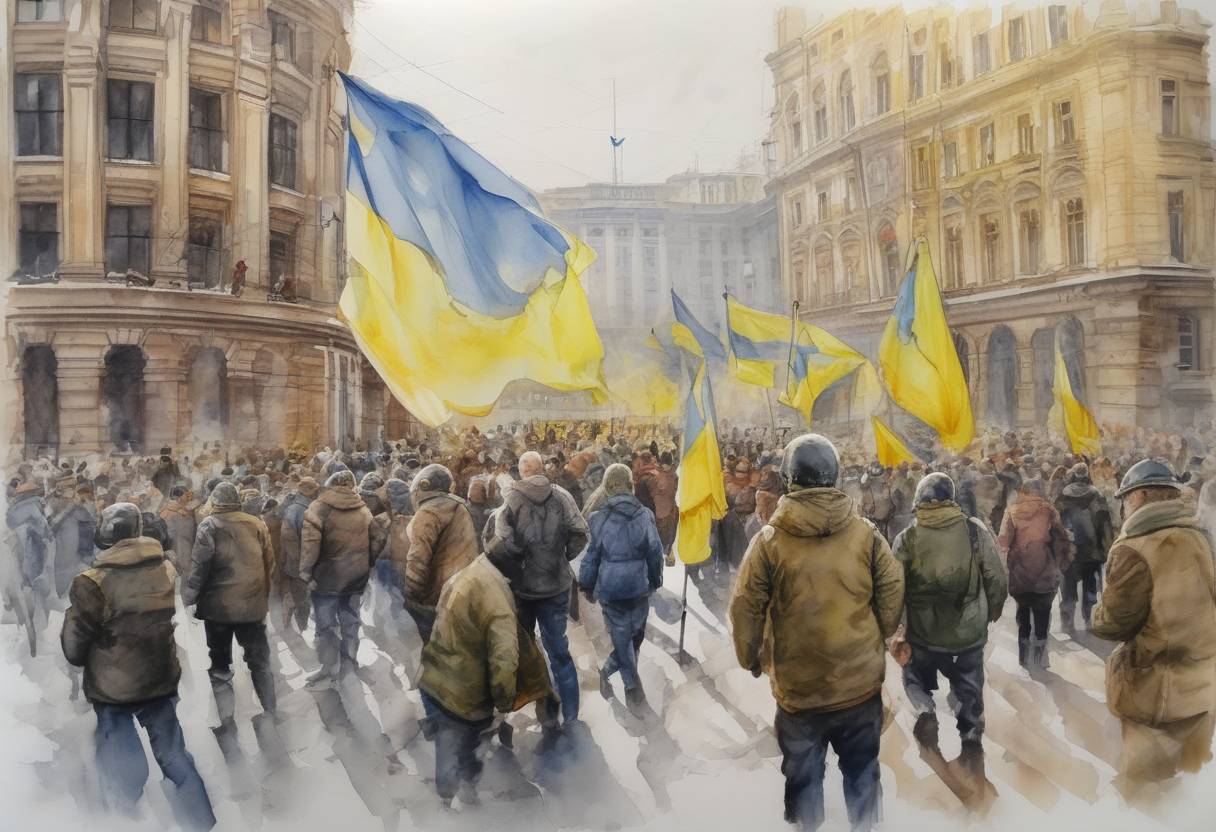
Amnesty Law for Euromaidan Protesters - February 17, 2014
On February 17, 2014, the Ukrainian parliament, known as the Verkhovna Rada, passed a significant law granting amnesty to protesters involved in the Euromaidan demonstrations. These protests were part of a larger movement against the government of then-President Viktor Yanukovych. The decision to grant amnesty was a pivotal moment in the ongoing political crisis in Ukraine, which had begun in late 2013.
Context Leading Up to the Amnesty
Euromaidan Protests: The Euromaidan movement started in November 2013, initially sparked by President Yanukovych’s decision to suspend an association agreement with the European Union in favor of closer ties with Russia. This decision led to widespread protests, primarily centered in Kyiv’s Maidan Nezalezhnosti (Independence Square).
Escalation of Protests: Over the months, the protests grew in size and intensity, fueled by public discontent with government corruption, human rights abuses, and the lack of democratic reforms. The movement attracted a diverse group of participants, including students, civil society activists, and opposition politicians.
Government Response: The Yanukovych administration’s response to the protests included attempts to disperse demonstrators through police force, which resulted in violent clashes and casualties. This heavy-handed approach only intensified the protests and drew international condemnation.
The Amnesty Law
Purpose: The amnesty law was part of a series of concessions aimed at de-escalating the situation and addressing some of the protesters’ demands. It was intended to release individuals detained during the protests and provide legal immunity for actions taken during the demonstrations.
Conditions: The law stipulated that the amnesty would only take effect if protesters vacated occupied government buildings and cleared certain streets in Kyiv. This condition was a point of contention, as many protesters were wary of government promises.
Aftermath and Significance
Impact on Protests: While the amnesty law was a gesture towards reconciliation, it did not immediately quell the protests. Many demonstrators remained skeptical of the government’s intentions and continued to demand Yanukovych’s resignation and broader political reforms.
Political Consequences: The situation continued to deteriorate, leading to further violence. By late February 2014, the political crisis reached a climax with the ousting of President Yanukovych, who fled to Russia. This marked a significant turning point in Ukraine’s political landscape.
Broader Historical Significance: The Euromaidan protests and the subsequent political upheaval had profound implications for Ukraine’s future. They set the stage for a shift towards European integration and democratic reforms, while also contributing to heightened tensions with Russia, eventually leading to the annexation of Crimea and the ongoing conflict in Eastern Ukraine.
The amnesty law of February 17, 2014, thus represents a critical moment in the Euromaidan movement, highlighting the complex interplay between protest movements and governmental responses in times of political crisis.